





Let's find out about the air!
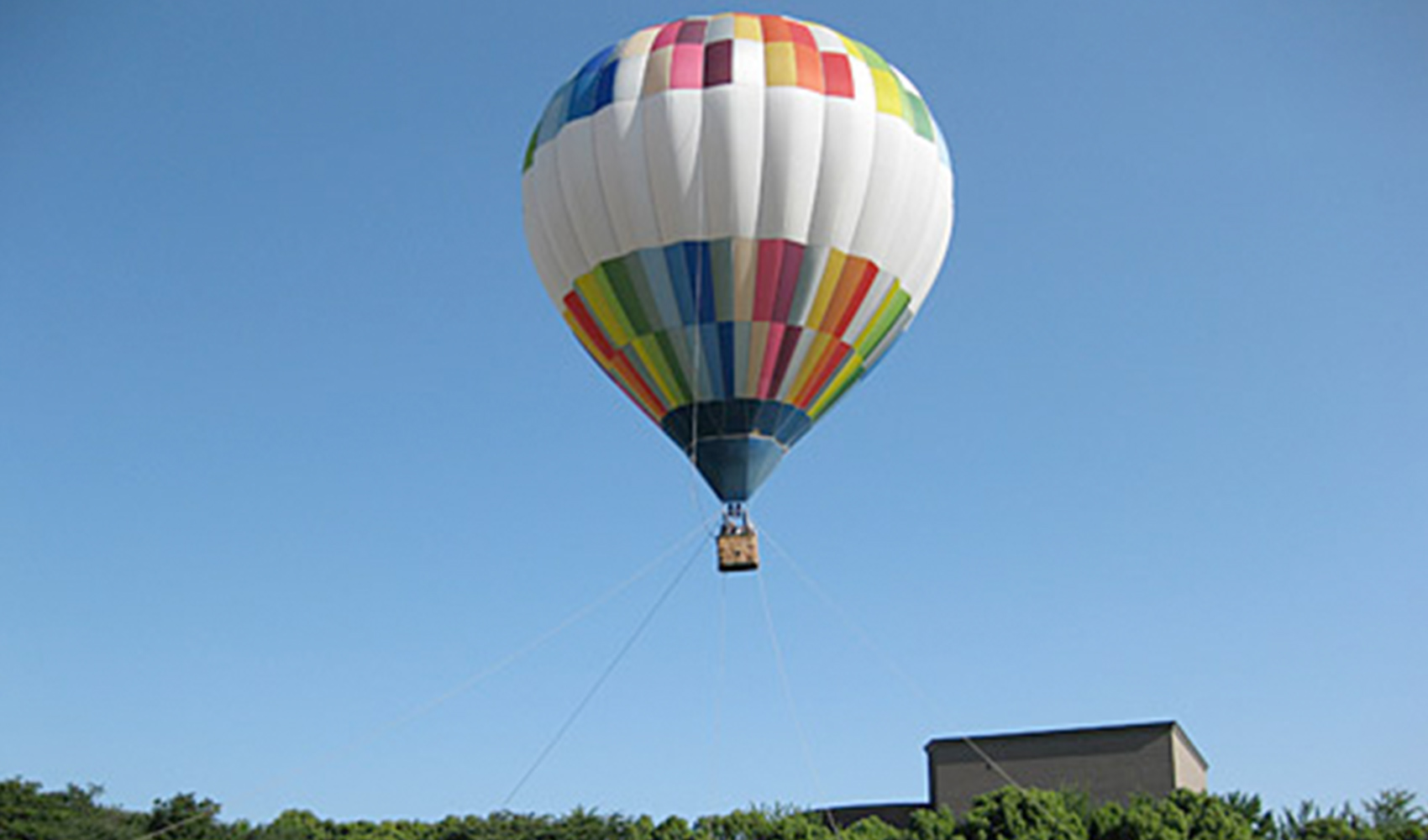
Since air is invisible, you may not realize that it is all around you. However, we are able to live thanks to air. What is air and what kind of properties does it have? Let's find out about air.
Air that sustains the life of living things
We are always breathing in and out. This is called breathing. If there was no air on the earth, we would not be able to breathe and we would not be able to live. Air is necessary for our survival.
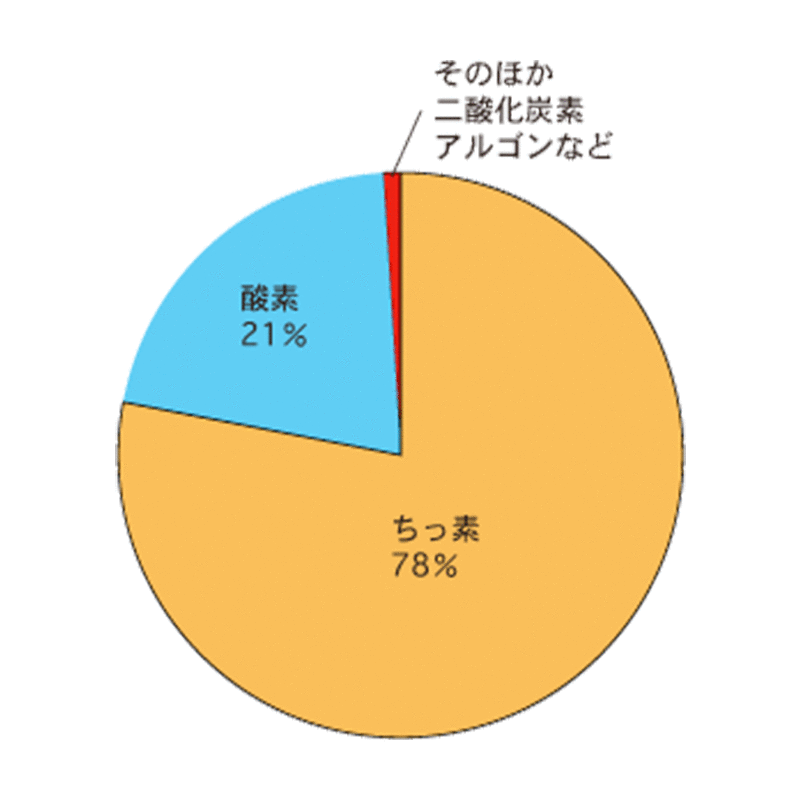
Air is a mixture of several gases. About 78% of air is composed of carbon dioxide and argon, and about 21% of air is composed of oxygen.
We breathe, absorbing oxygen and expelling carbon dioxide from our bodies. Oxygen is used to produce energy for thinking and movement.
Even the invisible air has weight.
Although air is invisible to the eye and cannot be touched, it does have weight. At normal temperature and humidity, a liter of air weighs about 1.2 grams. However, the weight of air changes with temperature. For the same volume, warm air is lighter and cold air is heavier. Hot air balloons take advantage of this property. In a hot air balloon, the air inside the balloon is heated by a burner to make it lighter than the surrounding air, and then it flies through the air.
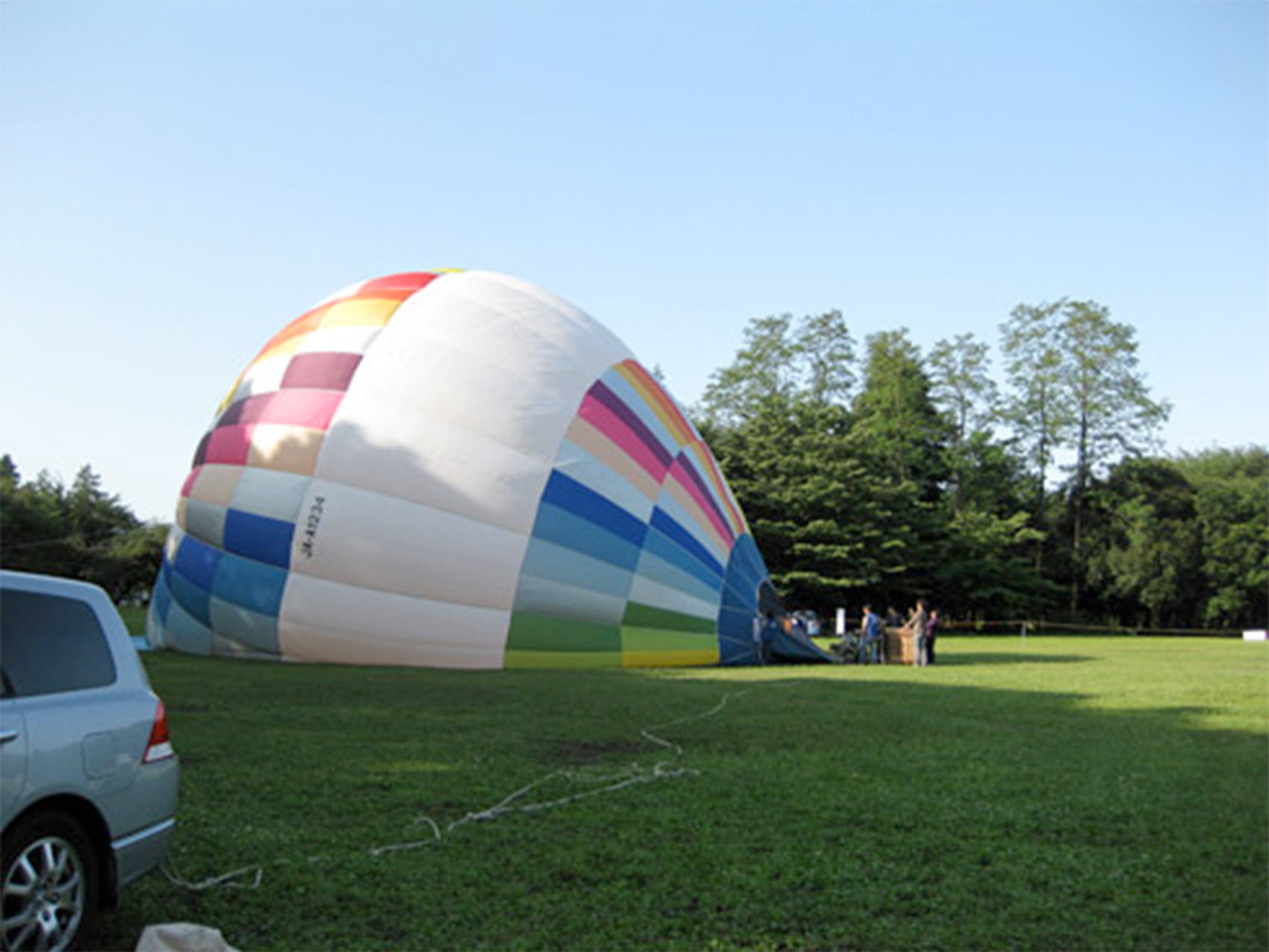
Courtesy of AirB Hot Air Balloon Operating Organization
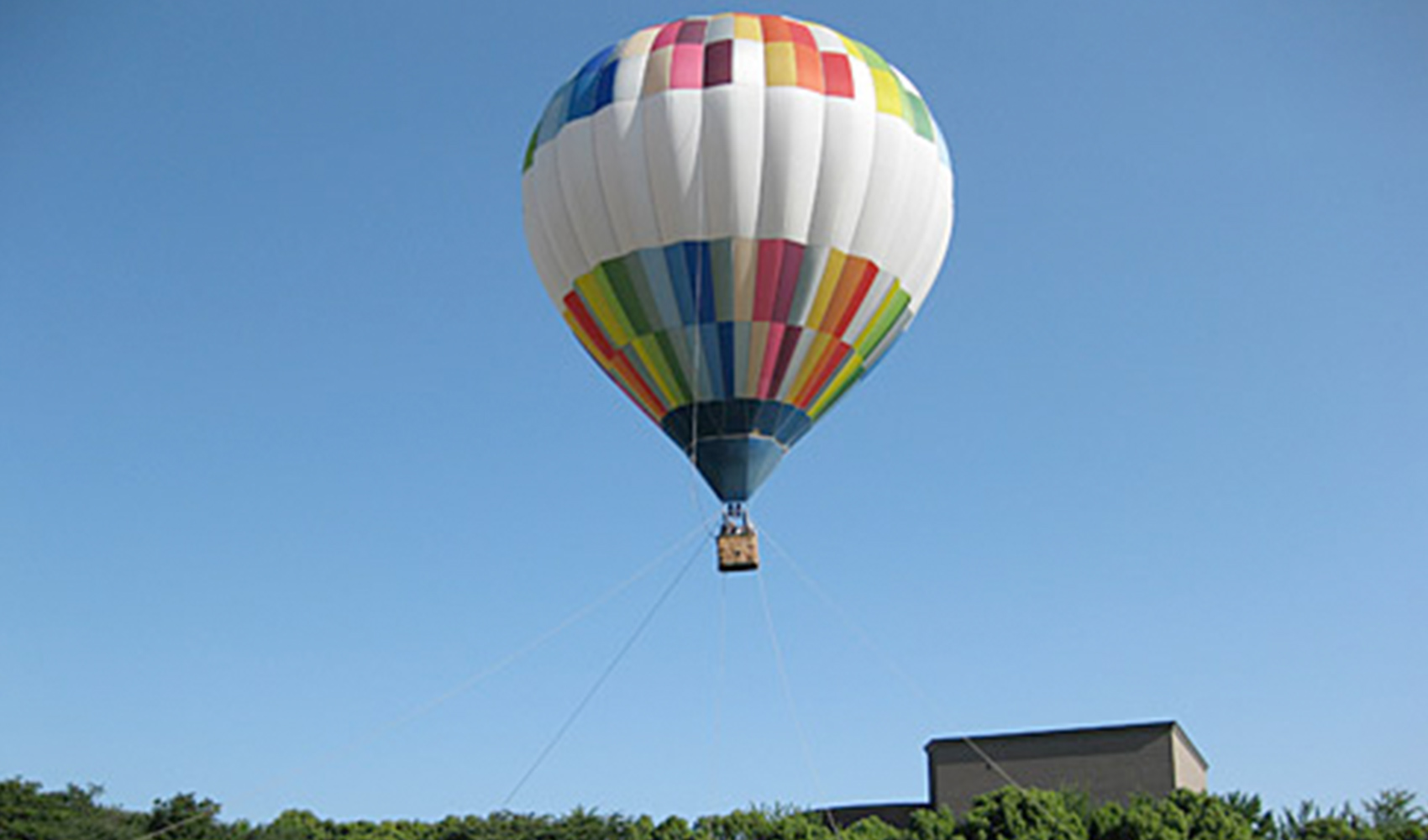
Courtesy of AirB Hot Air Balloon Operating Organization
Air pressure is the force that air pushes
The force of air holding things down is called atmospheric pressure. Air pressure works on the surface of the earth. We are also held down by air. However, we do not usually feel that we are held down by the air, do we? This is because the force from the inside of our body is also exerted on the outside, and the two are in perfect balance.
The atmospheric pressure at ground level is about 1 kg per square centimeter, which is called 1 atmospheric pressure. The atmospheric pressure varies from place to place, and the higher you go, the smaller the pressure. For example, on a high mountain, a bag of candy you are carrying may puff up. On the ground, the force of the air around the bag pushing it down is balanced by the force of the air inside the bag pushing it outward. On a high mountain, however, the force of the air around the bag pushing against the bag is less than the force of the air inside the bag pushing against the bag, and so the bag swells.
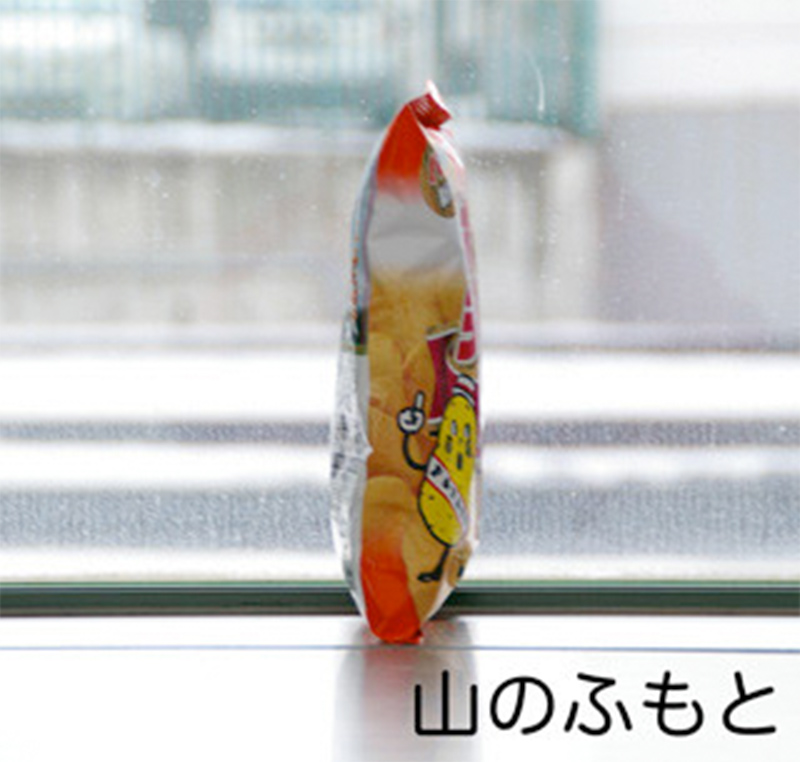
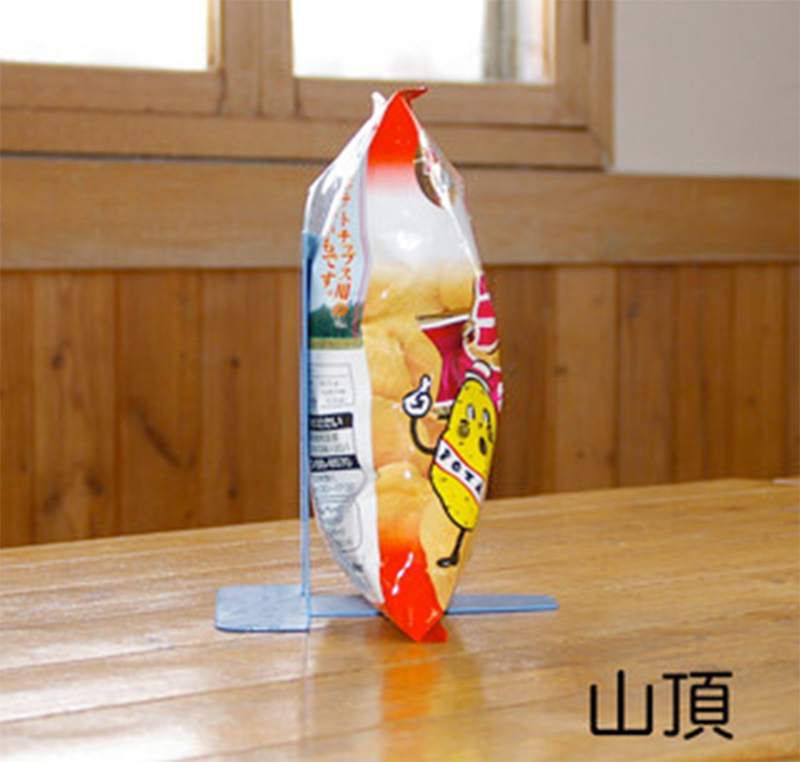
Source: Takuya Ohnell, alumnus of Hokkaido University Science and Technology Communicators Training Unit
Barometric pressure" used in weather forecasting
We often hear the word "atmospheric pressure" used in weather forecasts. The air covering the earth has different atmospheric pressure in different places. The area with high atmospheric pressure is called high-pressure area, and it is often sunny. And where the pressure is low, it is called low-pressure, and it is often cloudy or rainy.
Air shrinks, and when it shrinks, it tries to get back to where it was.
If you push a rubber ball, it will contract. In this way, air that has been sealed up has the property of shrinking when it is pushed. Tanks used for scuba diving, for example, contain a lot of air that has been compressed using this property.
When air is contracted, it creates a force that pushes it back to its original volume. This is the reason why a rubber ball bounces. When a rubber ball is dropped and hits the ground, the air inside the ball shrinks. The air then tries to return to its original volume and bounces off the ball.
When shrunk, it produces heat.
Air also has the property of increasing in temperature when it is suddenly compressed. For example, when you inflate a bicycle tire using an inflator, the air inlet sometimes becomes hot. This is because the air in the inflator has been suddenly compressed.
The various properties of air are used in various ways in our daily lives.
Let's do free research using the properties of air!
Let's make an air horn with a cardboard box!
Make a hole in a cardboard box and tap the side of the box to make air rush out. Use an empty plastic bottle as a target and feel the force of the ejected air. Let's also make air bows with different sizes and shapes of holes and cardboard boxes, and see if there is a difference in the force of the air ejected.
What to prepare
Cardboard box, adhesive tape, cardboard cutter (or scissors), compass, several empty plastic bottles (500 ml)
way of making
- Assemble the cardboard box and firmly tape it with adhesive tape to prevent air leakage.
- On one side of the cardboard box, use a compass to draw a circle 10-15 cm in diameter.
- Cut a hole along the circle with a corrugated cardboard cutter or similar tool. (Be careful not to injure yourself.)
- Tap the side of the cardboard box with both hands, with the side with the hole facing you, and the air will fly out. Try hitting an empty plastic bottle as a target.
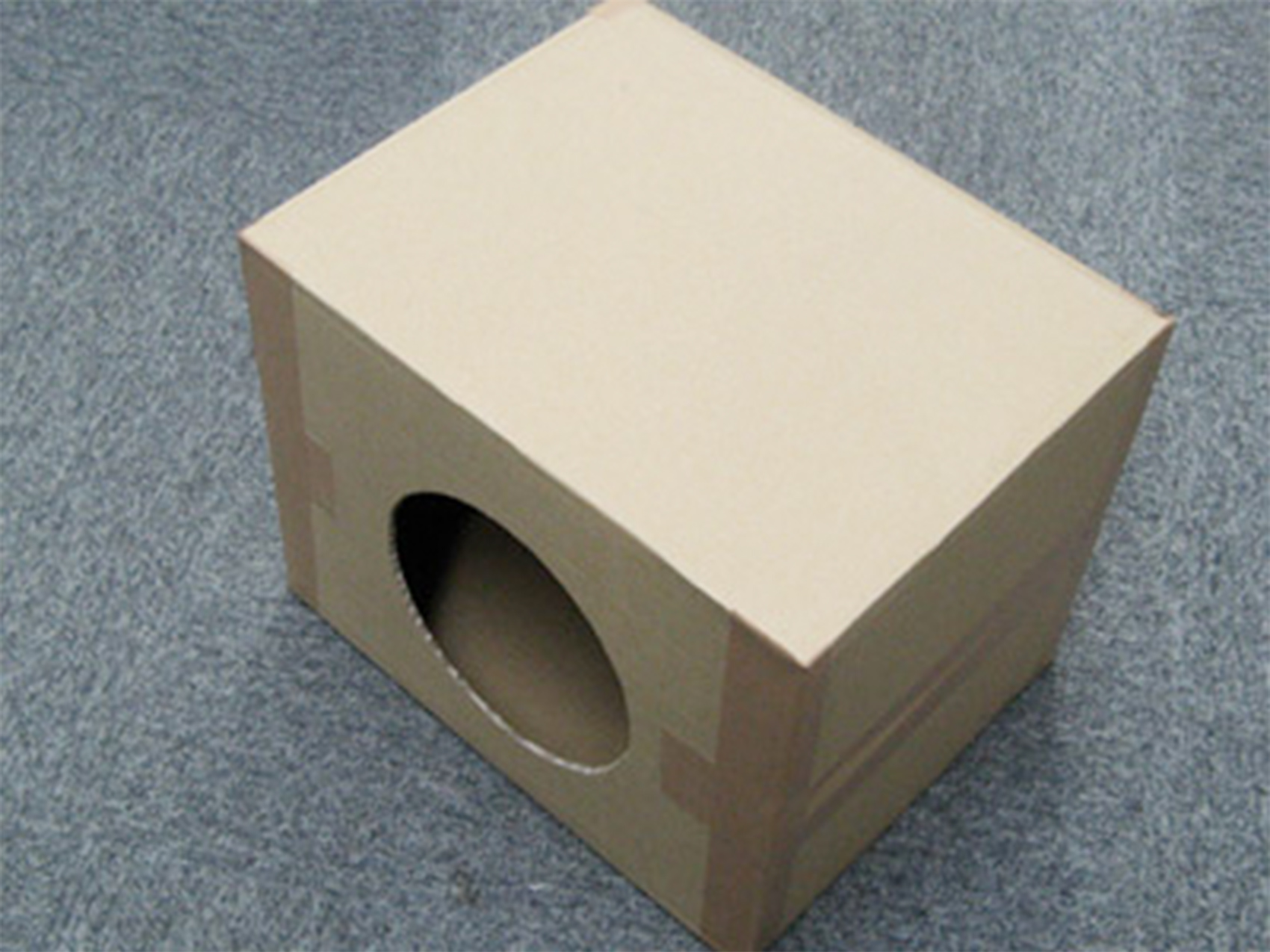
Let's try making various air bubbles with different sizes of holes and cardboard boxes, and compare the number of bubbles that fall down.
When the smoke from the wire rod is collected in a cardboard box and tapped, you can see the air being ejected. (When using a wire rod, be sure to do so with an adult.)
Balloon hovercraft powered by air
A hovercraft is a vehicle that blows air between its hull and the surface of the water (ground), and uses propellers to send wind in the opposite direction. Let's make a hovercraft using balloons and plastic bottles.
What to prepare
Rubber balloons, plastic bottles (500 ml), vinyl tape, 1,000 sheets (or cutters), scissors, cutters, CDs, cup noodle containers
way of making
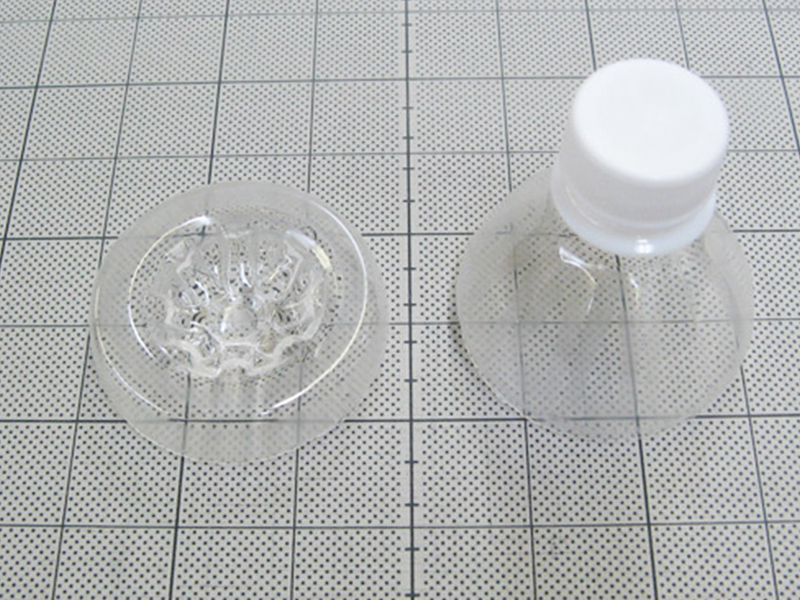
- Cut the top and bottom of the plastic bottle with a cutter and scissors. Do not use the middle part. (Be careful not to injure yourself).
- Punch 5 or 6 holes in the bottom of the bottom part with a thin slit (or slit). (Be careful not to injure yourself.)
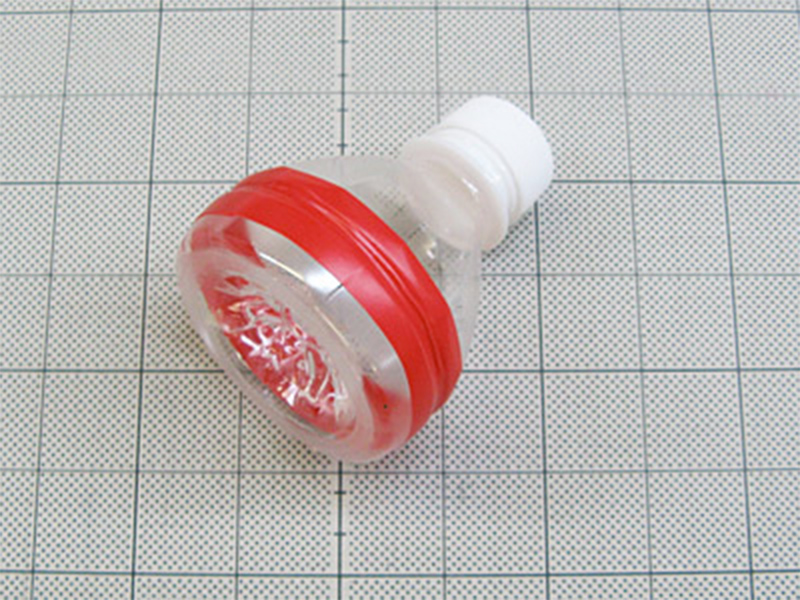
- Attach the cut-out top and bottom pieces tightly together with vinyl tape.
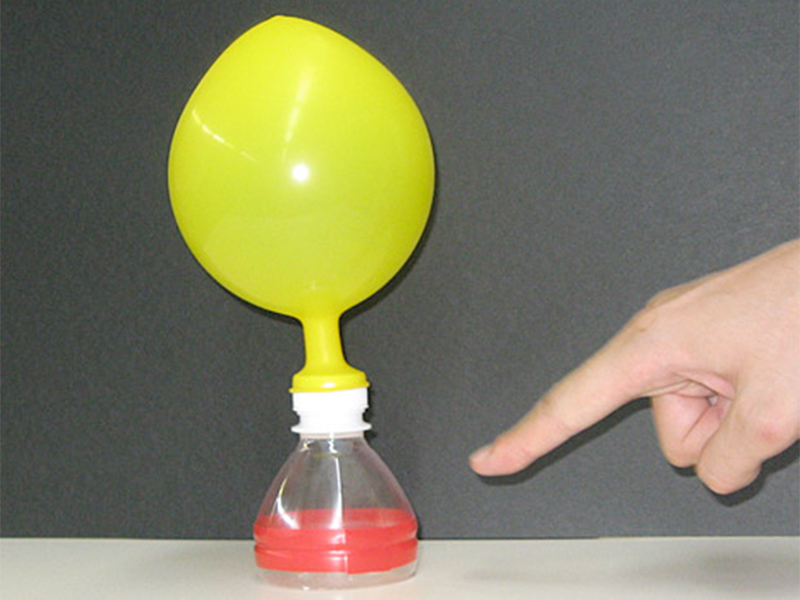
- Punch a hole in the center of the plastic bottle cap using a thin slit (or kiri). (Be careful not to injure yourself.) Cover the cap with a rubber balloon.
- Puff up the balloon by pulling in the cap. Twist the balloon so that the air does not escape, and place the cap over the plastic bottle.
- When the balloon is untwisted, air comes out from under the plastic bottle and bubbles up, which is then popped forward with the fingers.