





Let's find out about the new coronavirus.
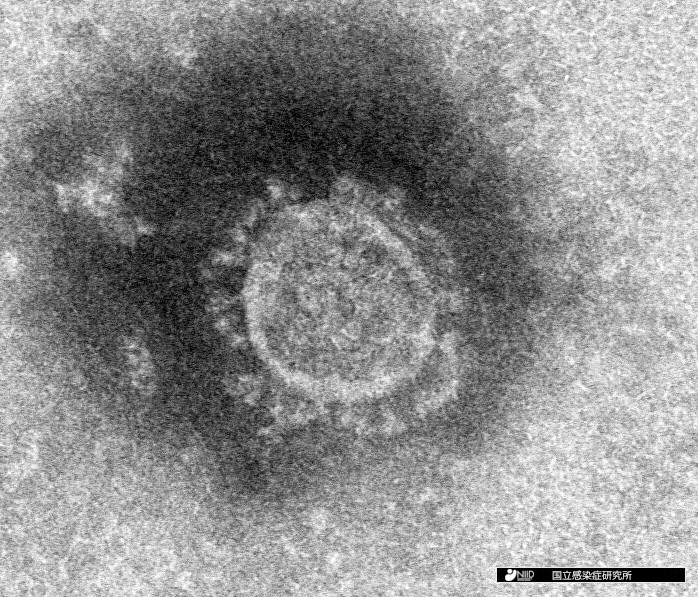
The new coronavirus is attracting worldwide attention. It has become a familiar problem, with daily news stories and schools being temporarily closed. Let's take a look at what the new coronavirus is.
What is a virus anyway?
Viruses are so small that they are invisible. There are many types, and they infect humans and animals, causing disease. Bacteria are also small and can cause disease, but bacteria and viruses are different.
The most important characteristic of viruses is that they cannot increase by themselves. They enter the cells of other organisms and use the substances in those cells to increase. And as the virus increases more and more in the body, symptoms of various diseases appear.
There are several ways for viruses to enter the body. There are "airborne infection," in which a person becomes infected by inhaling airborne viruses, "droplet infection," in which a person becomes infected by directly inhaling spray from coughing or sneezing, and "contact infection," in which a person becomes infected by touching a doorknob, switch, button, or toilet seat surface.
One of the well-known viruses is the influenza virus. Influenza is said to be often transmitted by droplet infection.
When the influenza virus increases in the body, symptoms such as fever over 38°C, headache, joint pain, sore throat, runny nose, sneezing, and coughing appear.
When a person develops influenza, he or she usually recovers in about a week, but some cases can cause complications such as pneumonia or encephalopathy.
Influenza can be prevented by getting vaccinated to reduce the likelihood of developing symptoms and to prevent serious illness. In addition, starting anti-influenza virus medication within 48 hours of the onset of illness can help alleviate symptoms.
Thus, some viruses have vaccinations and treatments. So what about the new coronaviruses?
Why is the new coronavirus so scary?
There are several types of coronaviruses, and the newly discovered new type of coronavirus is the one that is spreading in many countries. The disease causes fever, coughing, lethargy, shortness of breath, sore throat, headache, and pneumonia.
What makes it different from the influenza virus is that there is currently (as of March 11, 2020) no vaccination or cure.
The new coronavirus is thought to be transmitted by droplet or contact infection.
The new coronavirus is said to cause no severe symptoms in most cases, even if elementary school students are infected. But if the elderly or people who are originally ill are infected, the symptoms can become severe and even life-threatening. So it is important to prevent yourself, your family, and others around you from becoming infected.
Supervised by Takashi Tsuchida (Director, Yokohama Tsuchida Medical Clinic)
Photo: "Electron micrograph of a new coronavirus successfully isolated at the National Institute of Infectious Diseases" provided by the National Institute of Infectious Diseases.