





Watch out for heavy rains, not just the rainy season! How do rivers rise and flood?
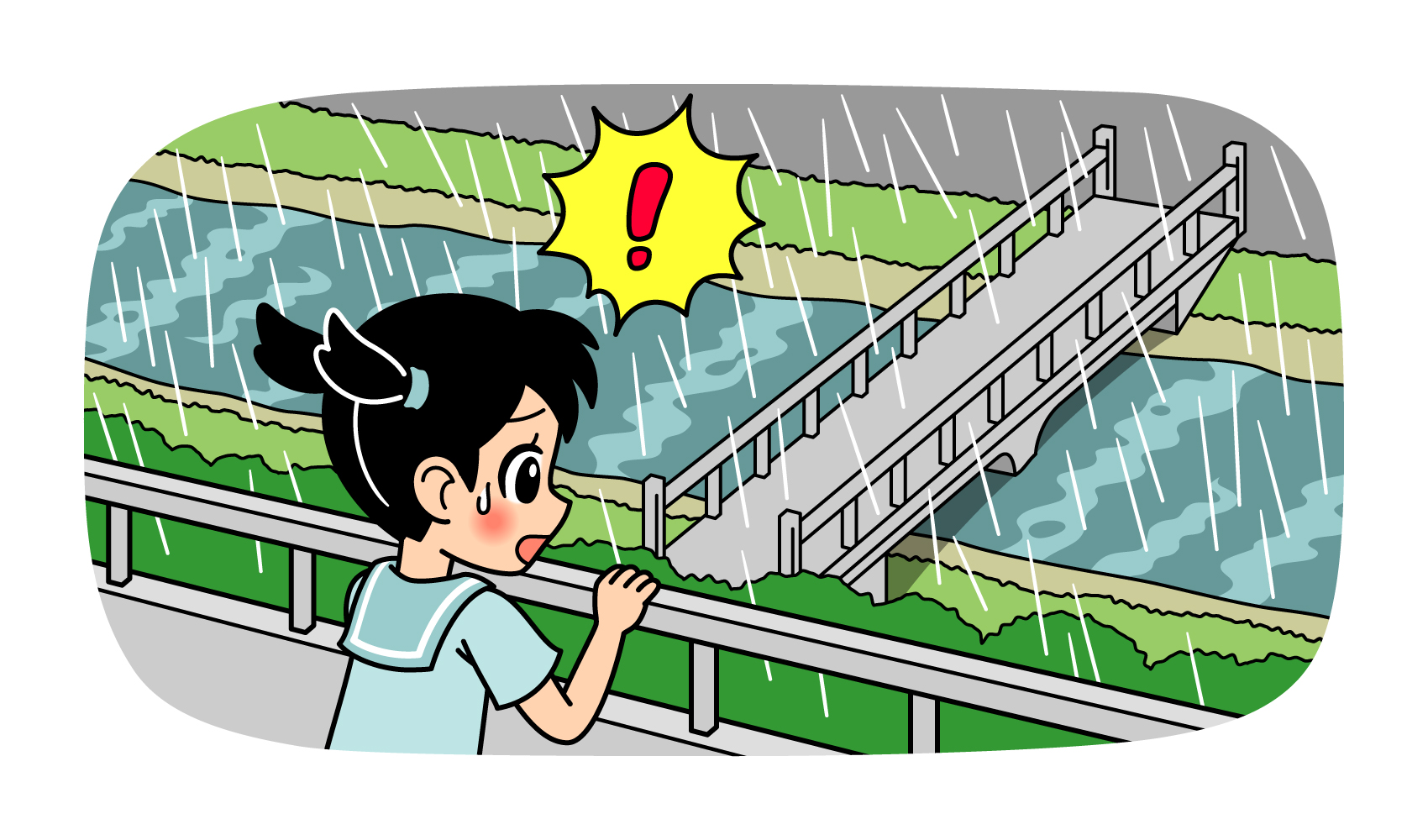
Japan has a rainy season, the rainy season, but it is not only during the rainy season that rain-related disasters occur. In summer, there are often sudden heavy rains called "guerrilla downpours," and typhoons also come during the summer and early fall. Heavy rains cause rivers to rise and sometimes overflow. If the city is flooded, your homes, cars, and other property, as well as your life, are at risk. Here is a summary of how rivers rise and overflow, and what to watch out for during heavy rain.
Related Article "Why do evening showers occur? What is the difference from a guerrilla downpour?"
There are two types of "flooding" in which a river overflows
When water overflows from a river, it is called "flooding. Inundation can be divided into two main types, depending on the mechanism by which the water overflows.
One is called "open water flooding. This is caused by "overtopping," in which the water level exceeds the height of the levees due to the continuous increase of river water, or "breakage," in which the levees break under the pressure of the river water and overflow due to flooding. When an outflow flood occurs, houses and fields around the river are inundated over a wide area. Typical examples are the flooding of the Kinugawa River due to the heavy rains in the Kanto and Tohoku regions in 2015 and the flooding of the Kuma River due to the torrential rains in July 2020.
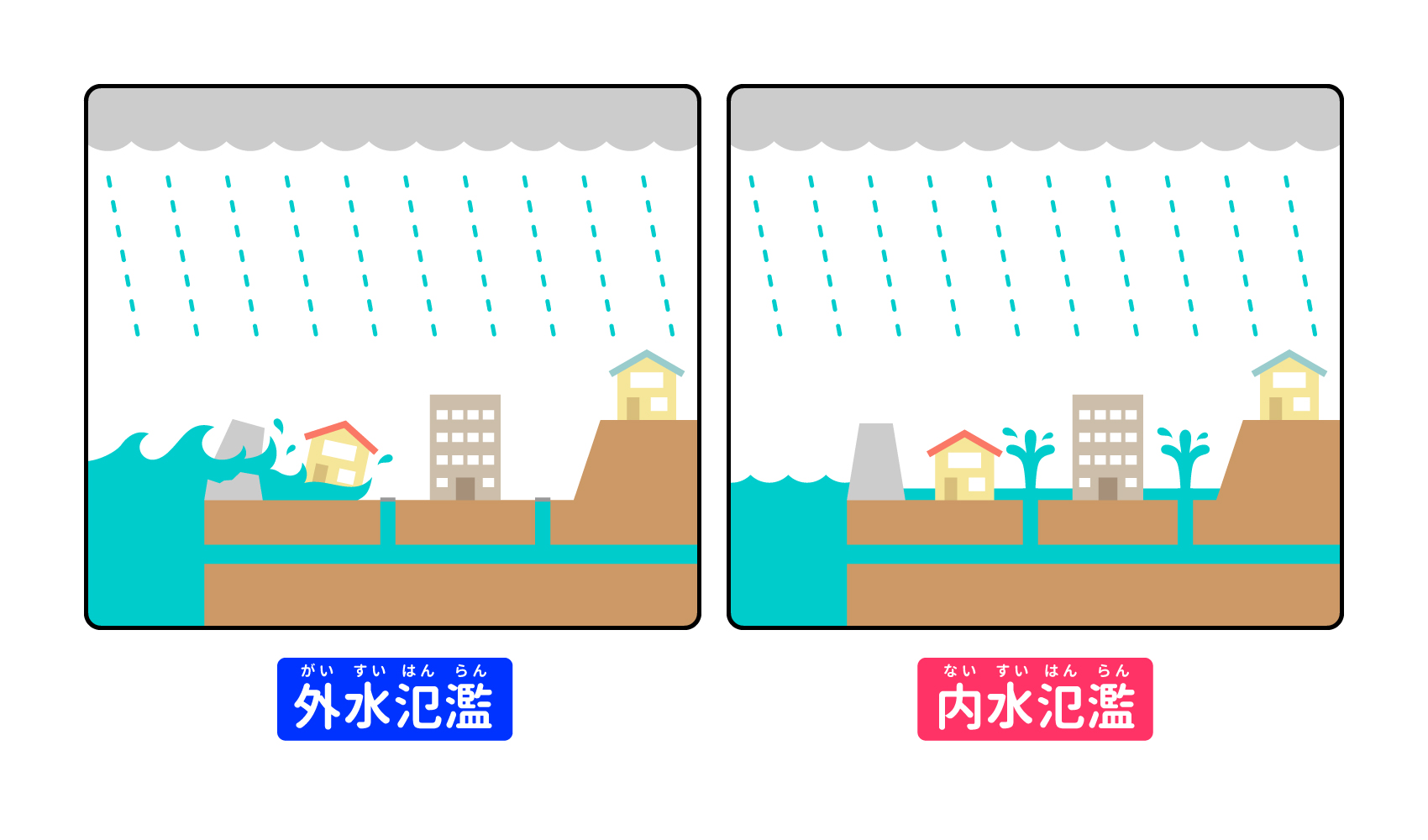
The other type of flooding is called "internal flooding. Rainwater is routinely discharged into rivers through sewers and drainage channels, but heavy rainfall can cause the drainage to be inadequate. For example, if the water level of the river is higher than the location of the drainage outlet to the river, rainfall in the city will not flow into the river properly. Also, if heavy rainfall occurs in a short period of time, the speed at which water is discharged from sewers and drains will not be able to keep up. When water overflows into drains and manholes in the city instead of flowing into the river itself, this is called internal flooding. Inundation due to internal flooding is especially likely to occur in urban areas; the flooding of the lower reaches of the Tama River in Typhoon No. 19 in 2019 and the flooding in Akita City in July 2023 are typical examples of internal flooding.
How to Save Lives When Heavy Rain Falls
First, can you act to avoid danger when it rains heavily? Take the survival quiz to help you reach your goal without choosing the wrong answer. Following the quiz, we have compiled a list of things to watch out for during heavy rain, so you can make sure you are aware of the dangers.
Hazard maps prepared by local governments indicate areas at high risk of flooding due to heavy rainfall. If you live in a flood-prone area shown on a hazard map, the best thing to do in the event of heavy rain is to evacuate to a shelter before the situation becomes dangerous, such as an actual flooding. However, if the city is already under water and it is dangerous to go outside or move around, you should evacuate vertically, moving to the second floor or higher of a building such as your house.
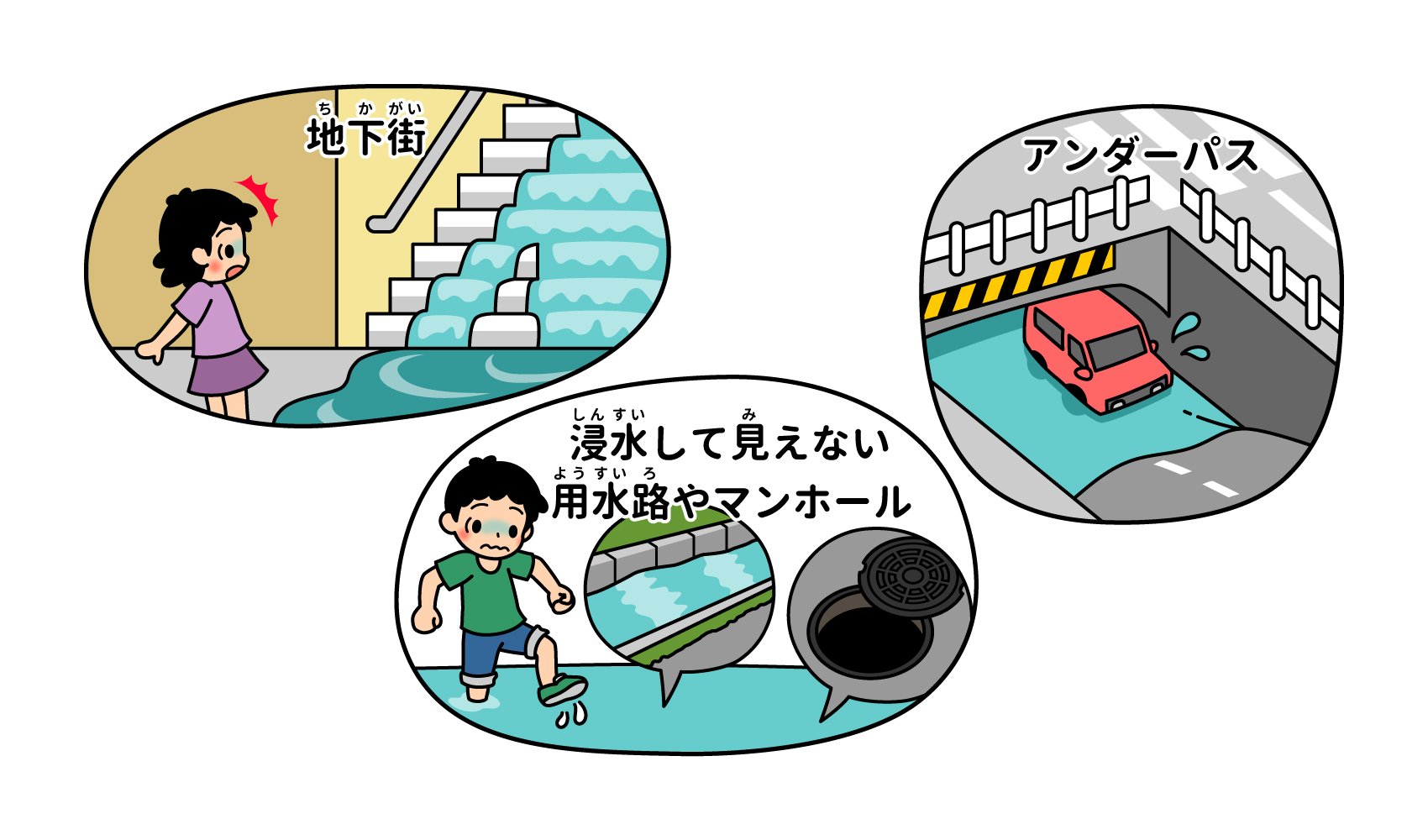
A surprising pitfall is the underground mall. Not only is it difficult to notice when it is raining underground, but the water that accumulates on the street surface will also flow underground and cause flooding. In the event of a sudden heavy rainfall, be sure to get out of the building as soon as possible.
Another place to watch out for during heavy rains is a place called an "underpass". These are places where roads go under to intersect with railroad tracks or roads, and they quickly fill with water during heavy rains. If you inadvertently drive your car into a water-filled underpass, your car will be stuck, and the water pressure from the accumulated water will make it impossible to escape from the car without opening the doors and windows. In the worst case, the car may drown. The locations of underpasses are also indicated on hazard maps, so please check with your family to identify underpasses in your neighborhood and avoid passing through them during heavy rain.
When it comes time for the roads and other areas to be covered with water, perhaps some of your friends may get excited and wonder if they can play in the water because the road looks like a river. However, it is very dangerous and you should never go out there. For example, it is difficult to tell the difference between an irrigation canal and a road, and if you accidentally fall into an irrigation canal, you will be swept away. Even where there is no irrigation canal, you might fall into a manhole hole. When it rains heavily, a sudden influx of water into the sewers crushes the air in the pipes and increases the pressure, causing the manhole lids to open. In addition, water overflowing from sewage pipes is dirty, and if you are injured, bacteria can enter through the wounds and you may contract an infection.
Usually a small river can be tricky.
Large rivers have a lot of water, so it is easy to imagine that they might be dangerous if it rains heavily. On the other hand, it is easy to think that a small river flowing through the city will be somewhat safe. However, even if they are usually streams, they can suddenly swell when heavy rain falls. For example, in 2008, the Tsuga River, which flows through Kobe City, rose 1.34 meters in 10 minutes, and five people were swept away. Even if it is not raining where you are, water levels can rise suddenly if there is heavy rain upstream. Check the weather forecast and leave the river as soon as you hear the revolving light that warns of the danger of flooding near the river. Even if there is no revolving light, be sensitive to signs of rising water, such as muddy water, and leave the river immediately if it looks dangerous. If you are near the river and it starts to rain, never take shelter from the rain under a bridge. It is easy to get swept away by a swollen river.
During the warmer months, you may often camp or barbecue by the river and play in it while you are at it. However, the water can suddenly rise and become dangerous due to guerrilla downpours upstream. Be sure to wear a life jacket when entering the river. Please take all possible safety measures to enjoy playing in the river.
Related article: "Why Do They Happen? Water Accidents: A Pictorial Guide to Ocean and River Risks" (Japanese only)
Text/Akiko Imai