





Why does the spring sky look hazy and white? Is it true that yellow sand and pollen have something to do with it?
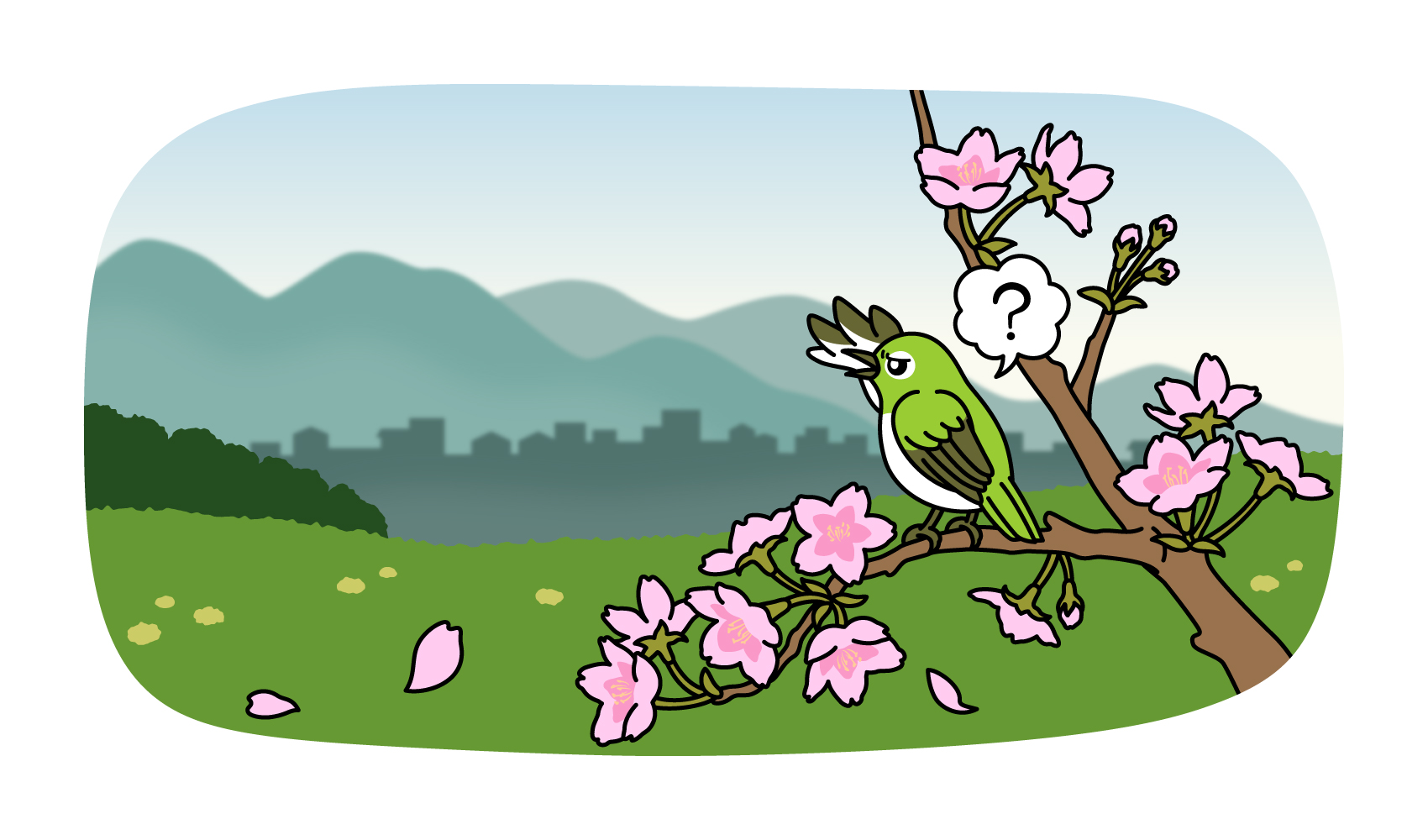
Have you ever felt that the mountains in the distance, which you could see clearly on a clear winter day, are somehow different and difficult to see in spring? The sky is clear, but the air is somehow hazy, and the color of the sky is whitish and indistinct. This is not just your imagination. In spring, the amount of impurities in the air, such as yellow sand and pollen, increases compared to winter, and this causes the scenery to become whitish and hazy.
Large impurities in the air scatter light all at once
The hazy spring air is called "spring haze," and despite its beautiful sound, it is not a pretty sight.
During the course of the year, spring and fall are about the same in temperature, but the sky is a different color. Autumn is known as "autumn when the sky is blue and the horses are fattened up," and the sky seems to be bright blue and high. This is because the air in autumn is cleaner and purer than in spring.
So why does the sky look hazy and white in spring? It is because the sun's rays appear white when they collide with and scatter larger impurities in the air. These impurities in the air include dust from the soil, pollen from cedar trees and other plants, and yellow dust carried by westerly winds from the continent.
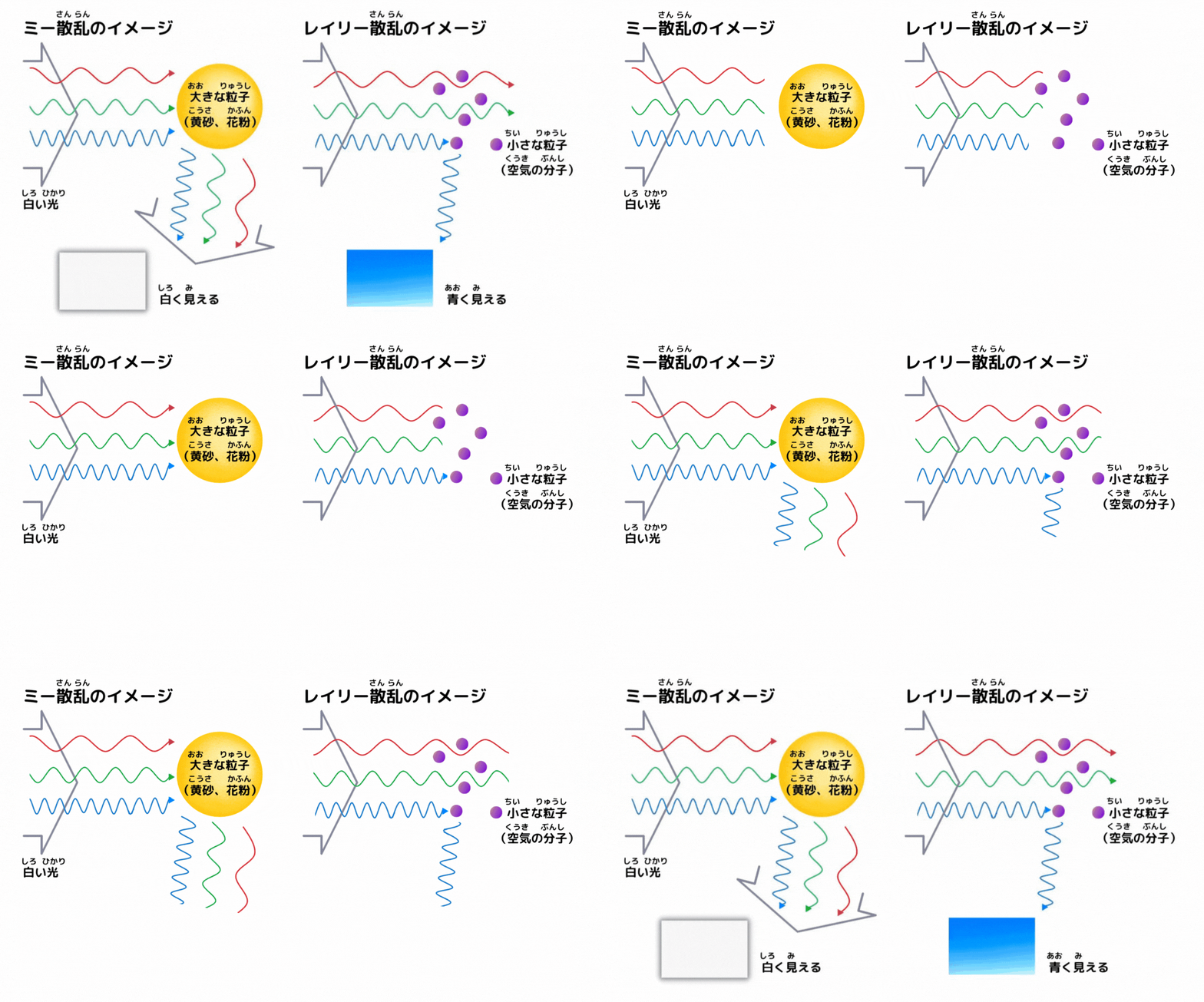
Sunlight appears white when various colors come together. Each of the various colors of sunlight has a different wavelength. When blue, which has a shorter wavelength, collides with nitrogen, oxygen, and other molecules that make up the air, it is strongly scattered and spreads out to many places. This phenomenon of light is called "scattering," and the scattering makes the daytime sky appear blue and the morning and evening skies appear red. This scattering that makes the sky appear blue or red is called Rayleigh scattering.
Related LinksWhy is the sky blue?
And when the sun's light hits a larger impurity, all wavelengths are scattered at once. When all wavelengths are scattered, the light entering the eye appears white. This is called "Mie scattering. Dust, sand, and plant pollen floating in the air in spring are larger than oxygen and nitrogen molecules, so they cause Mie scattering instead of Rayleigh scattering. This is why the sky becomes whitish.
The white appearance of clouds is also due to the Mie scattering mechanism. Cloud particles are small particles of water or ice. These are originally colorless and transparent, but they appear white when sunlight causes Mie scattering. Another familiar example is the whiteness of milk. Milk appears white to our eyes because of Mie scattering caused by light hitting the water-insoluble proteins and milk fat particles in the milk.
Related LinksWhy is milk white?
Let's try an experiment.
You can do an experiment that allows you to see Mie and Rayleigh scattering using familiar objects.
What to prepare
2L PET bottle *1.5L is also OK. The less uneven the bottom part of the bottle is, the better it looks.
5~8ml of milk (about 1 capful of PET bottle cap)
Floor wax 5~8ml *About 1 capful of plastic bottle cap
Smartphone light *White LED light is also OK
Experimental Procedure
1) Mix water, milk, water and floor wax in a PET bottle.
2) Hold the PET bottle vertically and illuminate it with a cell phone light from the bottom.
Observe how the PET bottle appears to glow.Does the milk mixture look whitish overall, while the floor wax mixture looks bluish near the light and reddish far from the light? This is because the particles of the milk component are large and undergo Mie scattering, while the particles of the floor wax are small and undergo Rayleigh scattering.
Text/Akiko Imai