





Why does my tummy hurt?
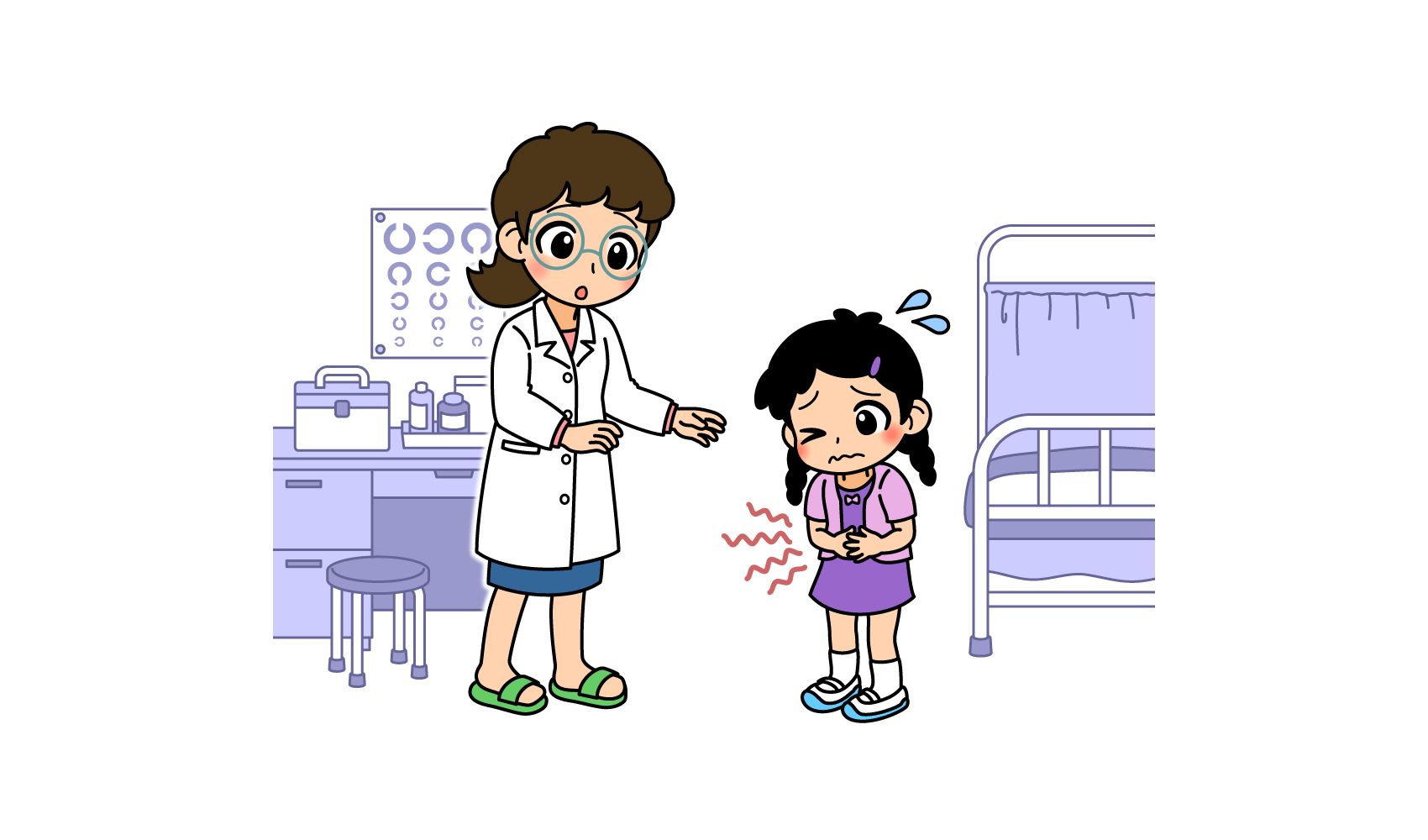
Answer: It can be caused by internal organs or by irritation of the nerves in the peritoneum.
Tummy pain (abdominal pain) is a common symptom in children. The size and manner of the pain may vary from time to time, and even if it subsides quickly, it may cause anxiety. It may be helpful to know what kind of abdominal pain there is and what to watch out for.
Abdominal pain can be divided into three main categories: visceral pain, somatic pain, and related pain.1) The first, visceral pain, is pain felt through visceral nerves when the digestive tract stretches, contracts, or spasms; the second, somatic pain, is caused by irritation of sensory nerves in the peritoneum, mesentery (membrane surrounding and supporting the small intestine), diaphragm, or other organs. The second, somatic pain, is caused by stimulation of the sensory nerves that pass through the peritoneum, mesentery (the membrane surrounding and supporting the small intestine), and diaphragm. The third, associated pain, is caused by an abnormality in a location distant from the abdomen.
Visceral pain is characterized by a vague ache over the entire abdomen. The pain often comes and goes in a steady rhythm. For example, pain during diarrhea is an internal organ pain.
Somatic pain, on the other hand, has a well-defined area of pain and is followed by a sharp pain. It can also run suddenly and cause pain in the side of the body, appendicitis Appendicitis is also a somatic pain. In the case of appendicitis, the pain begins in the stomach area, then gradually increases around the appendix, and finally becomes a piercing pain. This is because visceral pain occurs first, followed by somatic pain.
The third type of pain is related pain, in which pain in an organ is transmitted to the spinal nerves and causes pain in the skin or other parts of the body that are different from the organ's location. The pain is caused by an abnormality in a distant location, but the cause can be estimated because the general relationship between the pain in this location and the organ is known.
As described above, there are three types of abdominal pain, but it is dangerous for those who do not have medical knowledge to judge the cause or severity of abdominal pain, as it may mask an unexpected disease. It is dangerous for those who do not have medical knowledge to judge the cause or severity of abdominal pain.
When you visit a clinic or hospital, you will be asked the following questions2)
- How long has it been painful (e.g., since last night's dinner, since this morning)?
- Does the pain change (e.g., pain after eating, pain every 30 minutes)
- Which location is painful (e.g., overall, in the area of the solar plexus, lower right)
- How it hurts (e.g., throbbing, prickling, stinging)
- Are there any other symptoms (e.g., diarrhea, flakiness, fever)?
- Other (e.g., medications you are taking, allergies, previous illnesses or injuries)
It may be difficult to communicate well when you have a tummy ache, but having this information will make your medical examination easier. It would be nice if you could explain it with the help of someone at home.
Article updated: April 2023
reference data
1) Daiko Pharmaceutical Co. Tummy Troubleshooting Room: Types of Abdominal Pain:
https://www.seirogan.co.jp/fun/stomach/stomachache02.html
2) Hiroshima Prefectural Medical Association booklet. 2) Hiroshima Prefectural Medical Association booklet, "Points to know about 'abdominal pain' (stomachache):
Supervisor: Mitsuharu Oyama

Born in Tokyo in 1957. Completed a master's degree at Tokyo Institute of Technology. After working as a physics teacher at a high school, a chief instructor at Chiba Prefectural Board of Education, and principal of Chiba Prefectural Chousei High School, he is currently a professor at Shumei University School Teachers' College, where he teaches lectures and exercises on teaching methods for "Science and Mathematics Exploration" and "Integrated Learning Time". He has appeared in many science experiment classes and TV experiment programs. He is also a project advisor for the Chiba City Science Museum, an executive director of the Japanese Society of Physics Education, a member of the Japanese Society for Science Education and the Japanese Society for Science Education, and a member of the editorial board of the monthly magazine "Science Education.