





How do rivers form and flow?
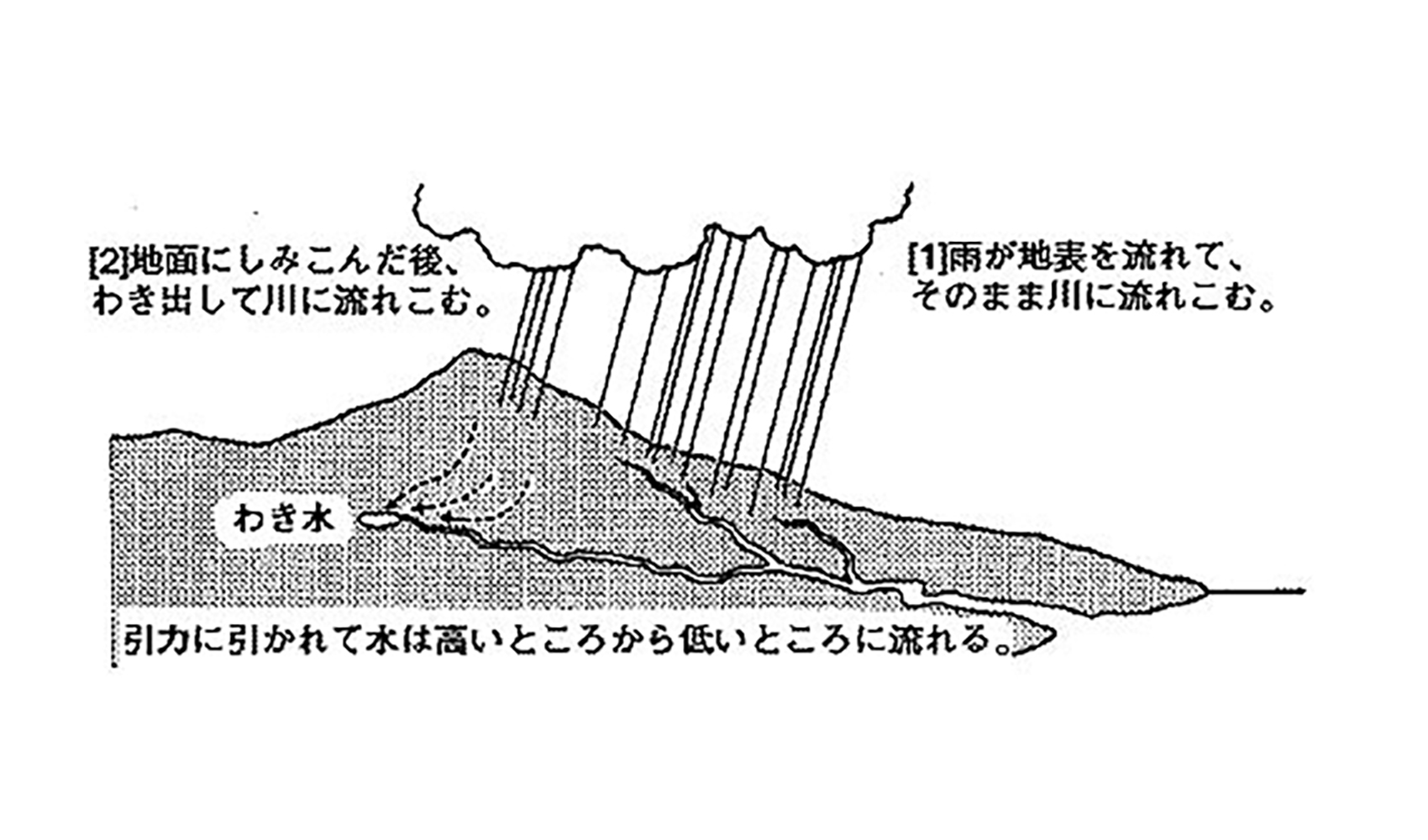
River water is water that originally fell to the ground as rain or snow.
Rain and snow falling from the sky flows into rivers in two different ways. The other is water that has soaked into the soil, but flows out to the ground again and flows into the river. The other is water that once soaked into the soil and flows out again into the ground, which then flows into the river.
When it rains or for a while after it rains, the first course, in which water flows directly over the soil and into the river, is most common. However, when sunny days continue for a while, the latter course is for runoff water from underground to flow into the river.
The water that seeps into the soil accumulates between the rocks and sand in the soil and becomes groundwater. Then, little by little, over time, it comes out of the ground. Therefore, river water does not disappear unless there is a long stretch of sunny days.
The reason why water gathered in rivers in this way always flows is due to the gravitational pull of the earth. The water in the river continues to flow from a higher place to a lower place due to the force of gravity.