





Why are snowflakes hexagonal?
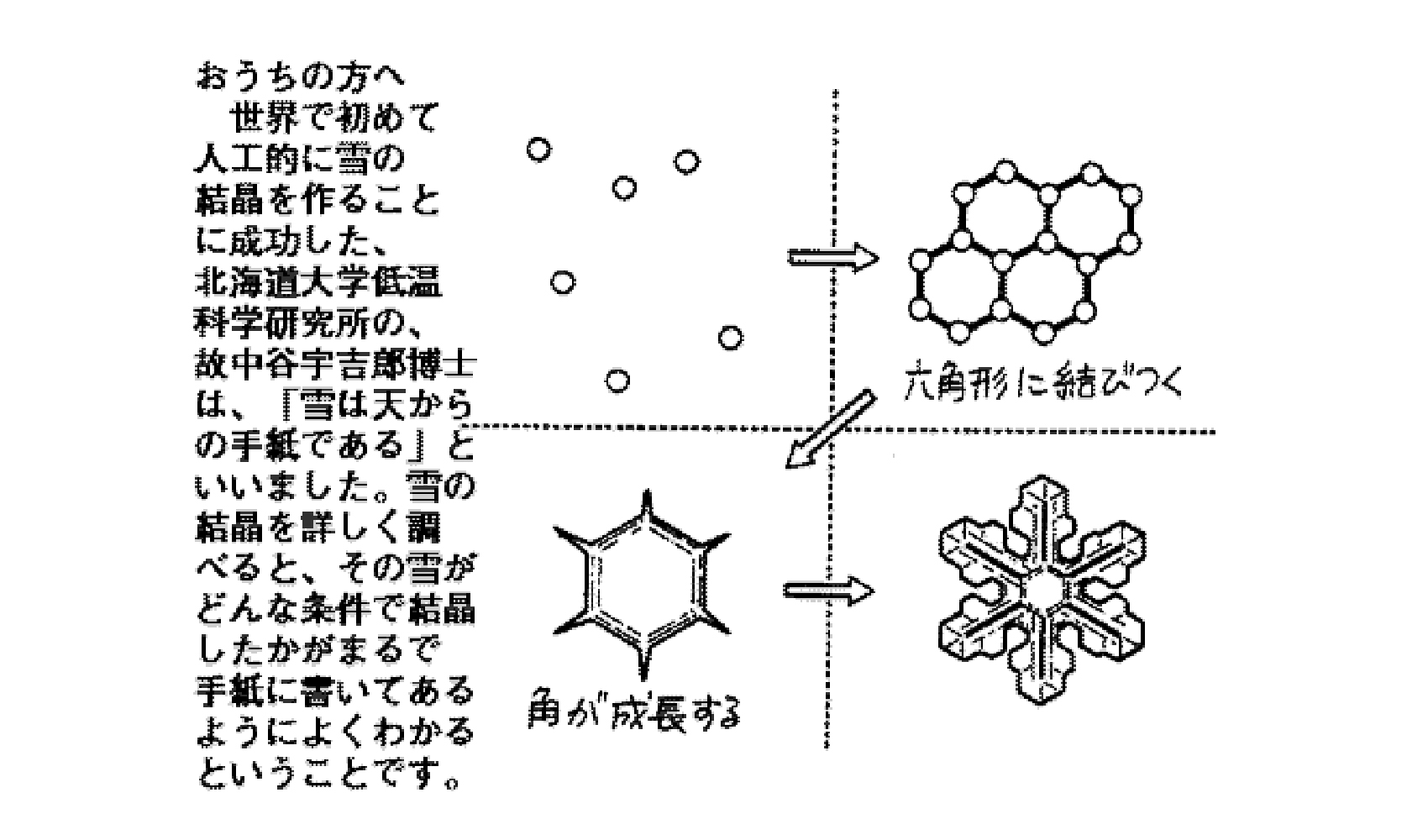
The small particles, called ice molecules, are hexagonal in shape.
Thus, when water cocoons in the air, the first thing that happens is a hexagon.
First, a snowflake is formed on the sky. Of course, it is a hexagonal block of ice. Water vapor in the air sticks to the corners of these hexagons. The water vapor in the air sticks to the corners of these hexagons, and the snowflakes get bigger and bigger as they stick and stick.
The reason why they stick to the corners is that water vapor tends to stick to the corners and edges. This is why snowflakes are flat and spread out horizontally. This is why the snowflakes are flat and spread out horizontally, and why snow falls on the ground where we are.