





Why do cartoon pictures move?
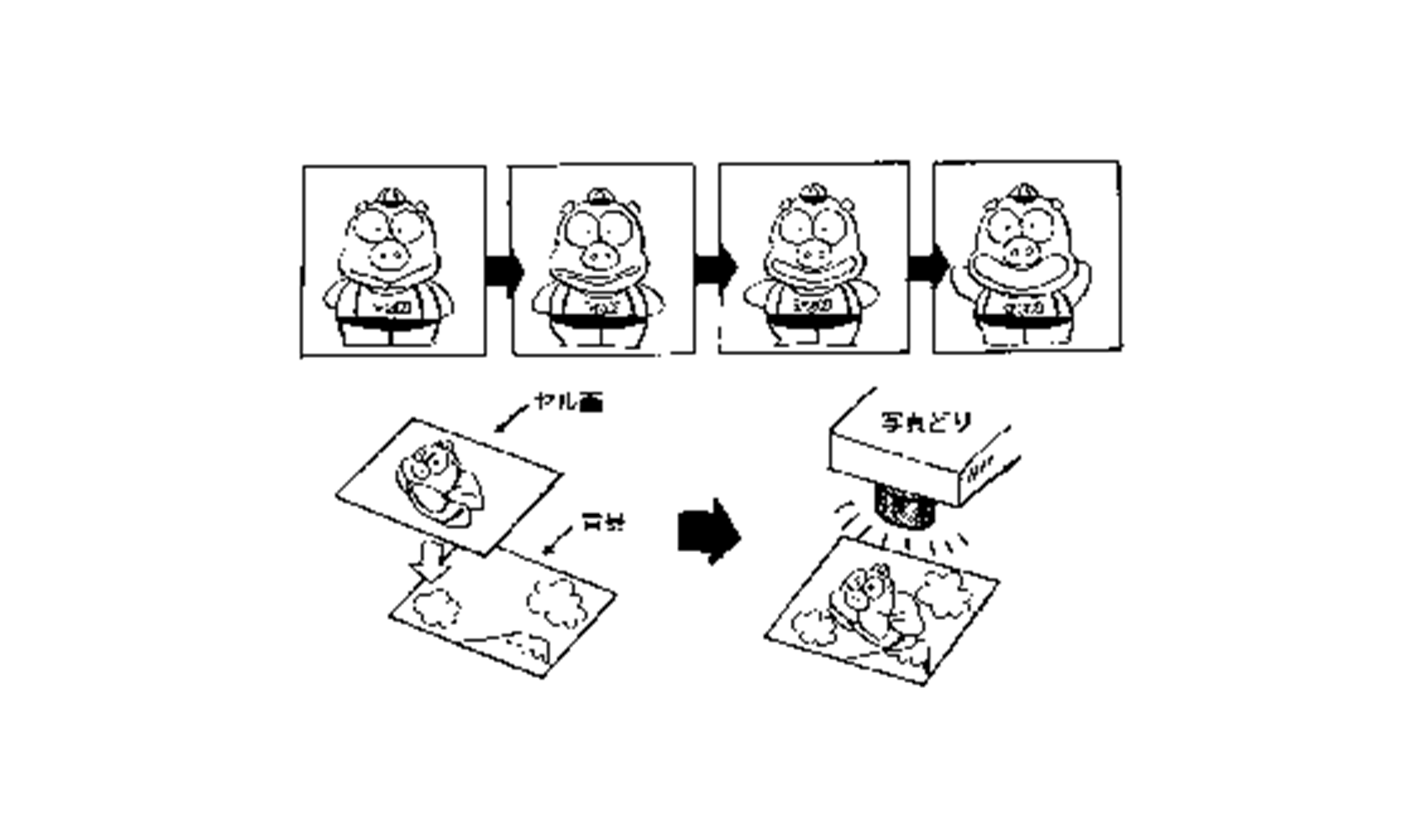
There is a simple way to experiment to find out why animated pictures move. First, draw a 1cm stick vertically on the edge of a notebook or a book where the page number is written. Next, turn the page and draw the stick slightly away from the page.
On the next page, the bars are drawn a little more crookedly than on the previous page. In this way, you will use at least 20 pages to draw the bars from vertical to horizontal, gradually moving them apart. When you are finished, pick up the edge of the page and flip it over.
Perhaps the bars will appear to move as if from vertical to horizontal. The principle of moving pictures in a cartoon is almost the same as in this experiment. In a cartoon, one second of movement is divided into 18 to 24 pictures. If you take the pictures in order, one at a time, and show them in fast motion at the end, they will appear to move.
However, since 24 pictures are needed per second, for example, more than 20,000 pictures must be drawn to run a 15-minute animation.
Recently, I do not draw all of the pictures one by one, but separate the background into two parts: the background into two parts, and the moving figures into two parts. The moving figures are drawn on a transparent surface called a cell, and then superimposed on the background. This saves a lot of time and effort. However, the same thing still has to be done with a large number of pictures. It is very hard work to make an animation.