





What is yarn made of and how is it made?
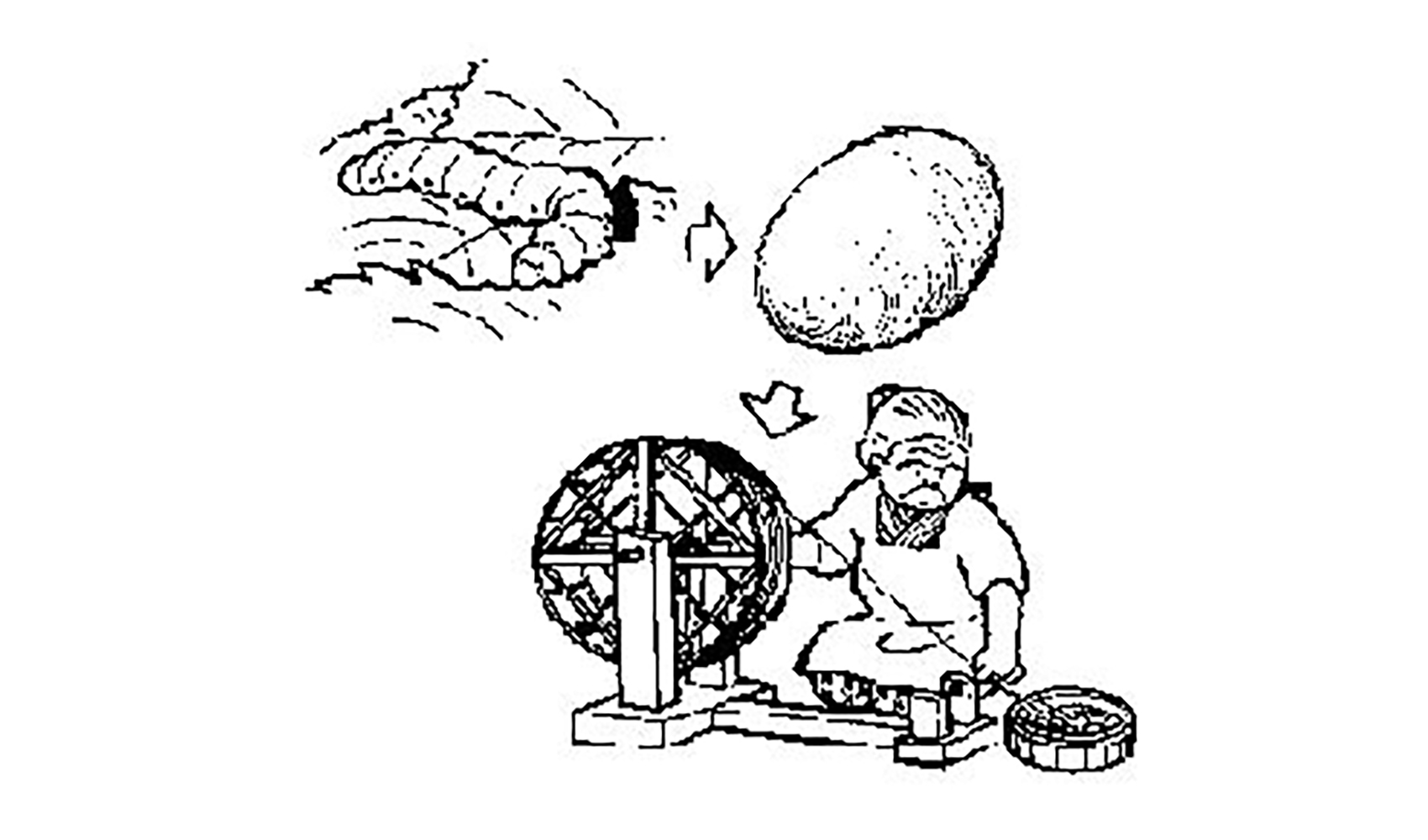
There are many raw materials from which to make yarn. In any case, yarn can be made from anything as long as it is a fine fiber.
Fibers can be broadly divided into two groups. One is the "natural fiber" group, which is made from natural materials such as wool, hemp, silk, and cotton. The other group is "synthetic fibers," such as nylon and Tetoron, which are chemically produced by human modification.
Natural fibers are characterized by the short length of each fiber. They are also very thin, so a single fiber alone cannot be used as a thread. Therefore, several fibers are gathered into a single strand and twisted together. Nowadays, these operations are performed by machines, but in the past, they were all done by hand.
Synthetic fibers are made by first melting the raw material, which is the base of the fiber, and then blowing it out through a small hole. First, thin man-made fibers are created. After that, the process is almost the same as for natural fibers, using a machine to knit the yarns together to make a single long strand.
Although there are differences in the raw materials used for both natural and synthetic fibers, the process of twisting the fibers is the same.
For your home
Cotton is made from the fine fibers of the cotton plant, hemp from its stalks, silk from cocoon fibers produced by silkworms, and wool from sheep's wool.