





How can sound come from a cassette tape? How can it be recorded?
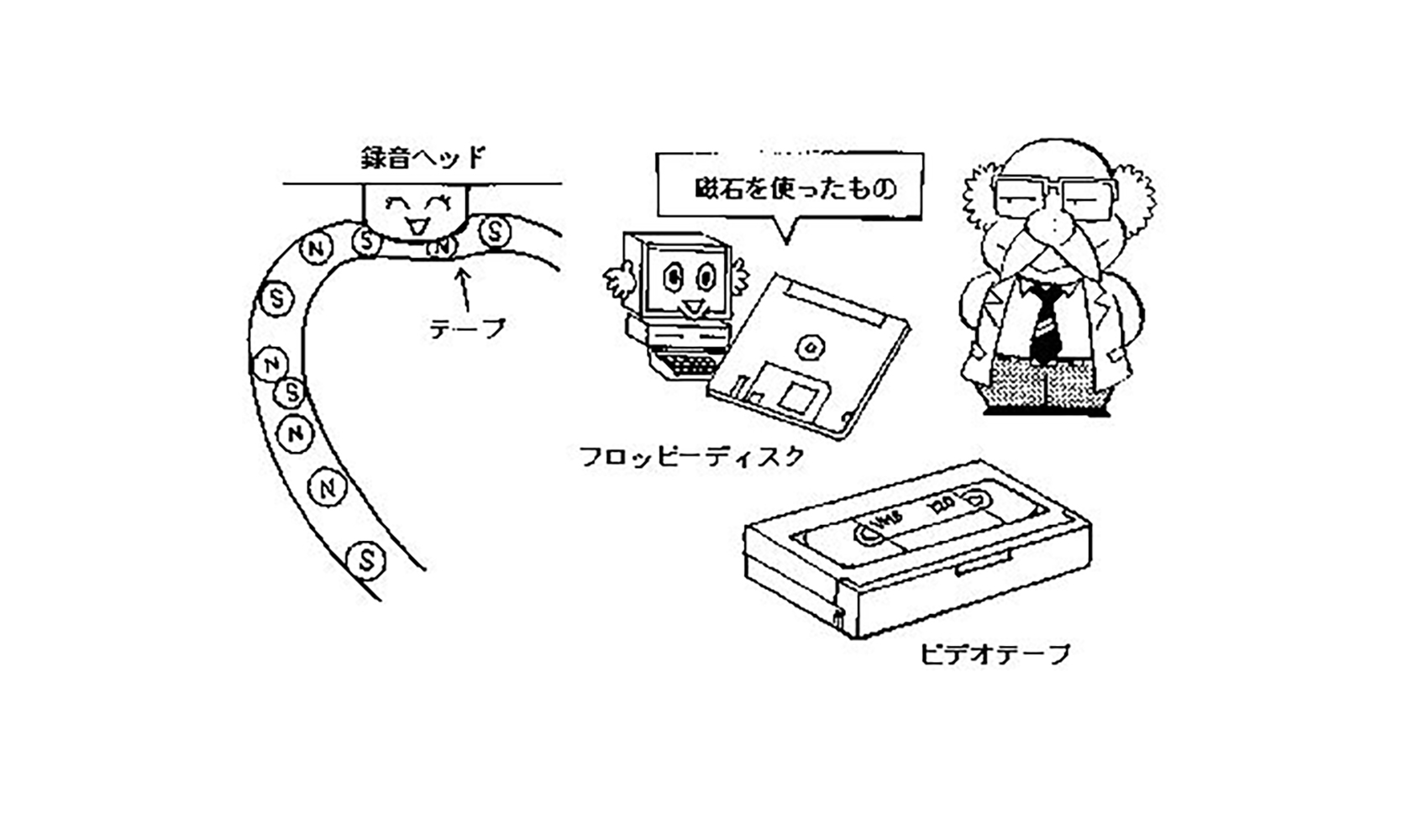
The sound produced by a cassette tape is based on the action of the S and N poles of a magnet.
The brown tape surface of a cassette tape is coated with a magnetic powder that acts like a magnet. When a tape with this magnetic material is put into a cassette and played into a tape recorder, it is possible to make a recording and listen to the recorded sound again.
The reason why this is possible is actually quite complicated, but let me explain it simply.
First, when recording sound, a tape recorder converts the sound signal coming in from the microphone into an electrical signal, and this signal is transmitted to a recording head. The recording head is a small electromagnet that is in contact with the tape, in other words, it is a magnet that works by electrical force. The recording head converts the electrical signals into magnetic N and S signals that correspond to the changes in sound. The magnetic signals are then recorded on the tape.
Although invisible to the eye, the surface of the tape contains many magnetic N and S signals.
When the tape is rewound and the cassette is moved again, the recording head begins to work as a playback head to produce sound, and the N and S magnet signals on the tape are replaced by electrical signals.
The N and S magnetic signals on the tape are converted to electrical signals, which pass through a machine called an amplifier to the speaker, where they are instantly converted back to the original sound.