





What's going on inside the TV?
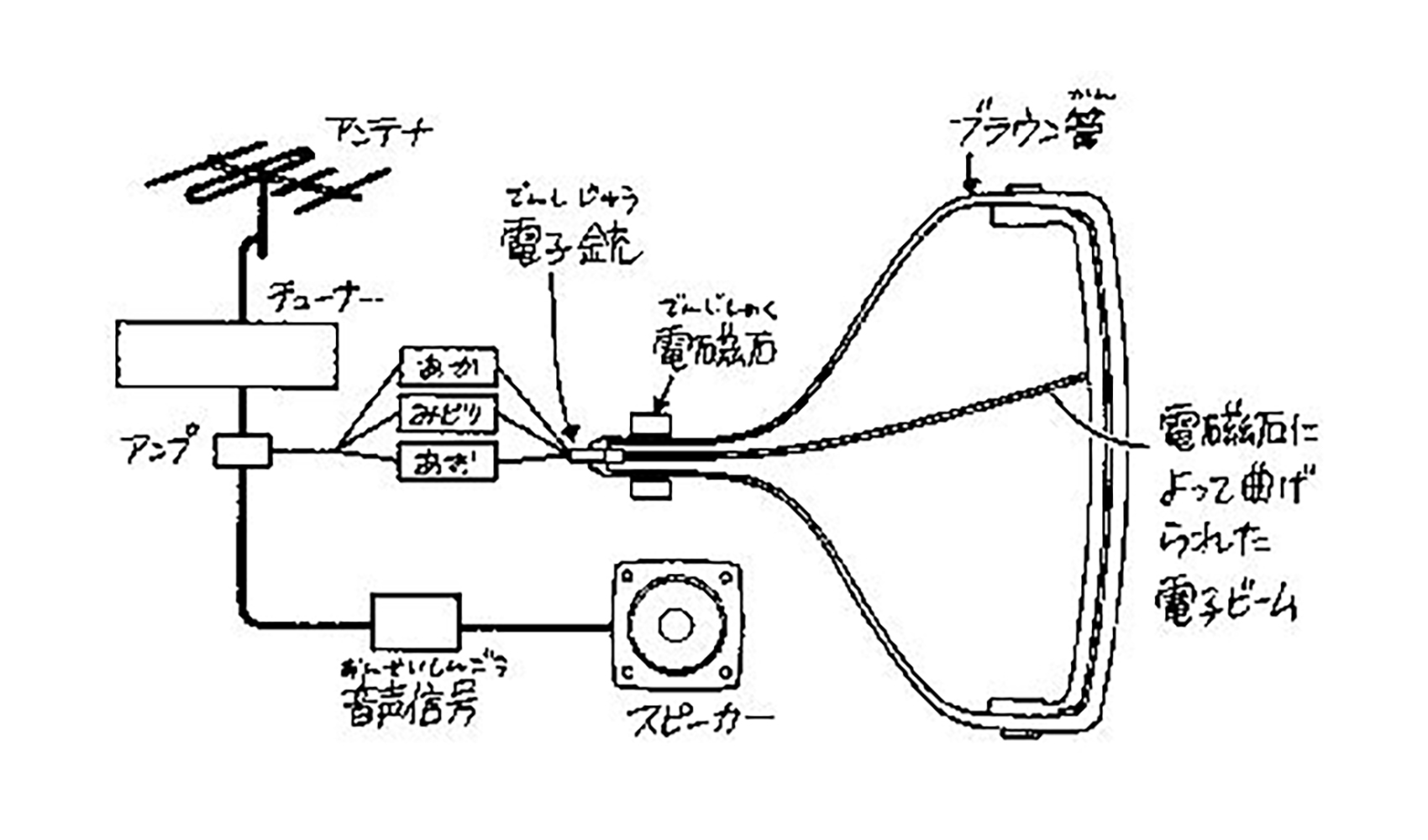
Inside the TV box is a large glass jar.
This glass bottle is called a cathode-ray tube, and it is the largest and most important of all television components.
The cathode-ray tube is mounted toward the back of the TV as if it were a large, square glass jar with a bottom that is tipped down. In other words, the screen you are always looking at is the bottom part of the bottle. At the far end of the screen is a component called an electron gun. From here, tiny electrons are shot out toward the screen.
The back of the screen is coated with a special chemical that lights up when the electrons hit it.
The doughnut-shaped electromagnet that surrounds the cathode-ray tube is another essential component of the TV. These electromagnets change the direction of electrons to 525 lines, creating an image of light on the screen. This is the reason why the screen looks like a collection of lines when viewed through a magnifying glass.
In addition, the TV is made up of many other parts, such as parts that strengthen weak electrical signals captured by the antenna, parts related to channels, and parts that produce sound.
However, you should not touch or open the inside of a TV set to examine its interior. High-voltage electricity flows through the TV, so it is very dangerous if a person touches it.