





Why does radish become tough when it is grated?
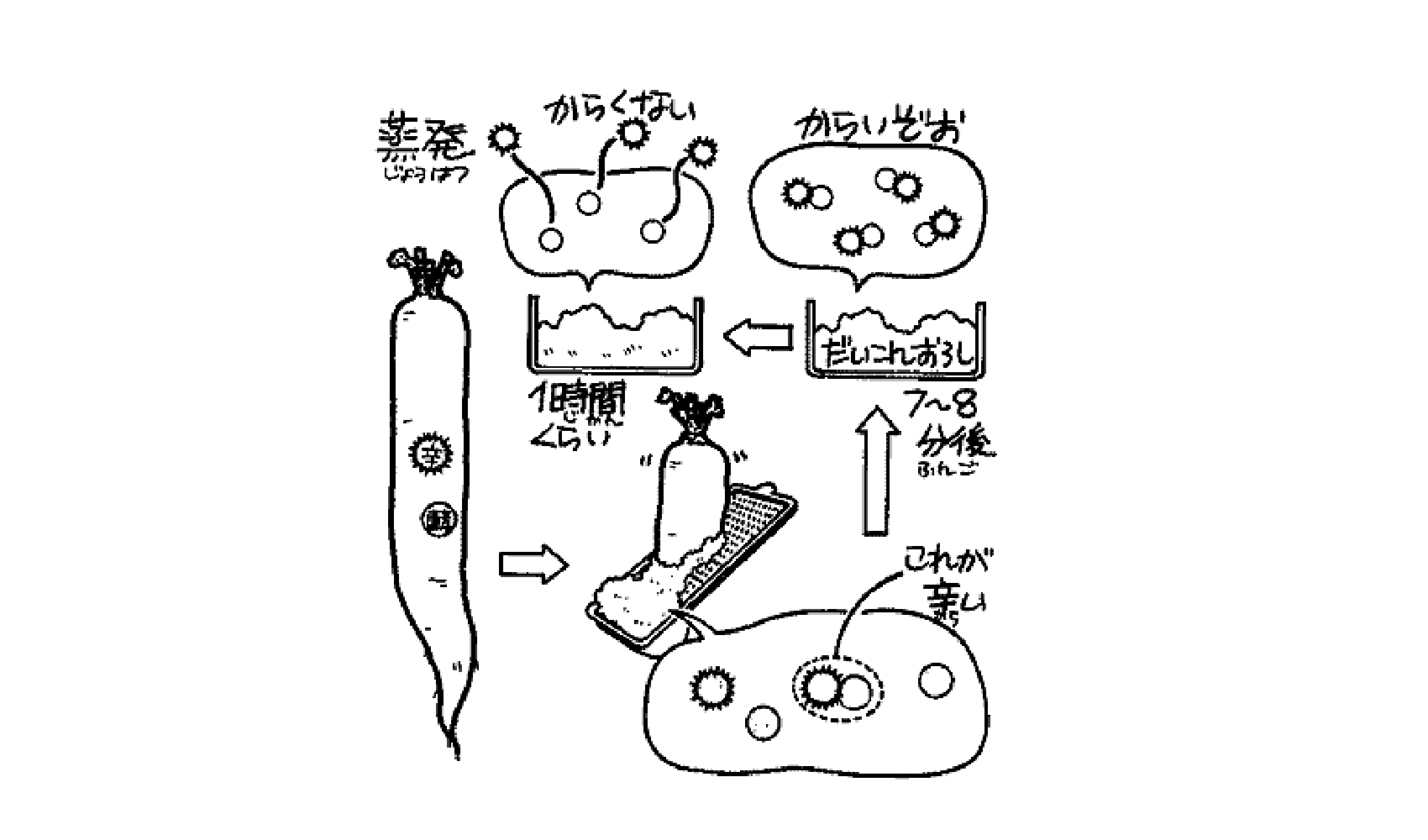
Daikon grated radish can be divided into shibori, shiru, and dregs, but it is the shiru that gives it its flavor.
When the shiru is inside the radish, it is not very salty. However, when it is grated, the tissue inside the radish is broken down, and a decomposing enzyme produces a component with a musty taste.
In other words, what was originally contained separately in the daikon is now combined with the grated daikon to produce a musty taste.
Therefore, radishes do not taste so bad as soon as they are grated. This is because it has not yet been transformed into something with a musty taste. However, after about 7 or 8 minutes of grating, a musty taste is gradually formed and the radish becomes musty. However, since this musty flavor component is very easily evaporated, it gradually evaporates, and after an hour, the musty flavor is completely gone.
This mustiness is also sensitive to heat. The reason why radishes in oden and nimono are not salty at all is because the salty flavor is destroyed by heat. On the contrary, the heat of the daikon produces a slightly sweet flavor component. This is the reason why oden radish is slightly sweet and tasty.