





You can forecast the weather, too! You can tell tomorrow's weather by looking at the sky!
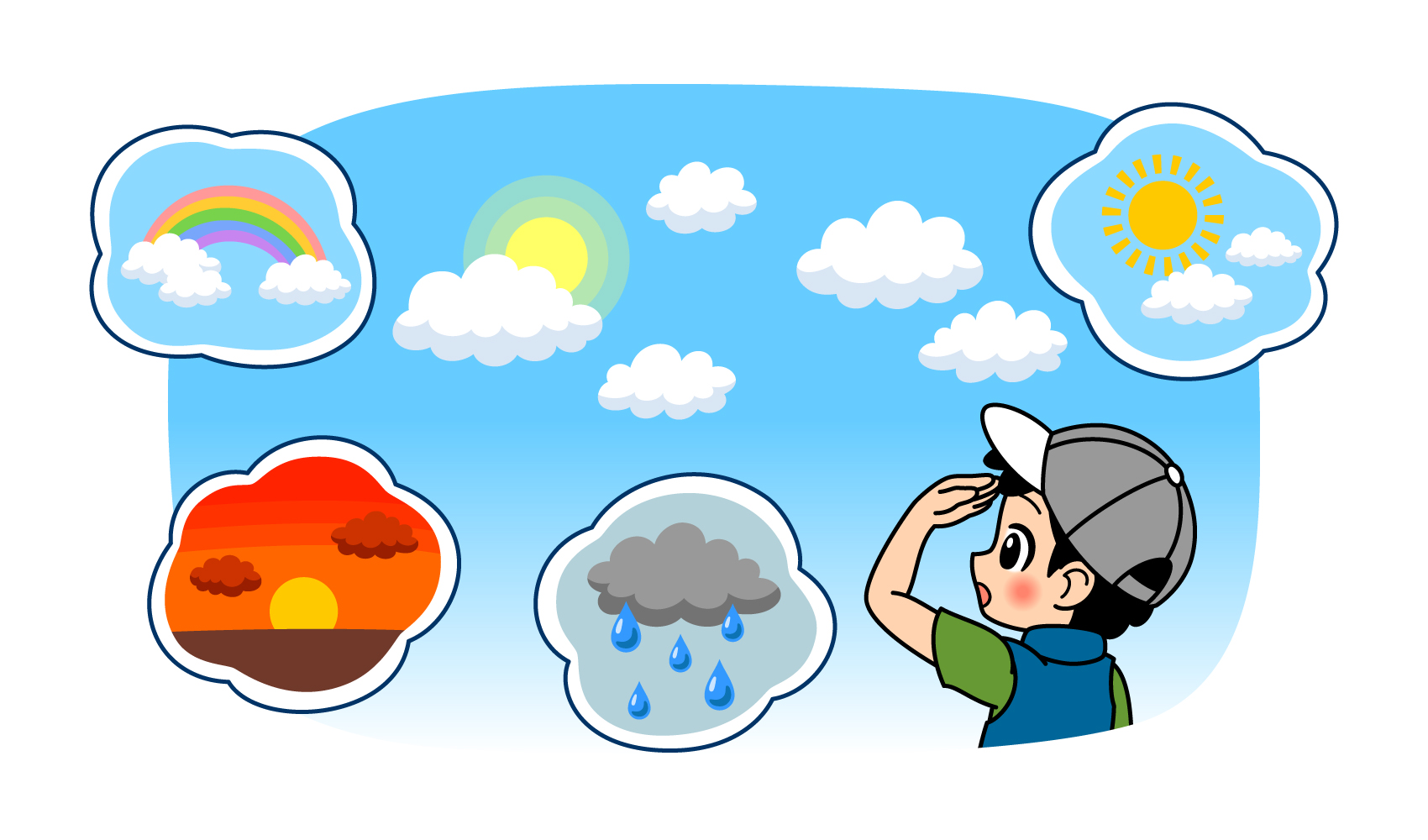
There are many legends about the weather in the world, such as "sunset means clear skies and sunrise means rain. Since ancient times, people have predicted the weather by looking at the sky. Some of these legends are unique to a particular region, such as, "If a cloud of this shape forms over Mt. 00, the weather will be stormy," and are still referred to by those who work with nature, such as farmers and fishermen. These legends are not false, and in fact, they can be explained with a sound scientific basis. Let us explain the mechanism of why this is so for some common lore.
Predicting how the weather will change by looking at the clouds in the sky, the direction of the wind, or the behavior of living creatures such as insects and birds is called "kanten-bouki. Since the age when scientific knowledge was not as developed as it is today, people made judgments based on their experiences and traditions.
Weather is downhill when the sun and moon are "bulky".
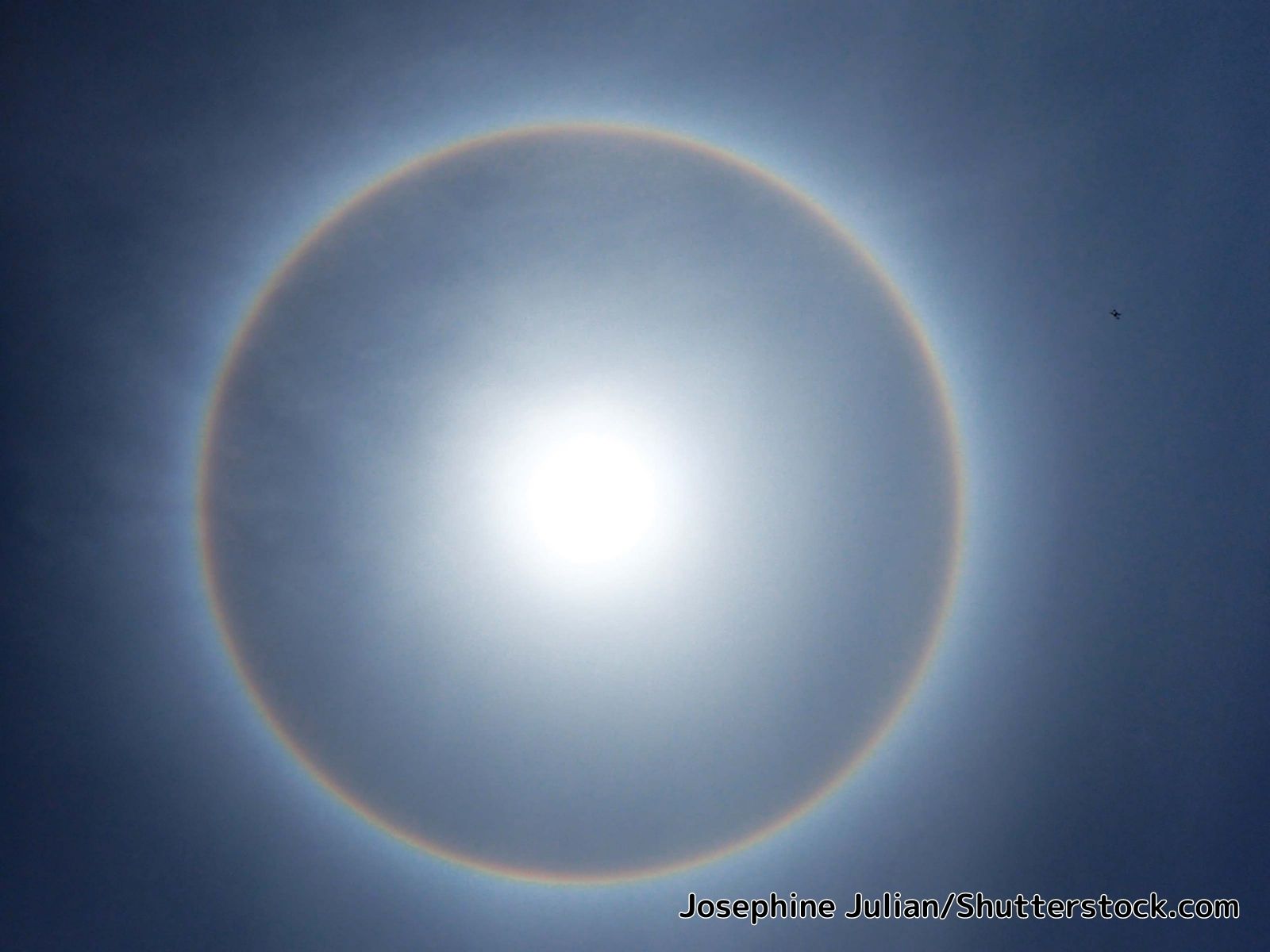
Sometimes a circle of light surrounds the sun or moon. This ring is called a "haze" or "halo. This appears when thin clouds are spreading in the sky. And these thin clouds appear when a low-pressure system is approaching. As the low approaches, these thin clouds gradually become thicker and thicker, and finally it rains. It usually rains about one or two days after the bulk of the clouds appear.
Note: Do not look directly at the sun!
If the airplane clouds don't disappear easily, the weather will go downhill

When an airplane is flying, sometimes there are airplane clouds coming out of the plane's butt. If this airplane cloud does not disappear immediately but remains in the sky forever, thick and blotchy, the weather is downhill. Airplane clouds form when water vapor from airplane exhaust turns into water or ice. The more water vapor in the air, the easier it is for airplane clouds to form and the harder they are to dissipate. In other words, when such a hard-to-disappear airplane cloud appears, it may rain a few days later.
When a cloud like a shade appears at the top of a mountain, it rains the next day
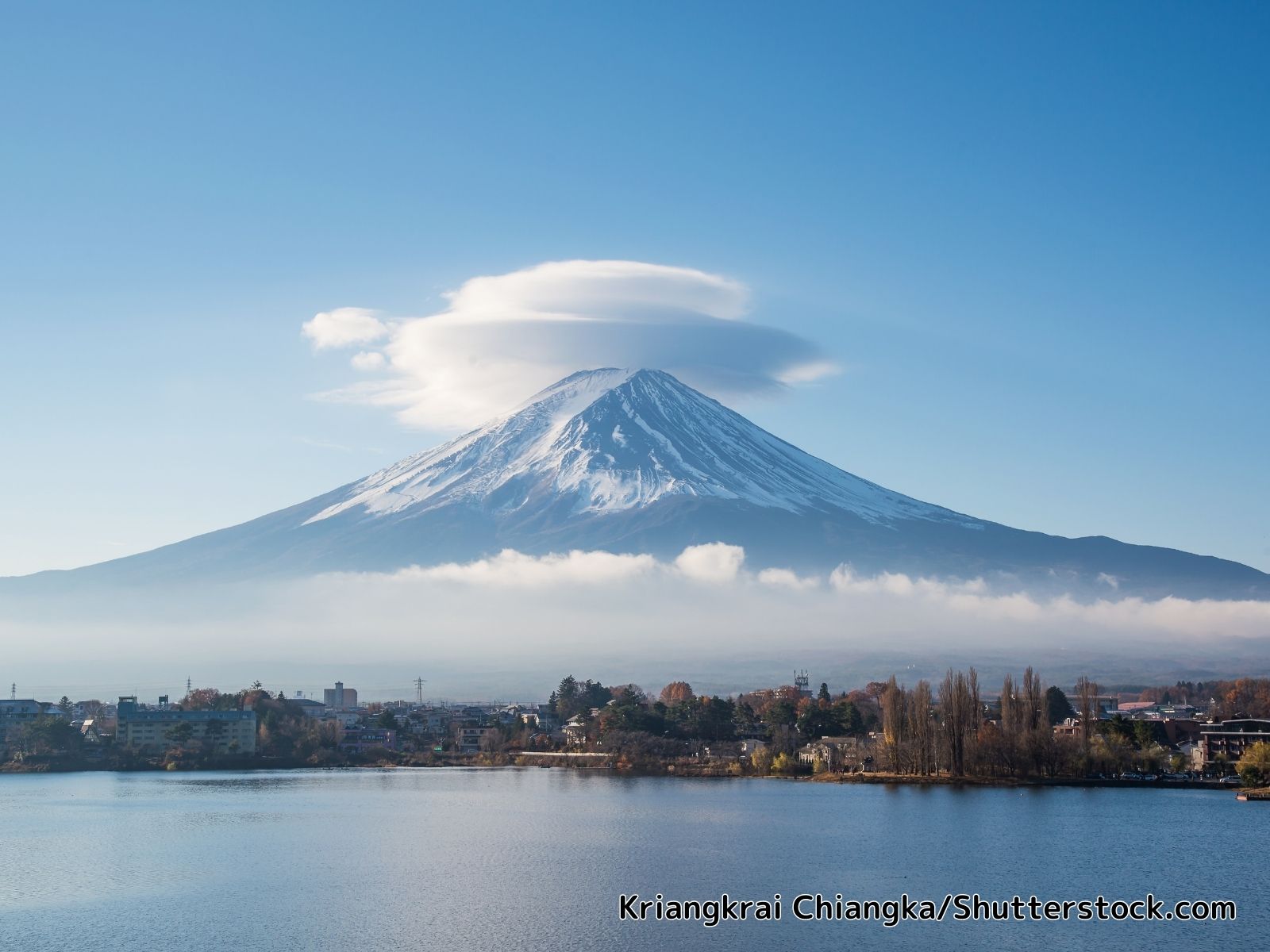
Clouds shaped like shades sometimes form on the tops of independent mountains, such as Mt. The shade-like shape is formed when moist air hits the mountain and forces it to rise, and the cloud disappears as the air descends over the mountain. When there is a low pressure system approaching the mountain and the moist wind blows constantly from it to the mountain, clouds are formed. Therefore, when you see clouds that look like shades on the tops of mountains, you can say that rain is approaching.
Sunsets are sunny and mornings are rainy (spring and fall)

This is a saying we hear often, but remember, "it depends". First, this saying is often true in spring and fall. In spring and fall, low pressure systems move from west to east. When you see a morning glow, it means that the sky in the east is clear, which also means that the next low pressure system is approaching from the west and the weather is about to go downhill. On the other hand, when sunset can be seen, the sky is clearer in the west, which means that the next day is more likely to be sunny.
However, you should pay attention to the color of the sky at sunset and sunrise. Sunsets can be orange, yellow, purple, or pink. If the sunset is orange, the next day will often be clear, but if the sunset sky is toxic red, perhaps the weather will be stormy the next day. The reason is that when there is a lot of water vapor in the air, the sun's red light is strongly scattered and turns bright red. When this happens, it is a sign that a typhoon or low-pressure system is approaching.
Text/Akiko Imai