





Why do evening showers occur? What is the difference from a guerrilla downpour?
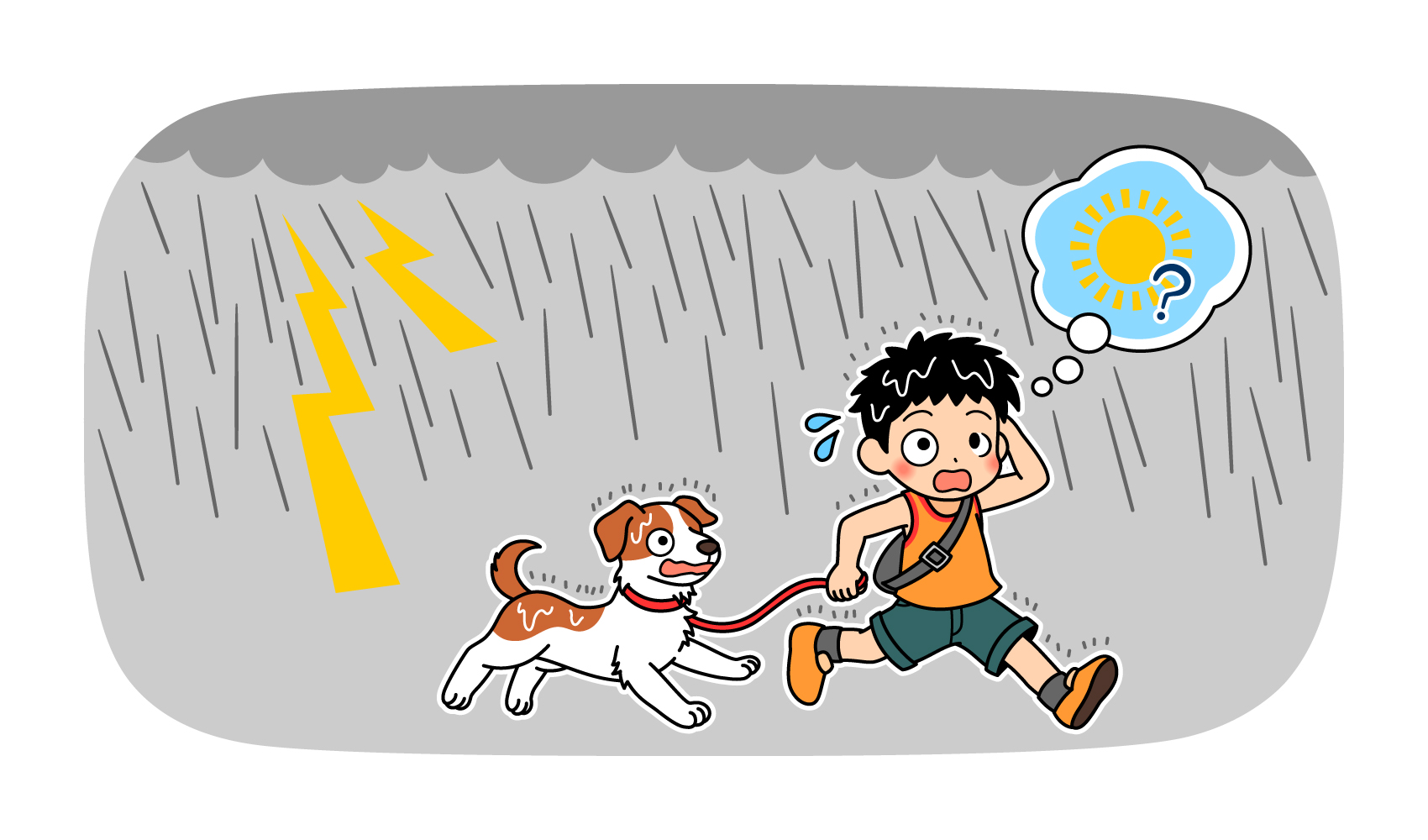
In summer, the can-can blue sky suddenly darkens, and heavy rain and thunder sometimes fall. The sudden heavy rain often falls in the evening, hence the name "evening shower. In recent years, the rainfall has become more intense, sometimes causing disasters. Perhaps the term "guerrilla downpour" is more familiar to everyone than "evening shower. This section explains how an evening shower occurs and what to watch out for when an evening shower occurs.
Evening showers? Localized heavy rain? Guerrilla downpour?
There is no clear standard for rainfall, such as 0 mm or less or 0 mm or more, for both evening showers and guerrilla downpours. Evening shower is a forecast term used by the Japan Meteorological Agency, which is sometimes used only in summer. On the other hand, the term "guerrilla downpour" is not an official forecast term, and the JMA uses the term "localized heavy rain" in its forecasts. The table below summarizes the differences in the definition and usage of evening shower, guerrilla downpour, and localized heavy rain.
| (sudden) evening shower (rain) | A heavy rain that falls suddenly, also called a shower or a shower. Among them, those that occur in the afternoon and evening in summer are called evening showers. There is no standard for rainfall. |
|---|---|
| local downpour | Heavy rainfall that falls suddenly and strongly over a small area in a short period of time (tens of minutes), regardless of the time of day or season. There is no clear definition of rainfall, but it is usually several tens of millimeters. The Japan Meteorological Agency uses this term instead of "guerrilla downpour. |
| unexpectedly strong rain (for the region, etc.) | Localized heavy rainfall. The term has recently been used mainly on TV, in newspapers, and on the Internet. |
Cumulonimbus clouds falling in the evening
It is a single cumulonimbus cloud that causes an evening shower. Since the diameter of a single cumulonimbus cloud is relatively small, ranging from several kilometers to a dozen kilometers, the area of rainfall is narrow, so much so that there is a saying, "An evening shower splits a horse's back" (meaning that one side of a horse's back is wet with rain while the other side is so narrow that it does not rain). Also, cumulonimbus clouds disappear in about 30 minutes to an hour, so evening showers often last about that long.
Cumulonimbus clouds are clouds formed by strong updrafts. In summer, strong sunlight shines on the ground and warms the air near the ground surface in the afternoon. Since warm air is light, it becomes an updraft. And when it stops rising in the sky, the place where it stops is the top of the cloud. In summer, the difference between the temperature on the ground and in the sky is large, so strong updrafts are more likely to occur, and taller cumulus clouds like soft-serve ice cream (cumulus oculus) are formed.
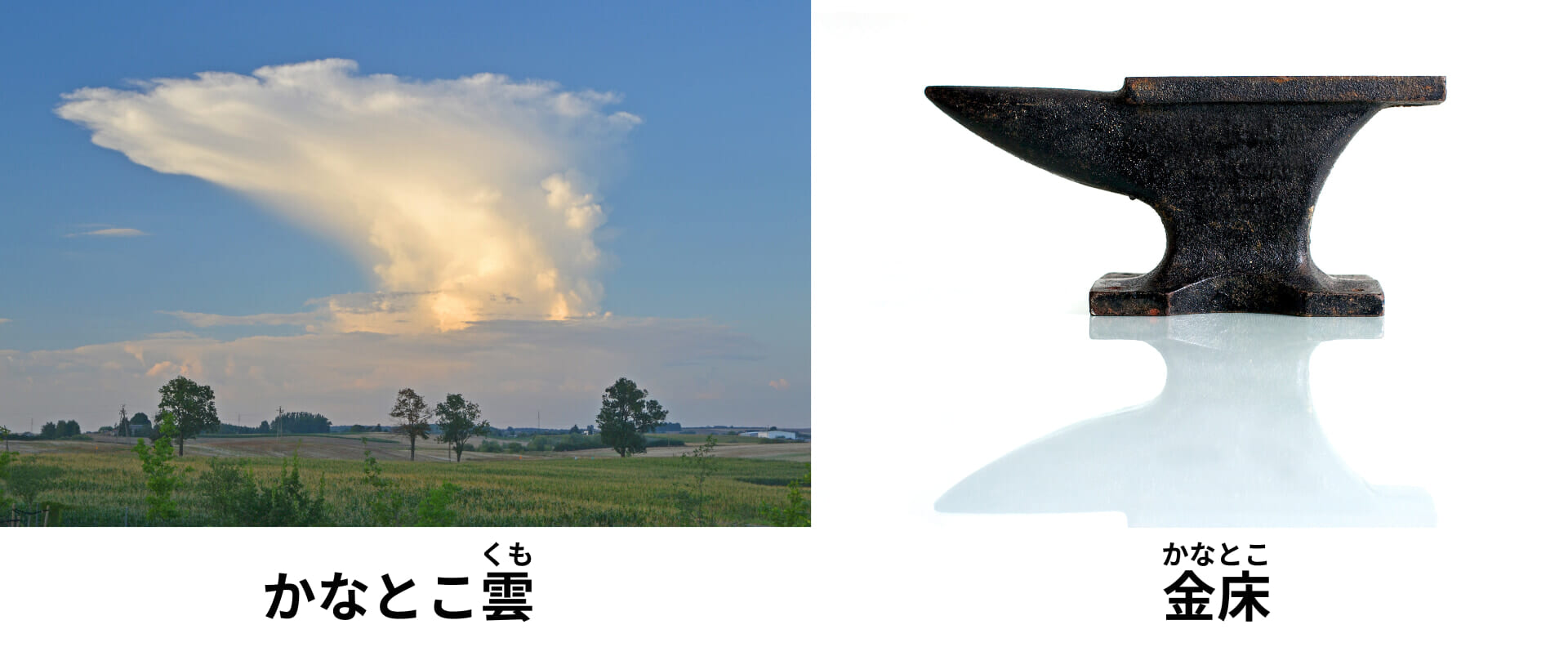
Sometimes the updrafts reach the boundary between the troposphere and the stratosphere, around 10 km above the surface. When this happens, the air cannot rise any higher and spreads out horizontally, flattening the tops of the clouds. This is a cumulonimbus cloud. They are sometimes called "Kanatoko clouds" because the flat tops resemble an "anvil," which is used in metalworking.
Heavy and large raindrops falling against the updrafts
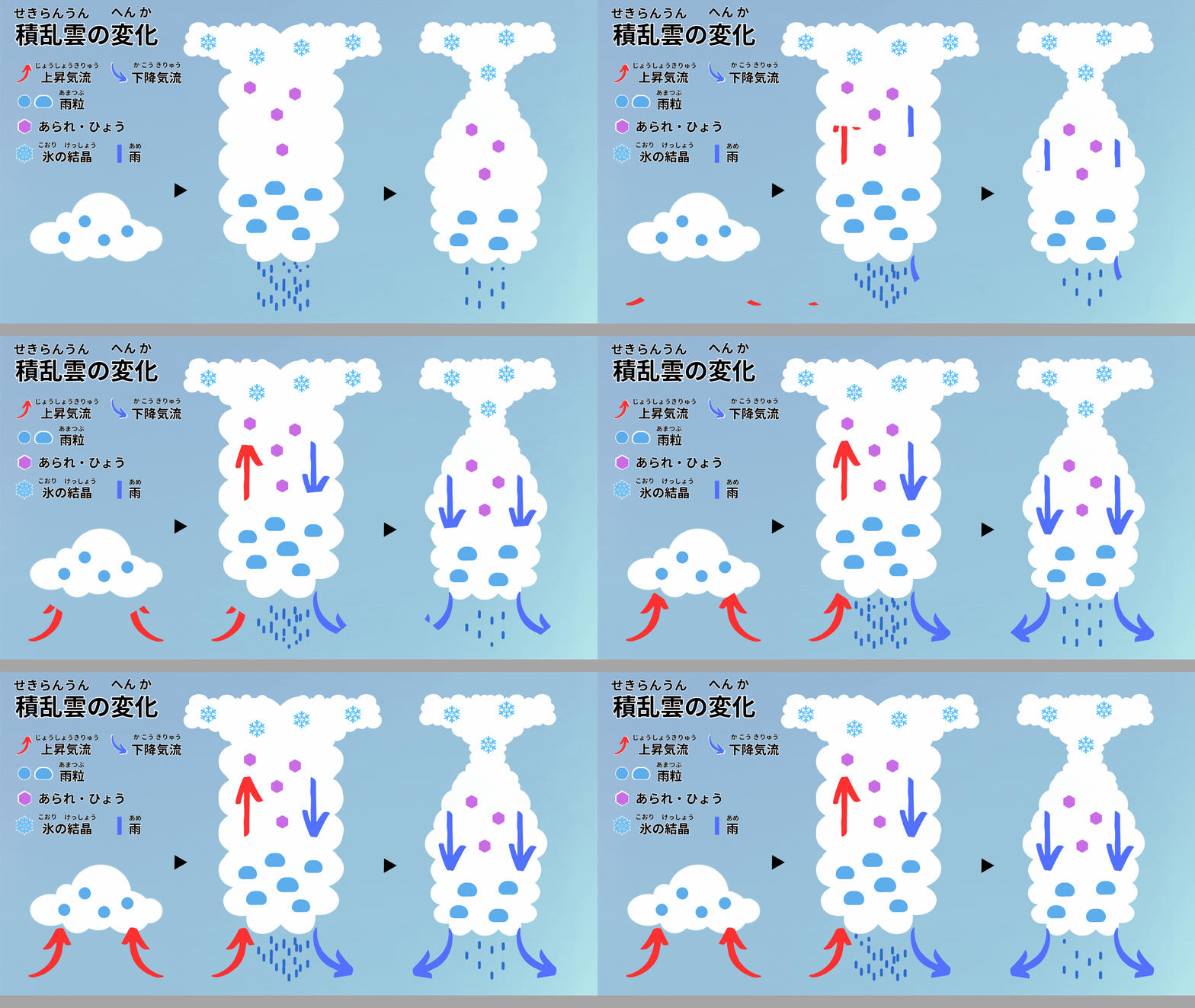
Above the clouds, cloud particles made of water and ice gradually become larger as they take in surrounding water vapor and as cloud particles stick together. The heavier particles cannot be supported by the updrafts in the cloud and fall. The upper part of a cumulonimbus cloud is made of ice particles, which melt as they fall in summer, and this melts to form rain.
Because cumulonimbus clouds are particularly high, raindrops tend to be larger because of the longer distance over which they fall. Moreover, because of the strong updrafts, they do not fall until they become heavy to a certain degree. This is why cumulonimbus clouds produce heavy rainfall suddenly. Note that all clouds that bring heavy rainfall, such as intense rain associated with cold fronts, torrential rains, and typhoons, are cumulonimbus clouds.
Ice particles in cumulonimbus clouds lose heat from their surroundings when they melt to water. The air that has been deprived of heat cools, becomes heavier, and descends. Furthermore, when raindrops fall, they drag down the surrounding air with them, which strengthens the downdraft. Originally, cumulonimbus clouds developed due to strong updrafts, but since these downdrafts cancel out the updrafts, the cumulonimbus clouds gradually weaken and finally disappear. The reason why an evening shower ends in about 30 minutes to an hour is because cumulonimbus clouds disappear after that long.
This downdraft causes a cool breeze to blow before the evening shower. When the cool air blows out, it also causes an updraft of warm air in the surrounding area, and cumulonimbus clouds can form again. In torrential rains, where heavy rain continues to fall in the same location for a long period of time, cumulonimbus clouds are created and then disappear, repeating this generational change.
Tips for avoiding sudden heavy rain
Summer is the season when people often enjoy outside leisure activities such as camping, fishing, mountain climbing, and fireworks. However, when evening showers occur, it is very dangerous because heavy rains can cause rivers to swell and lightning to strike. For this reason, it is necessary to evacuate promptly at the first sign of an evening shower. However, because evening showers occur suddenly within a small area, it is very difficult with current weather forecasting technology to predict, "An evening shower will occur in 00 town at 00:00. Therefore, you should try to avoid evening showers successfully by following the three steps below.
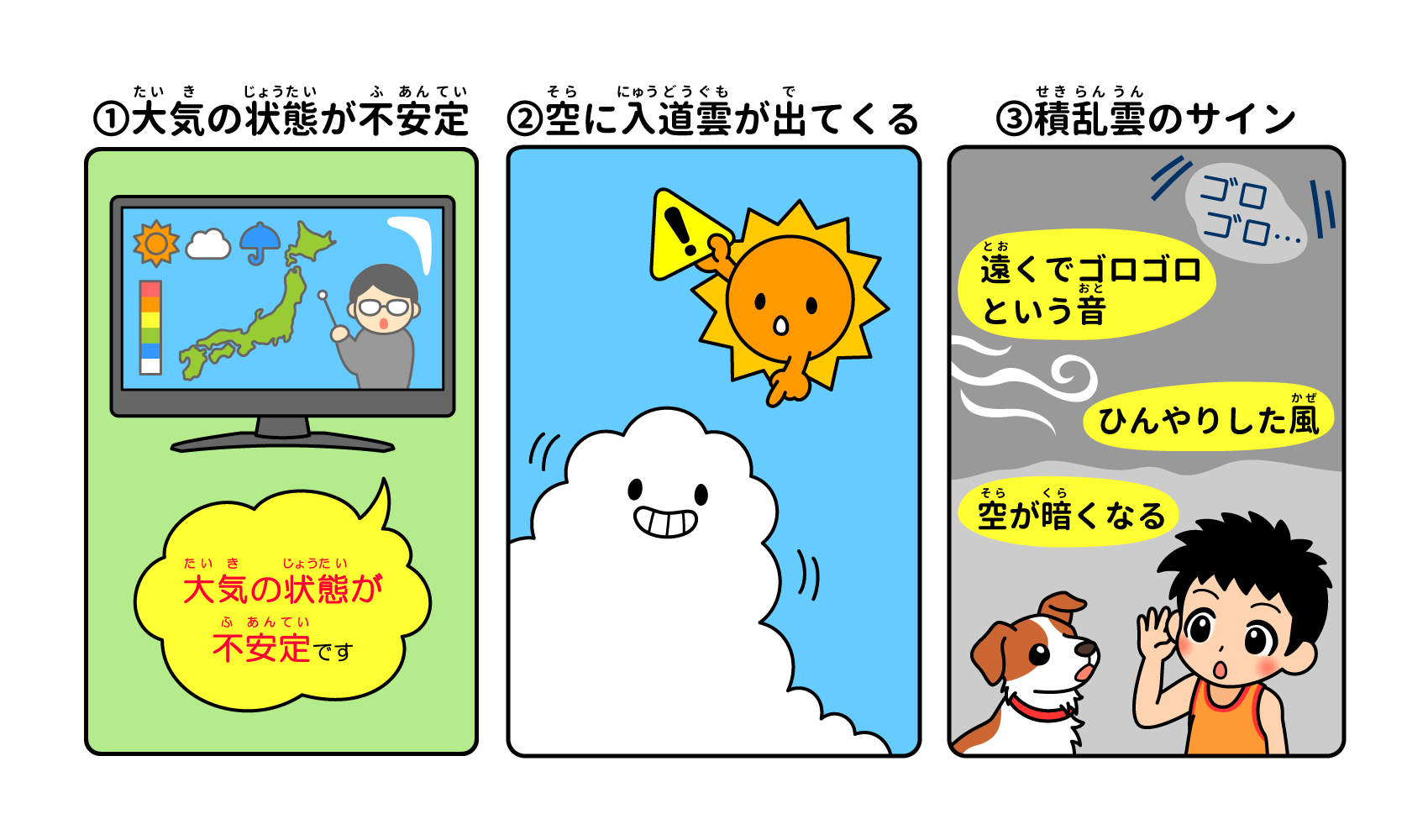
- Check the morning TV weather forecast to see if the words "unstable atmospheric conditions" appear. If you see this term, it means that cumulonimbus clouds are likely to form, so look up at the sky frequently when you are outside.
- If you see incoming clouds in the sky, it is a yellow signal.
- A rumbling sound in the distance, a cool breeze, or a darkening of the sky are all signs that cumulonimbus clouds are approaching. If an adult is nearby, ask them to show you the rain cloud radar on their smartphone so you can see when the rain clouds are likely to arrive.
Cumulonimbus clouds produce not only heavy rainfall but also lightning. The danger of lightning strikes increases especially if you are in an open area without high objects, such as a beach or grassland. Please take shelter indoors or in your car immediately. Do not go under a tall tree to shelter from the rain, as lightning striking the tree can easily hit you and is extremely dangerous.
Evening showers can be tricky, but after you've dealt with them safely, if the rain stops while the sun is out, by all means look at the eastern sky on the opposite side of the sun. You may be able to see a rainbow as the sun's rays hit the numerous water droplets floating in the air and are refracted and reflected by the water droplets. The cool air after the evening shower is also tasteful.
Text/Akiko Imai