


It's like art! How many do you know? 6 Beautiful Natural Phenomena of Winter
Many people think of the pure white snowy landscape when they think of winter scenery. Its shining appearance is also described as a "silver world. However, there are many other beautiful natural phenomena in winter besides snow. Some of them are rare and can only be seen when various weather conditions coincide. Here we introduce six beautiful natural winter phenomena that look like works of art, named after "Rokka," another name for snow, which comes from its hexagonal crystal shape.
frost columns
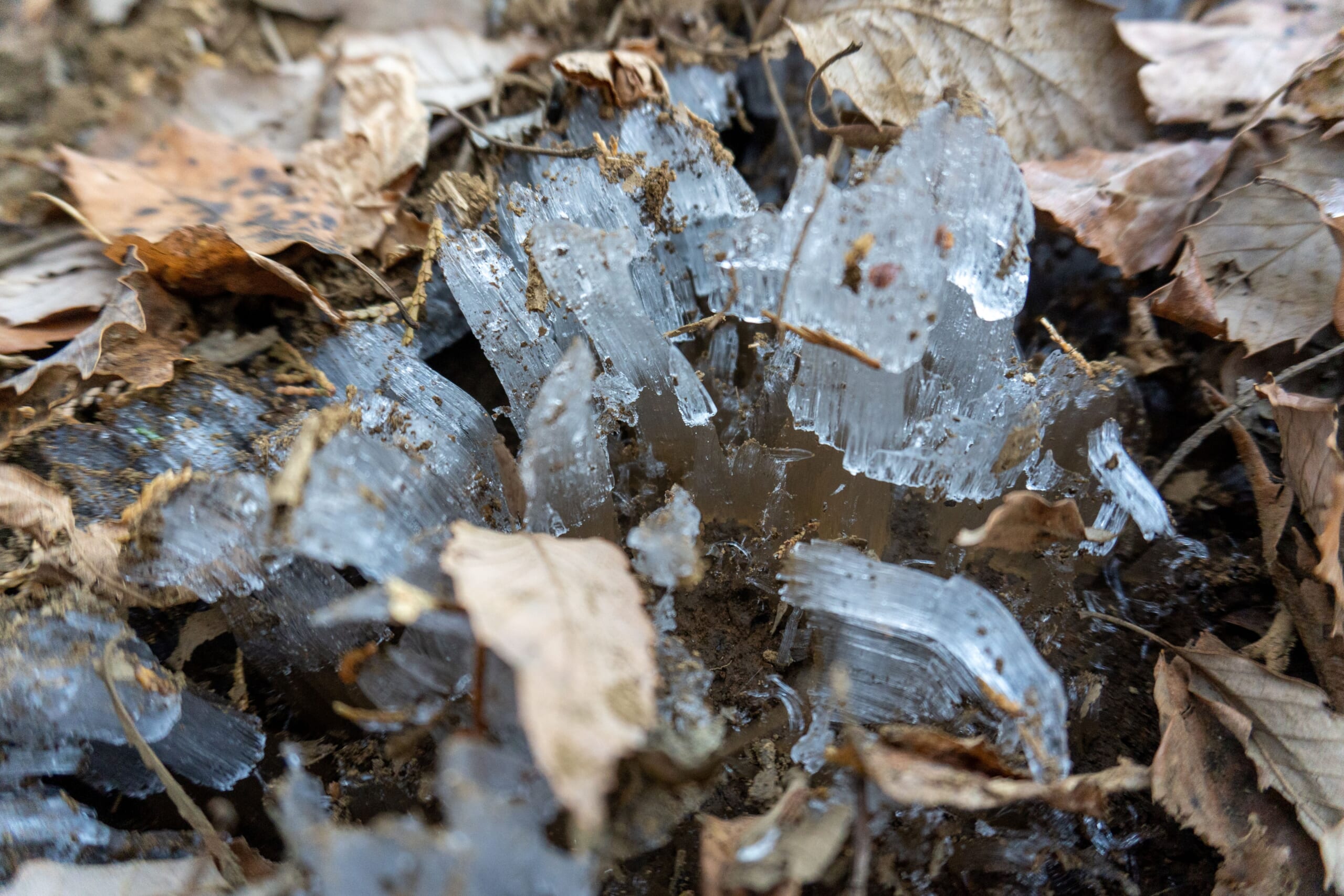
Zakzaky underfoot, fun to step on.
Frost columns look like many thin pillars of ice growing out of the ground. When you find one, you just want to step on it. The sound and feel of the crunching is irresistible. Frostpoles form when the temperature is below freezing (0°C or below) and there is no snow on the ground. When the soil surface freezes, a phenomenon called capillary action causes moisture in the ground to move toward the surface, pushing up the frozen area on the ground surface as it freezes. This is what forms a column of ice.
Weather conditions are necessary for frost columns to form, such that the minimum temperature is below freezing, but they may not form depending on the size of the soil particles. Soil with fine particles derived from volcanic ash tends to be more likely to form frost columns. It may be fun to find out if frost poles form in your area, as there seem to be regional differences in the locations where frost poles form.
Let's make a frost pole detection map together!
Do you see frost pillars in your city? If you find a frost pole, please take a picture and send it to us by clicking the link below. It would be great if we could create a "frost pole detection map" that arranges everyone's photos on a map of Japan according to the area where they were taken.
If you see a frost pole, take a picture and send it to me.
diamond dust
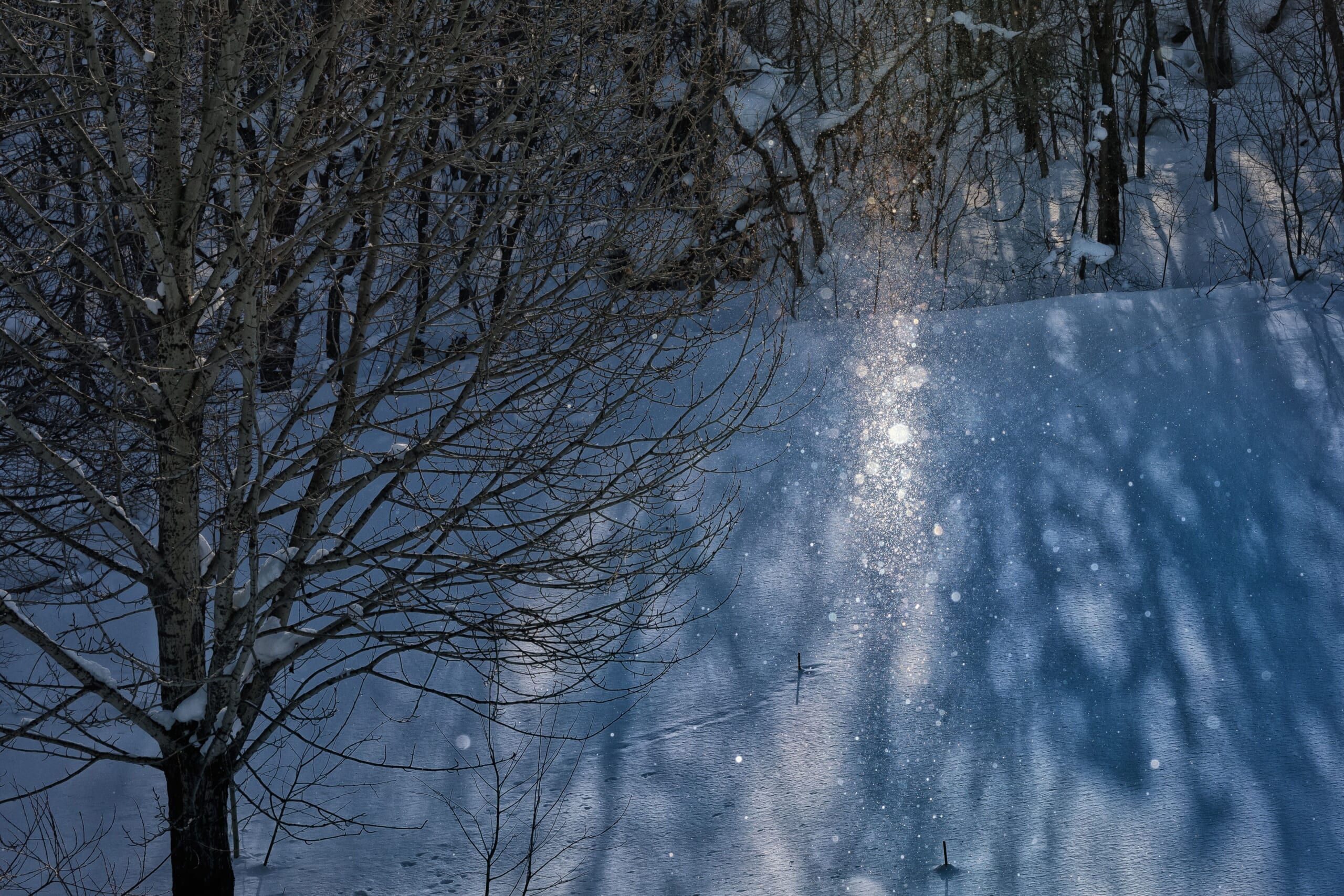
The air sparkles and water vapor turns to ice before your eyes.
Diamond dust is a phenomenon in which tiny ice particles in the air sparkle like diamonds when illuminated by sunlight. These ice grains are the result of water vapor in the air being cooled and transformed directly from water vapor into ice grains. This is called sublimation. Diamond dust occurs when the weather is clear, there is no wind, the temperature is below -10°C, and the humidity is high. In Japan, diamond dust can be seen in the interior of Hokkaido from January to February.
frost covered trees
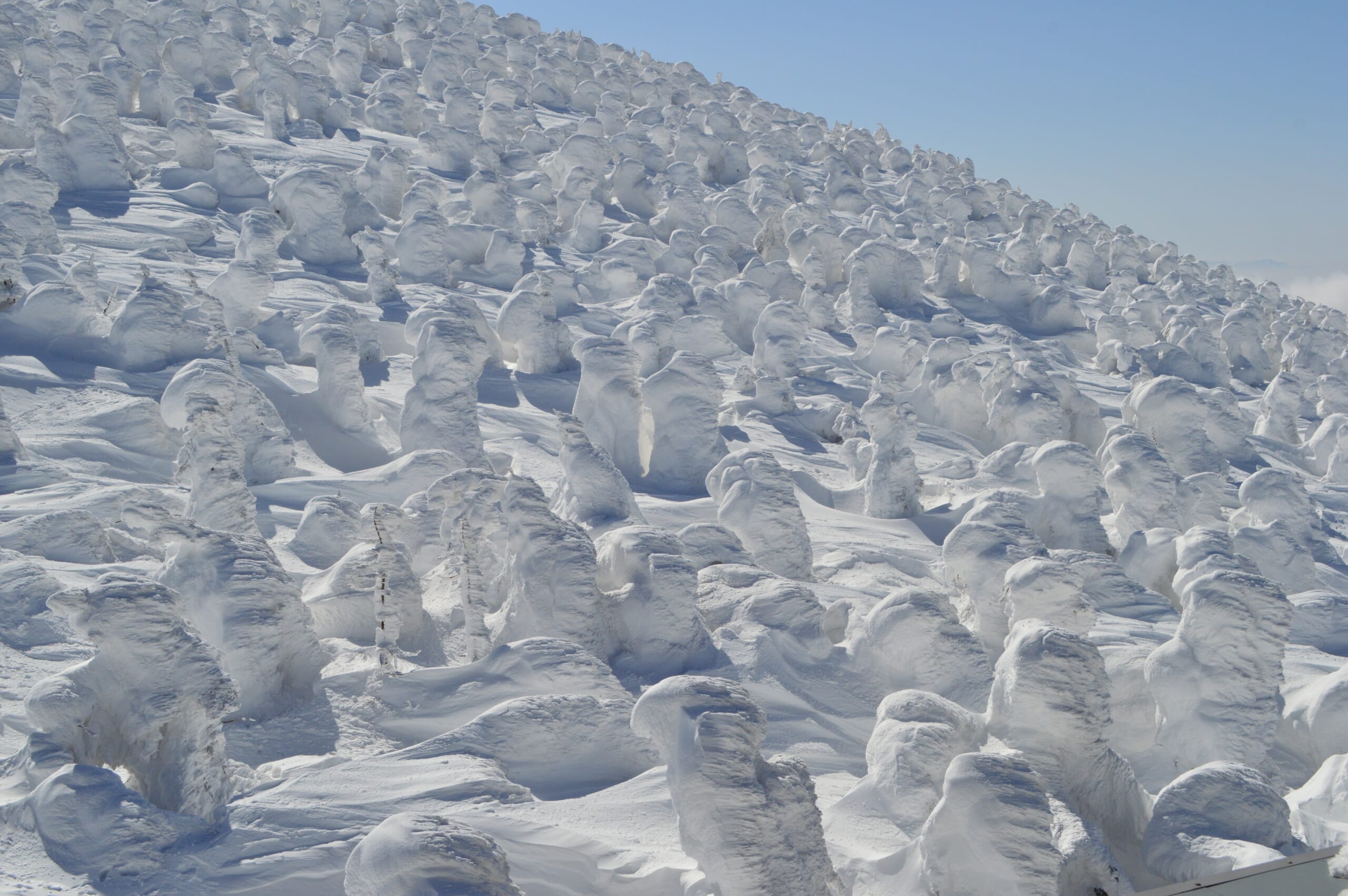
Fluffy monster appears at ski resorts, etc.?
Juhyo, also known as "snow monster" or "snow boy," is a fuzzy white snow or frost around trees. The Zao ski resort in Yamagata Prefecture is particularly famous for juhyo, but it can also be seen on other mountains in the Tohoku region, including Hakkouda, Hachimantai, Moriyoshi, and Azuma.
Juhyō, or tree ice, is formed when fog freezes on tree branches on cold days when the temperature drops below freezing, or when water vapor in the air freezes directly and forms frost on tree branches, which then grows into a fuzzy white shape when snow also adheres to the same spot. Especially in the Tohoku region, where the frost-prone coniferous Abies sachalinensis (Abies sachalinensis) grows naturally in the mountains, cold monsoons from the Siberian High Pressure System blow against it, making it easy for tree ice to form. Furthermore, the snowfall is not so heavy that the trees are buried and become invisible, so juhyō can often be seen.
ice bubble
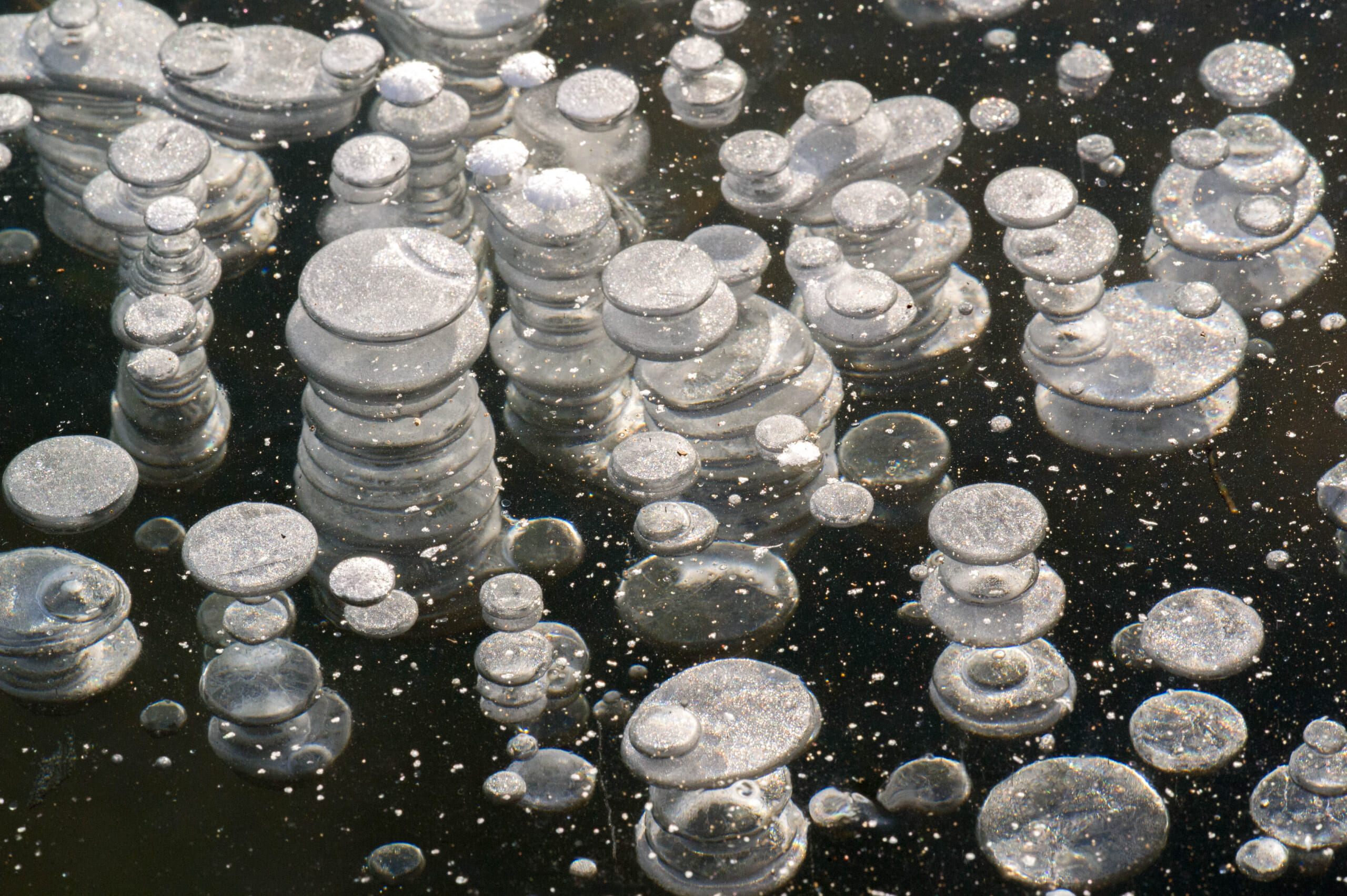
Frozen bubbles" in the water, as if time has stopped
When an entire pond or lake freezes over, ice bubbles are formed when air bubbles are trapped in the frozen water. The bubbles are actually volcanic gases or gases released when bacteria decompose dead leaves and other debris that have accumulated on the bottom of the lake. First, as the bubbles rise from the bottom, they hit a layer of ice, such as the frozen water surface, and accumulate there. After a while, the water below the bubbles also freezes, trapping them there. The jellyfish-like bubbles appear to stop in frozen ponds and lakes, as if time has stopped.
Ice bubbles can only be seen in places where it is cold enough to freeze the entire pond or lake and the water is crystal clear. In addition, they cannot be seen when the lake is covered with snow, so the time of year when they can be enjoyed is very limited. In Japan, they can be seen mainly in the East Hokkaido region, with Lake Nukadaira in Kamishihoro Town being particularly famous. They can also be seen a little further south at higher elevations.
jeweled ice cream
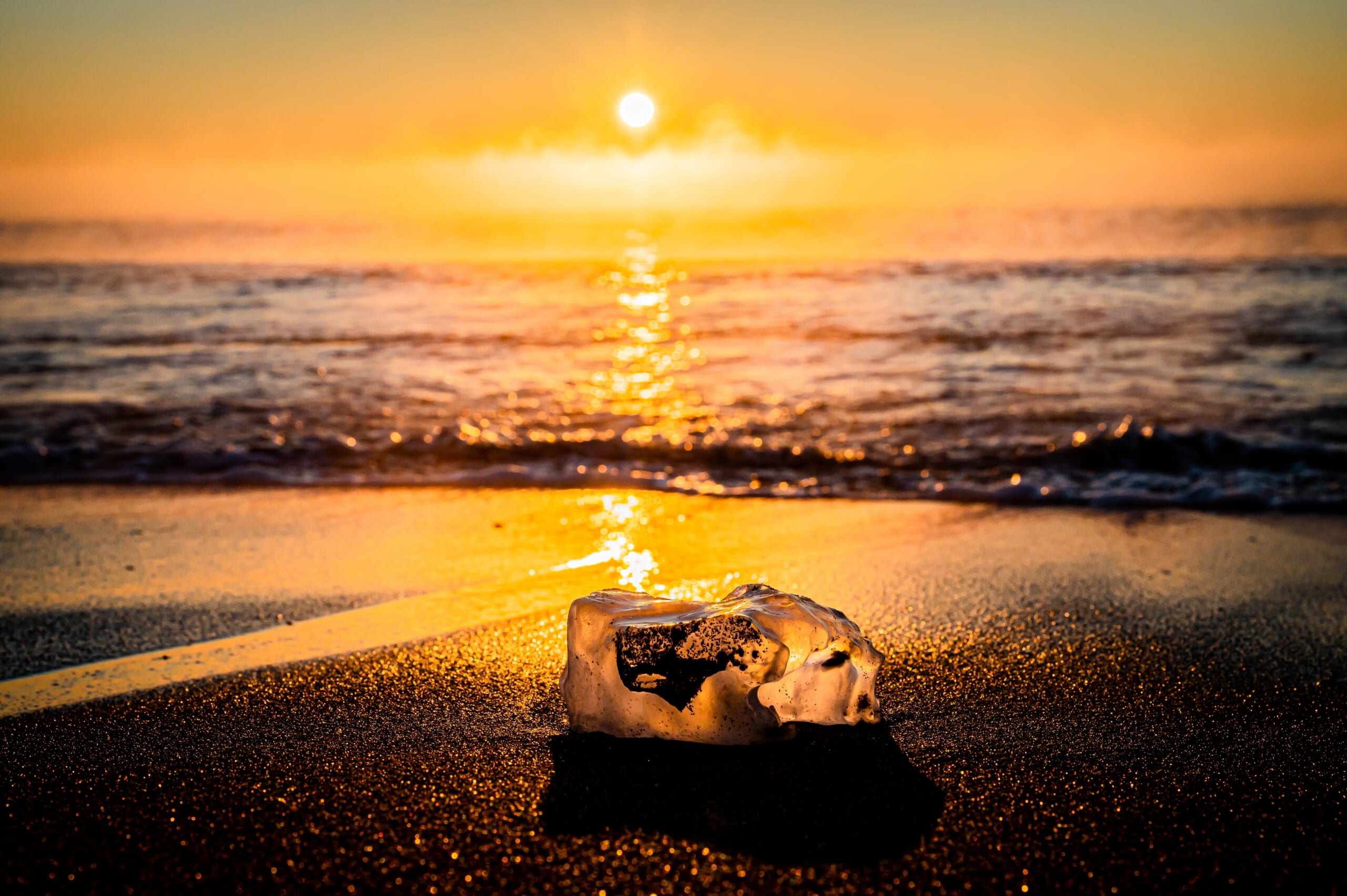
Crystalline chunks of ice shining on the beach
On the sandy beach near the mouth of the Tokachi River in Otsu, Toyokoro Town, Hokkaido, you can see "jewelry ice," a crystal-clear block of ice. This is ice that was formed when the Tokachi River froze, flowed out into the Pacific Ocean, and washed up on the beach. Unlike drift ice, the ice is rounded off as it is tossed by the waves, and its color is transparent. They can be seen from mid-January to late February.
frostflower
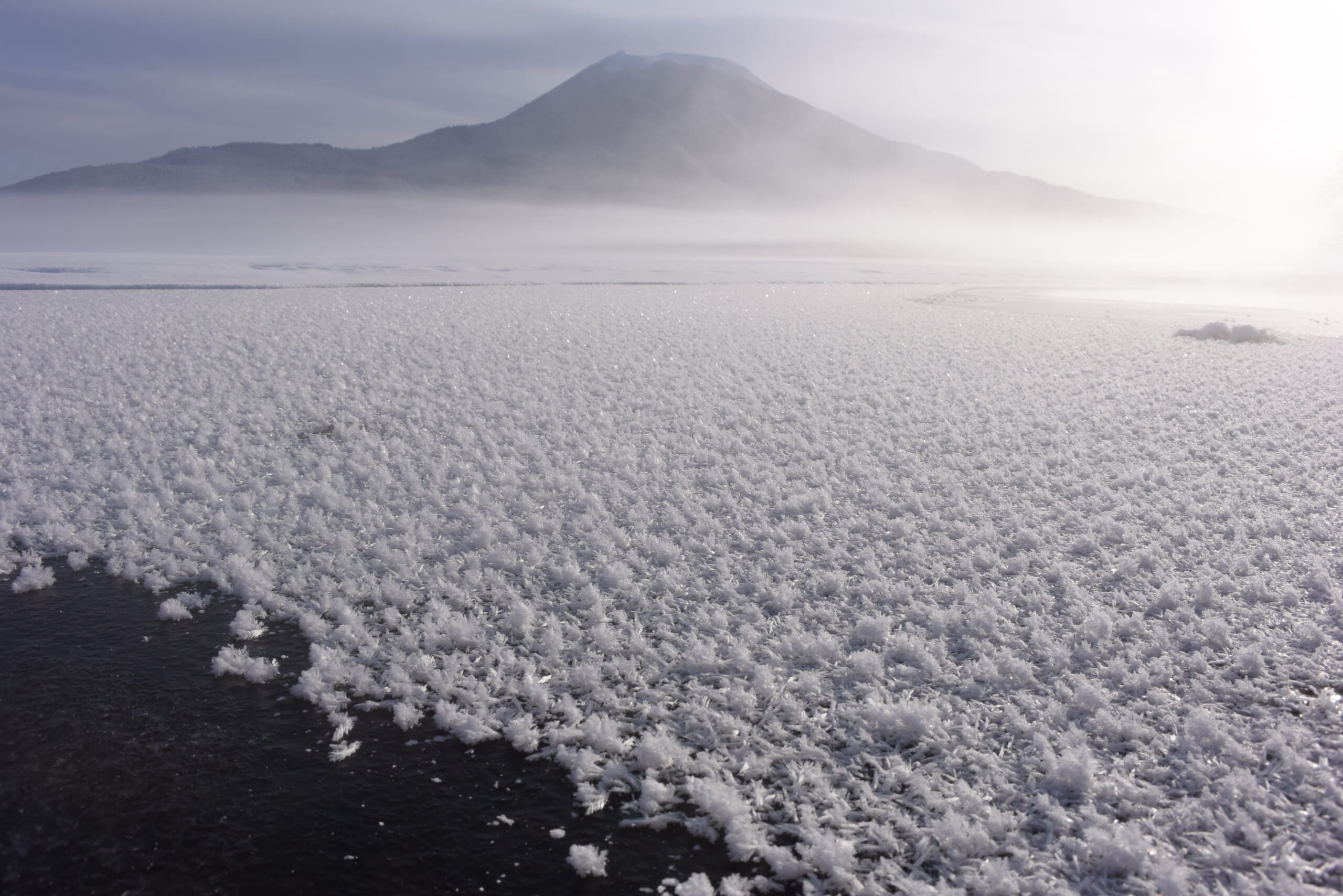
A fleeting frost flower that disappears when you blow on it
There is a phenomenon called "frost flower," which looks like an ice flower blooming on a lake or river where the entire surface of the water has frozen over. Frost forms on the frozen lake surface, and water vapor in the air forms ice around one frost and grows into a large flower. The weather conditions are as follows: temperatures below -15 degrees Celsius, almost no wind, and no snow on the surface of the lake in the early morning. The frost flowers are so fragile that they disappear when a person blows on them, and when the wind is strong, the frost flowers are blown away, and when the sun rises, the heat from the sun causes them to disappear.
Frosted Flowers are a Hokkaido Lake Kussharo and natural monuments. round green alga Also known as "The Lake Akan Lake Kussharo and Lake Akan were formed by volcanic activity. Lake Kussharo and Lake Akan were formed by volcanic activity. caldera lake The surrounding mountains make it difficult for cold air to escape from the lake's surface. In addition, hot springs gush out from the bottom of the lake, melting the surface of the lake in places and generating water vapor from there, making it easy to form frosted flowers.
The phenomena introduced in this article, especially those other than frost columns, are phenomena that can only be seen in very cold places such as Hokkaido and Tohoku. Some of these phenomena are limited to certain weather conditions, and are difficult to see even if you go there with the intention of seeing them. For this reason, if you are lucky enough to see them, it will be a memory you will cherish forever.
Text/Akiko Imai