





Tetsuro Hattori (Logisteed Corporation)
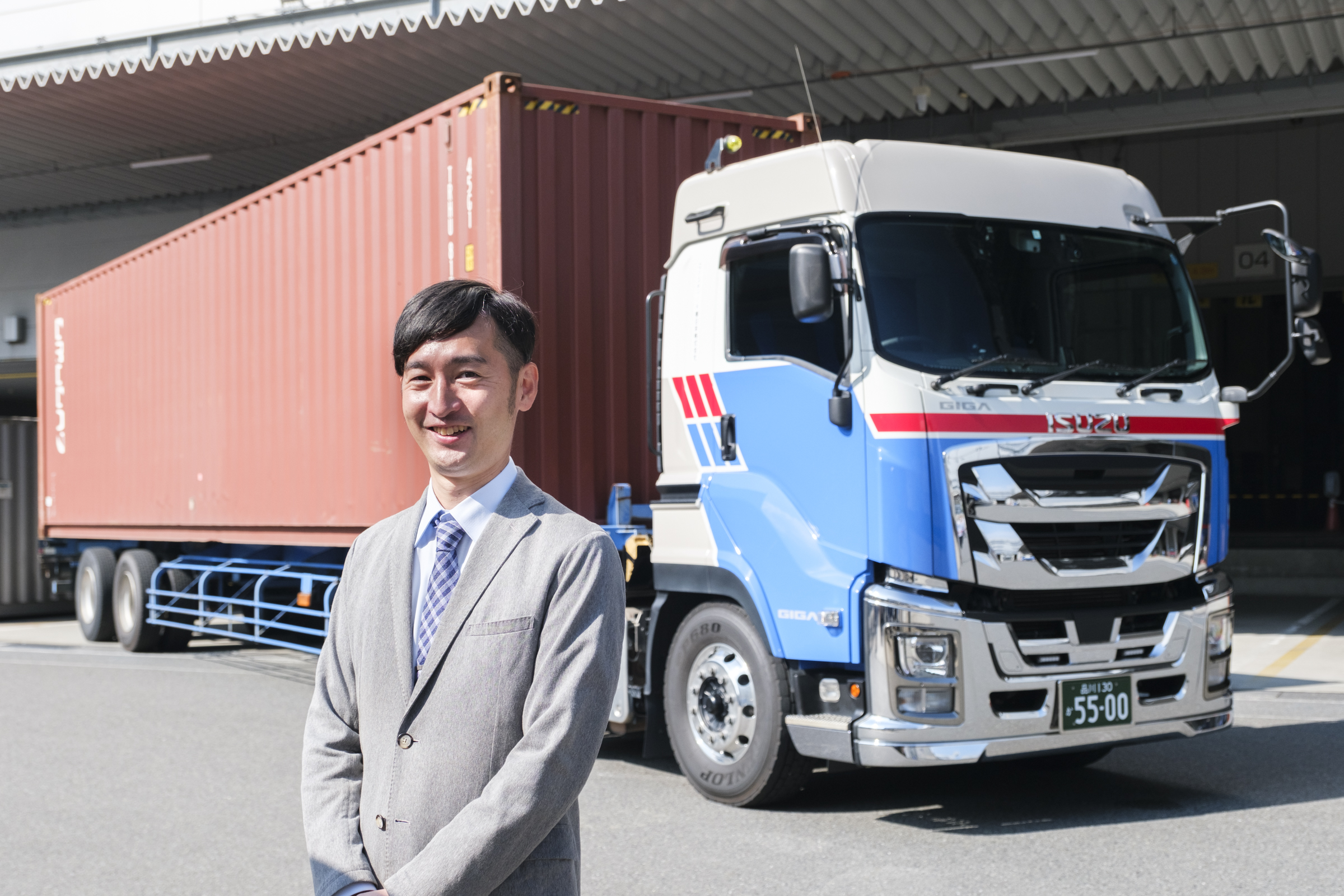
Society cannot exist without goods. Logistics, which transports all kinds of goods, is an important job that supports our convenient life where we take things for granted.
In this interview, we spoke with Mr. Hattori of Logisteed Corporation, which promotes the development of sustainable "logistics" systems based on the work of transporting goods!
What kind of company is Logisteed?
We are a "comprehensive logistics company" that supports not only domestic but also international logistics. The term "comprehensive logistics company" may sound a little difficult.
Simply put, we are a company that, in addition to transporting various items from small to large around the world, is also taking on the challenge of creating new logistics systems using digital technology.
For example, if "logistics" were to disappear, the textbooks everyone uses, the clothes they wear, and the food they eat would not reach them. The things we need reach the people who need them, so we can live a rich life.
We take it one step further and consider "logistics" to be not only "transportation" but also "the safe delivery of manufactured goods to people who use them.
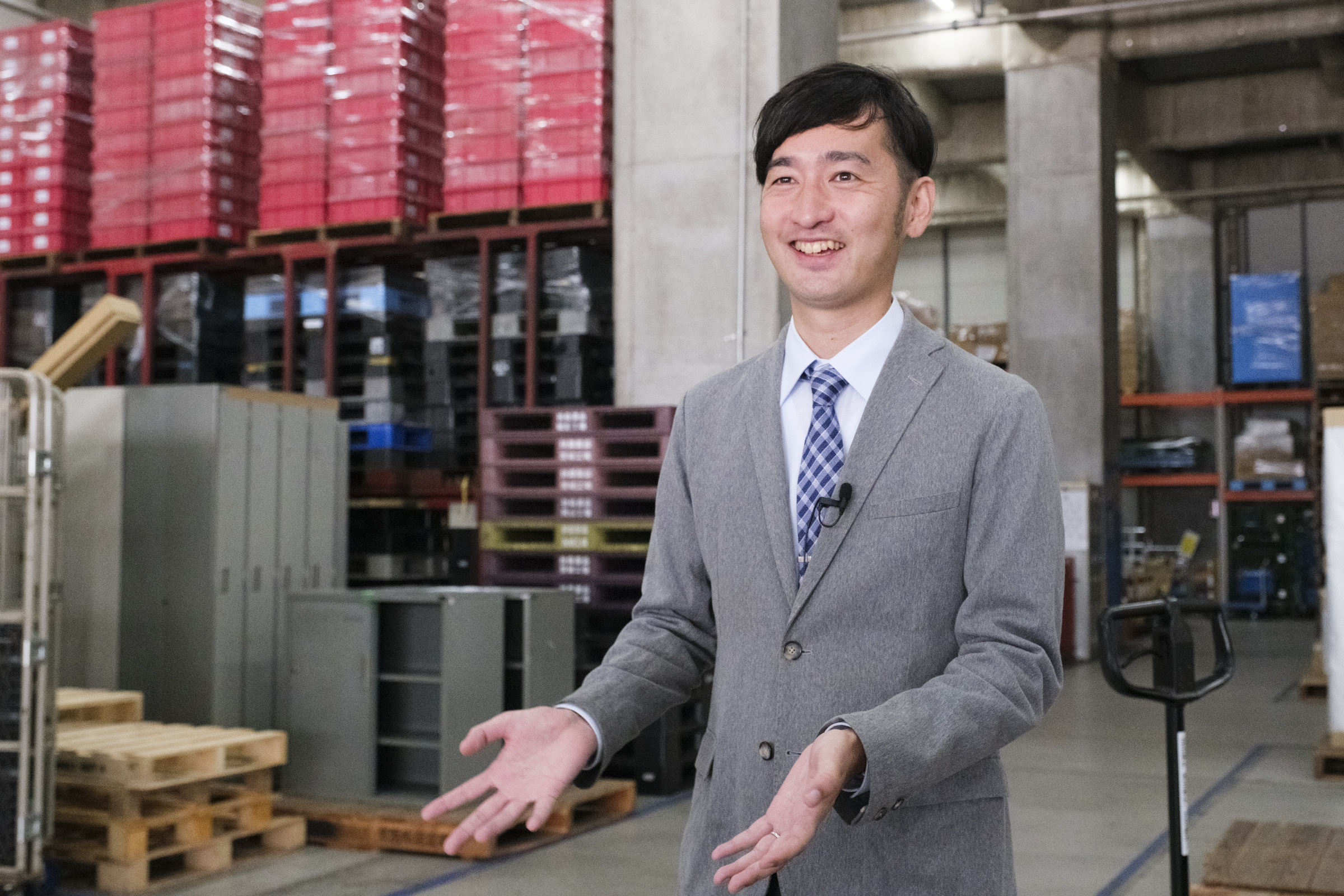
We would hate to see a crushed or dirty box when the desired item arrives at our customer's hands. That is why we consider "logistics quality" to include the safe delivery of goods to customers.
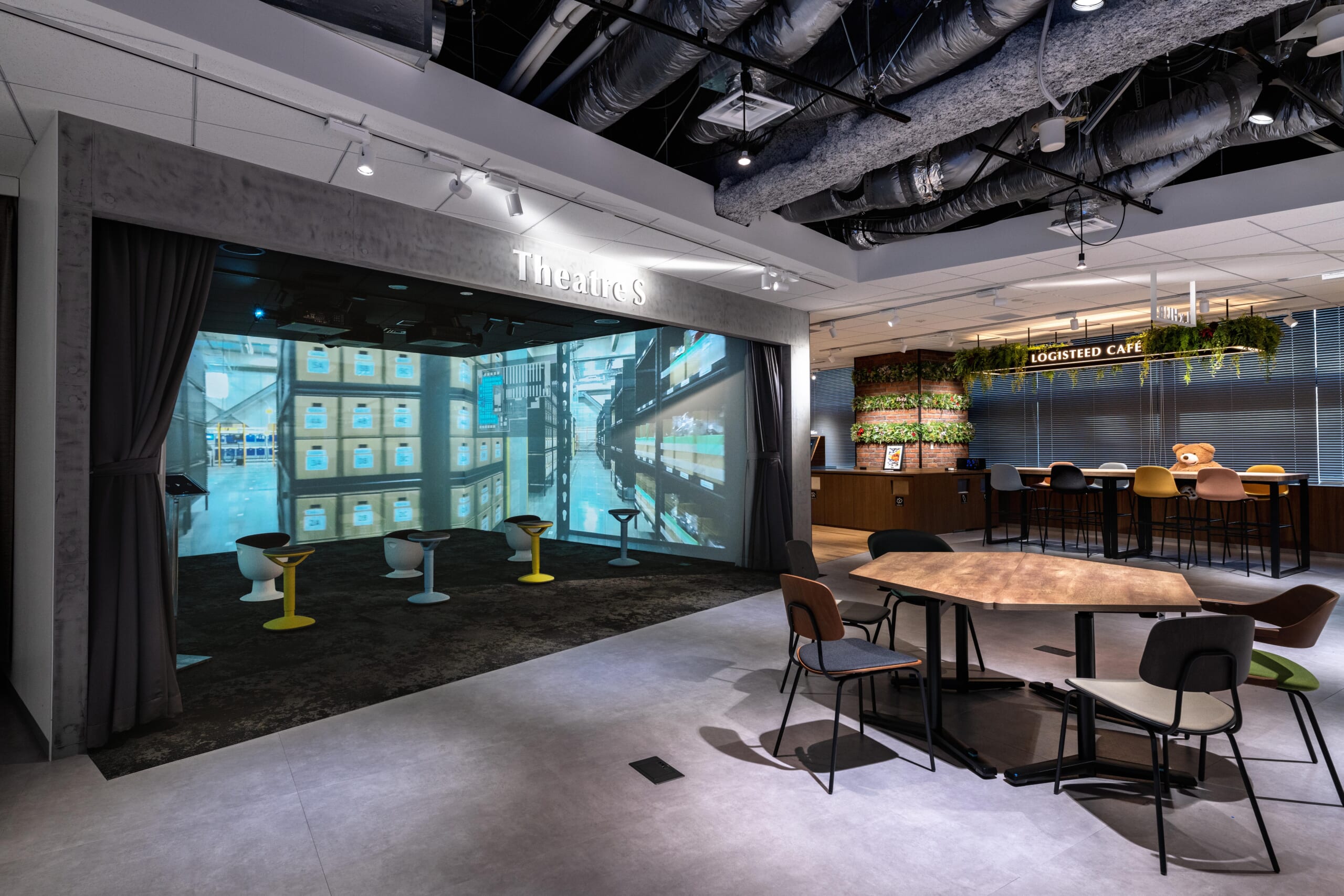
The company has approximately 800 locations in 28 countries and regions. The breakdown is approximately 330 locations in Japan and 470 locations overseas. Many of the overseas locations are in Asian countries such as India, Thailand, and Malaysia.
What kind of work do you do, Mr. Hattori?
We are working to advance logistics using cutting-edge digital technologies such as IoT, AI, and robotics.
For example, it is said that there will be a shortage of truck drivers who are in charge of "transportation," an essential part of "logistics. We are considering whether we can solve this problem using the power of digital technology.
Specifically, we are challenging the Smart & Safety Connected Vehicle (SSCV) system, which keeps drivers safe and trucks running efficiently.
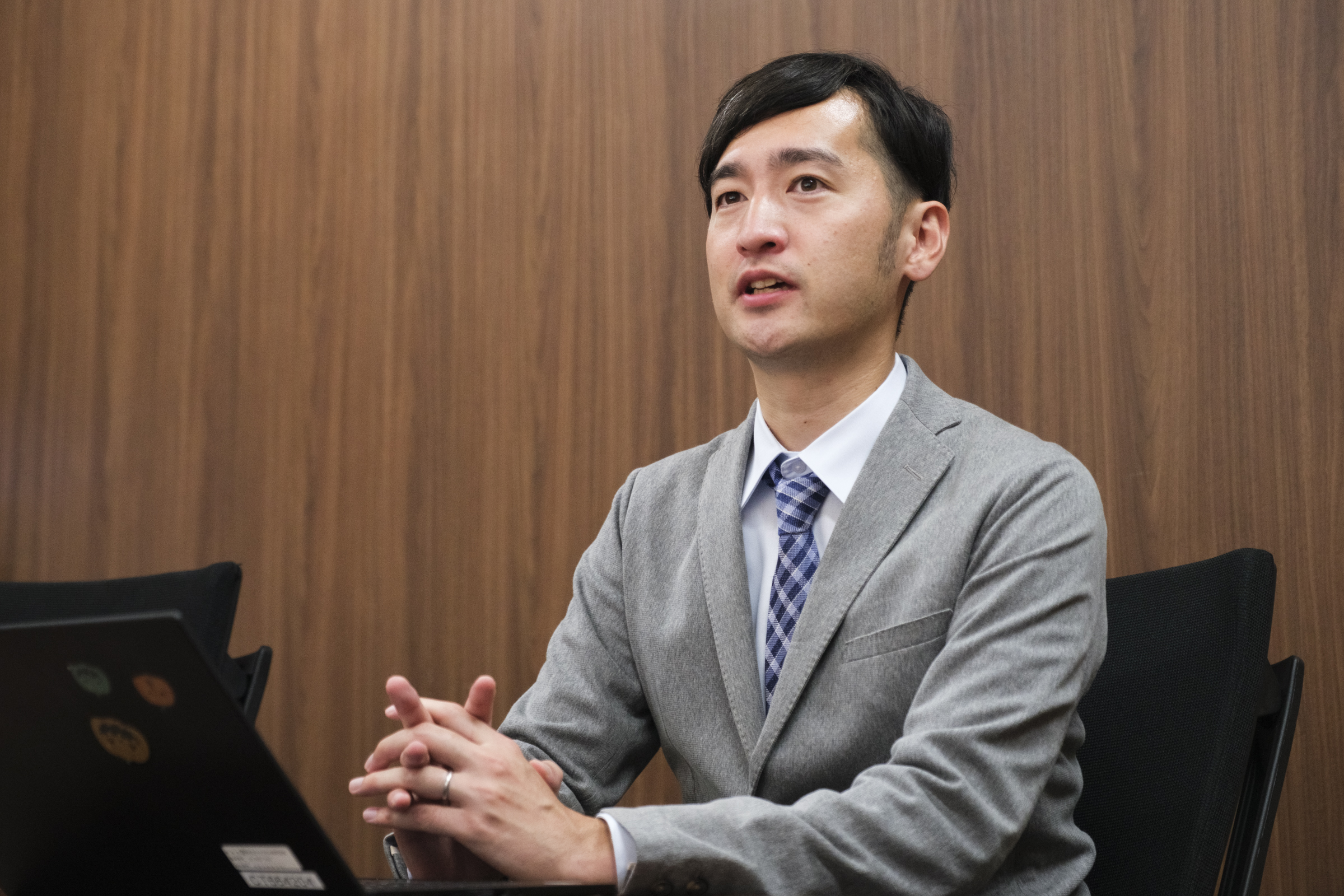
The "logistics" industry is full of trucks, but accidents caused by drivers' poor health are on the rise.
Accidents are caused not only by driver error or poor physical condition, but also by fatigue and lack of sleep that even the driver himself may not be aware of. Therefore, in addition to measuring physical condition, we use a rare machine called an "Autonomic Nervous System Monitor" to "visualize," measure, and manage the data.
Also, while driving, we check for fatigue with a wristwatch type band that can measure fatigue. Of course, we also use a drive recorder to watch for dangerous driving, etc.
When the driver returns home after completing his/her work safely, he/she and the driver reflect on the day. For example, we review a 20-second video that is automatically cut out as a review of a "near-miss! For example, we review a 20-second video that is automatically cut out to reflect on "near-misses," or "near-misses," so that we can drive safely on the next day.
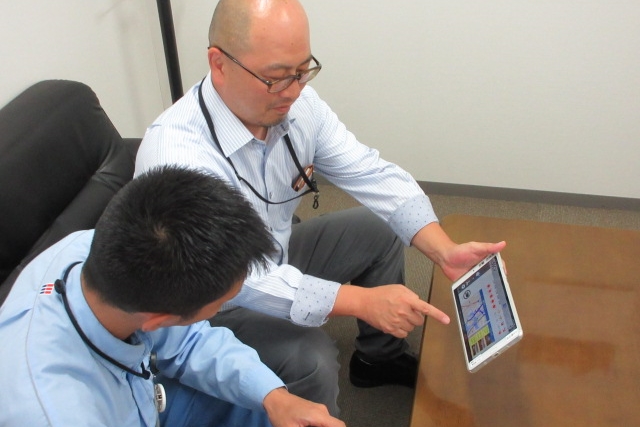 A look back at the operation (image courtesy of Logisteed)
You use digital technology to safely manage the three key points of "anticipate, watch over, and look back."
In addition to "transportation," we are also using digital technology to make operations more efficient. For example, at our distribution centers, where we sort packages, we have robots handle tasks that can be done by robots, and we are also promoting the computerization of communication, which is mainly done by paper and telephone.
What Logisteed values is the desire to make "logistics" better than it is now, without being satisfied with the status quo. That is why we find issues and take on more and more challenges to improve. There are also opportunities to propose ideas for on-site improvements and receive awards.
Why did you join Logisteed, Mr. Hattori?
Since I was a student, I had the desire to do something new and the hope to make a difference, although I did not know what exactly to do.
In the construction industry I joined after graduating from college, a so-called "house builder," I experienced a project to set up a "logistics" subsidiary and learned the basics of "logistics" and found it interesting. But at the same time, what came into view was the part of issues that we need to solve in the future.
The logistics industry is a very analog world. For example, for long-distance runs of more than 48 hours, an operation instruction form is required that lists the driver's schedule and performance, but it is all handwritten.
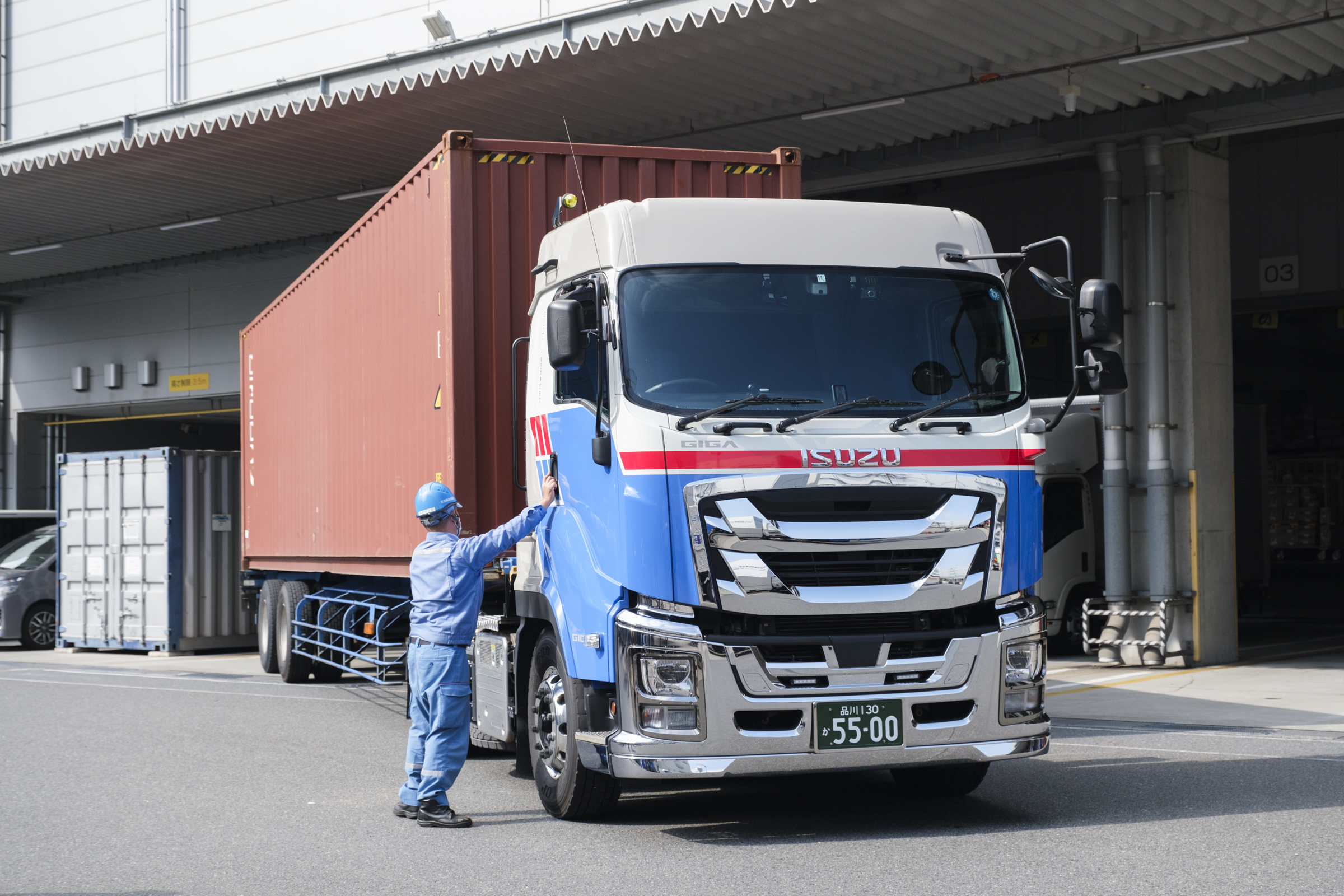
Of course there are advantages to analog work, but since the nature of the work depends in part on the experience of the individual driver, we felt that there were limits to what we could do in the same way as before for the sake of technological advancement in logistics as a whole.
Right around that time, I heard that Logisteed was going to develop a full-scale initiative to evolve "logistics" with a system called "SSCV," and I really sympathized with them.
I knew firsthand how difficult it would be to change the conventional way of doing things in the large "logistics" industry, but I decided to join the company because I thought I would be able to realize my dream that I had envisioned when I was a student.
When do you feel happy or rewarded in your work?
I think, "How can what I am doing be useful to whom and in what way?
It makes you happy when someone is pleased or tells you that you were helpful, doesn't it? So, I want to work while imagining, "How can I make the other person happy? I would like to work while imagining "How can I make the other person happy?
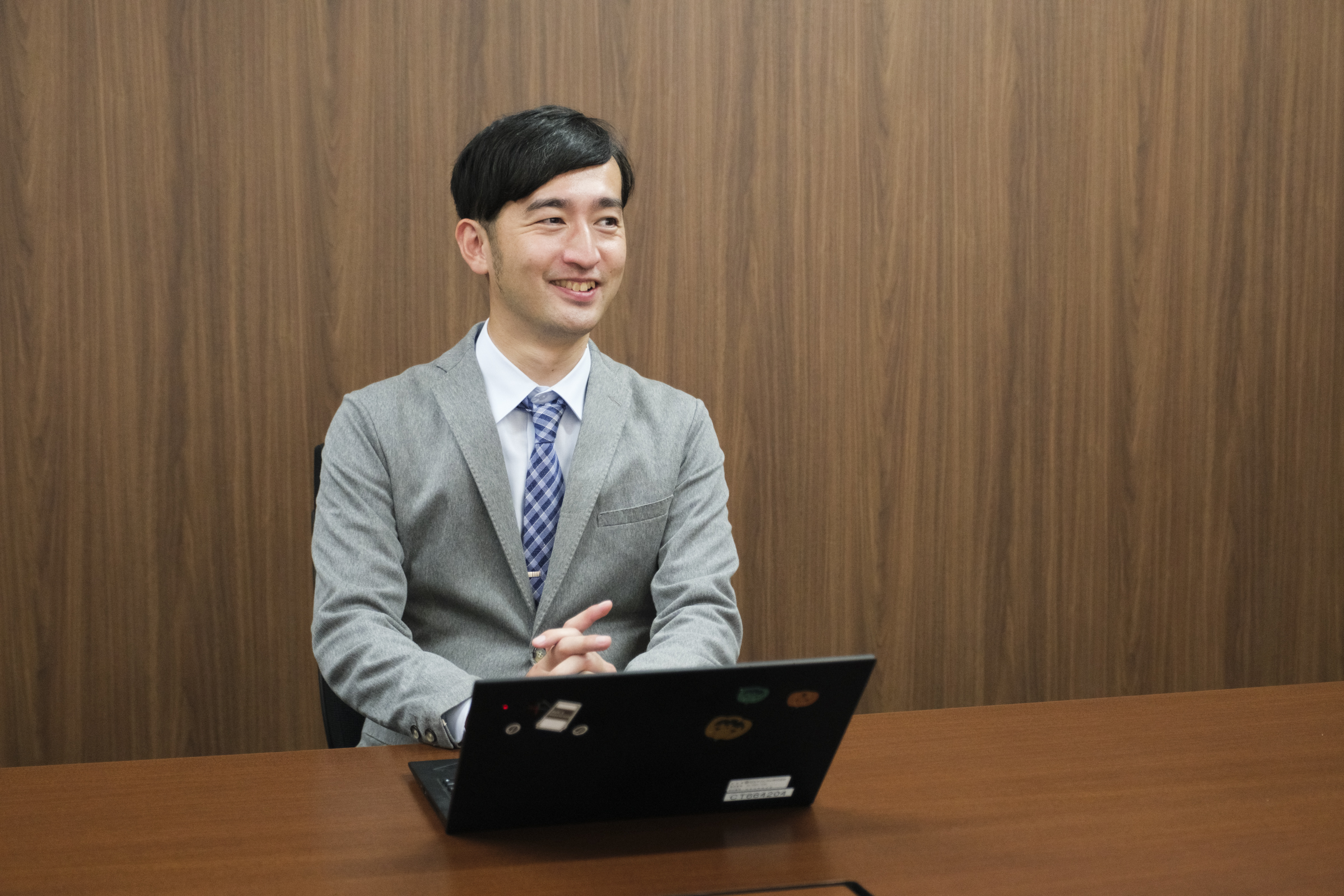
What I find most rewarding is "aiming for zero accidents" with the SSCV system. It is not an easy task, but if we can achieve it, no one will be a perpetrator or a victim.
I have a loving family (wife and daughter) and it pains me just to think of them being in an accident. Accidents cause misery not only to the perpetrator and the victim, but also to their families and others involved, so I think it would be ideal if no one had to grieve.
I feel proud of such socially beneficial work, and am motivated by the people who call out to me, "You are doing a good thing.
What are some of the hardest times in your work?
It is not easy to change the way we have been doing things to meet the challenges of "logistics.
On-site drivers, clerical workers, distribution center sorting workers, etc., each person works with pride, so simply saying, "This is the right thing to do, so please do it this way," is not going to get them to listen.
First, it is necessary to listen to each person's ideas, talk with them, and get them to agree. No matter how good a system is developed, it will not take root unless a relationship of trust is firmly established and people feel the benefits of the new way of doing things. It is also my job to think about the actual use of the system and act accordingly.

There are many companies that make systems, but it is rare to find an environment where you can hear directly from the field and actually move several trucks, which I find very rewarding.
When I go to the site and talk with each person, a simple remark like, "This is what I really want to do," can be a big hint for improvement.
Do you have a goal?
I want to change the image of the logistics industry. Before I got involved in the logistics industry, I thought it looked too hard and that it was all physical labor.
But in reality, it is an industry where people are enthusiastic about introducing cutting-edge technology, where there are close relationships between people, and where everyone works with passion.
So I would be happy if more people learn more about the logistics industry and think, "The logistics industry is fascinating," or "I would like to work in a place like this.
How to work at Logisteed?
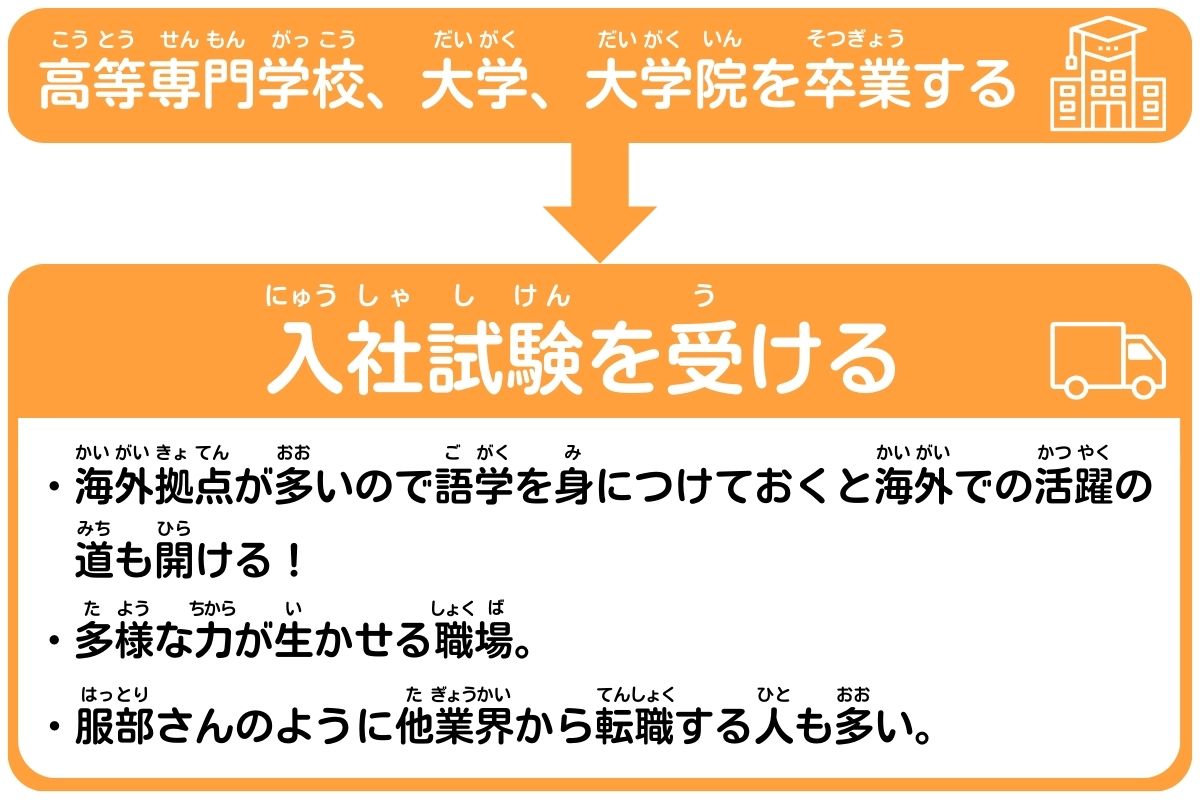
A message of support to everyone interested in the logistics industry
In the logistics industry, in addition to truck drivers who are in charge of "transportation," there are various other roles such as "storage," "packaging," "cargo handling," "distribution processing," and "information," and I find it attractive that we can all work together to make the most of what we are good at.
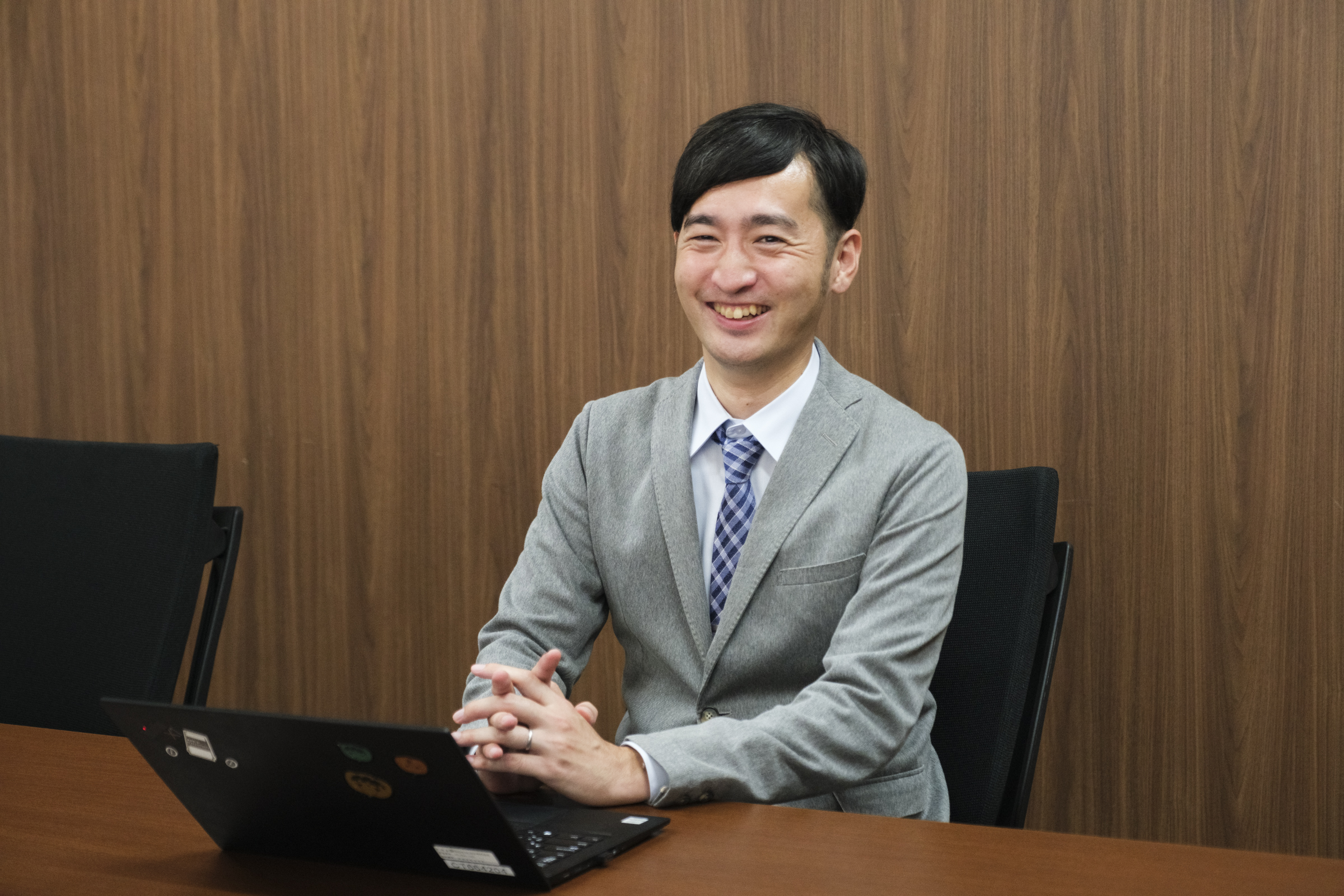
I look forward to the day when I can work with all of you who have read my article and become even slightly interested in "logistics!
The power of the professional "logistide" of transportation!
Interview and text by Kaoru Takasaki (A School) Editing by Saori Ishibashi Photography by Keiichi Wagatsuma
- I want to work to protect people!
- I want to help people!
- I want to work internationally!
- Interested in vehicles and machinery!
- I am a goal-oriented person.
- Good talker and listener
- leader type
- I like to take care of people
- Quick to act.
- I don't want to imitate others!
- He is the one who has a strong Kodawari!
- Easy to get along with any person
- Responsible.
- Cooperation.