





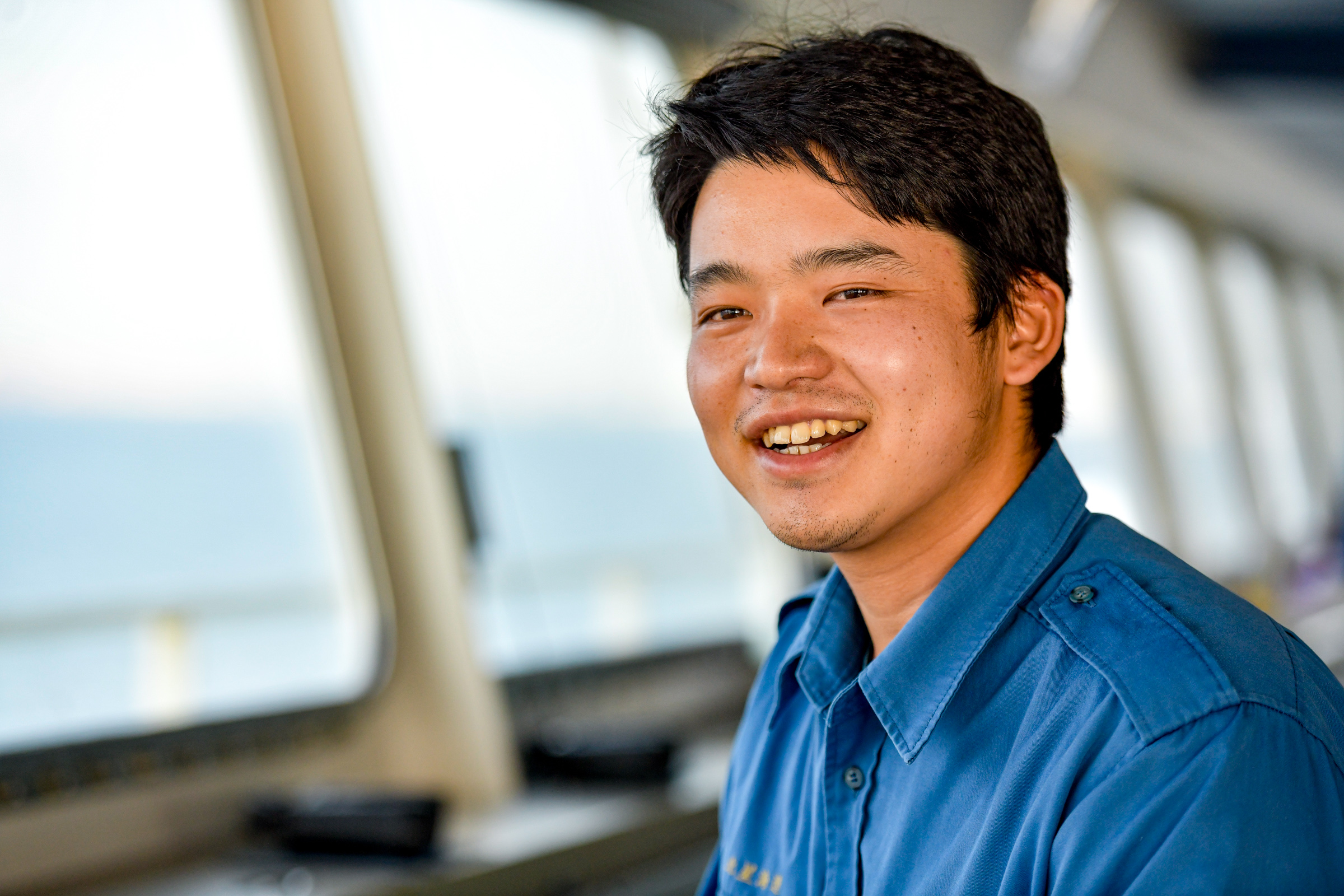
Mr. Kujuu Terada (Hokusei Shipping Co., Ltd. / Navigator)
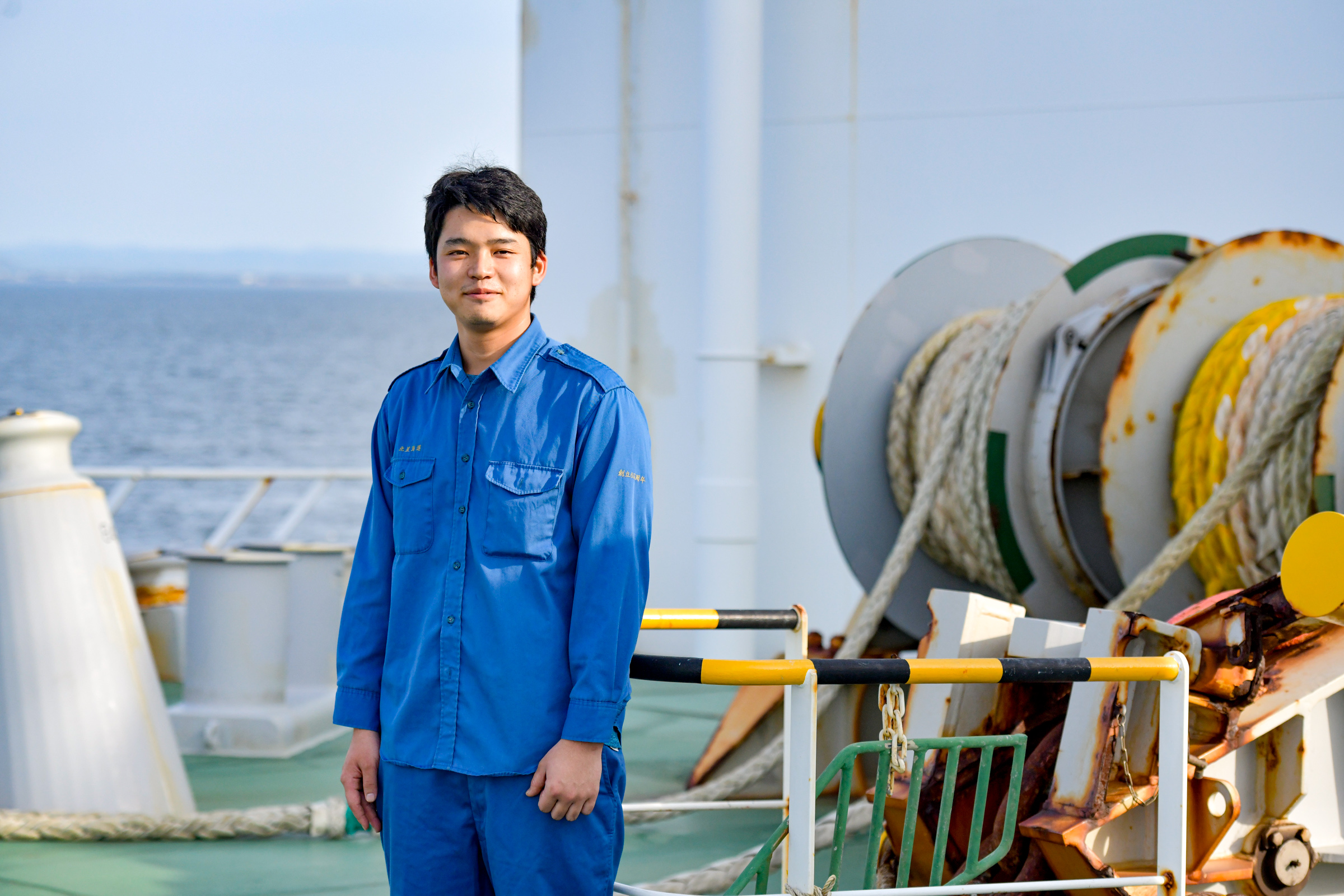
The ...... is a large ship that can be maneuvered at will and moves bravely through rough seas. The "steering" of the ship is done at the bridge, which is located at the front of the ship.
How in the world do they operate the ship? In this interview, we talked to Mr. Terada, who works as a "navigator" to ensure the safe operation of the ship!
What kind of work does a navigator do?
Simply put, this job involves safely maneuvering the ship and transporting cargo entrusted by customers to their destinations.
The crew takes four-hour shifts to monitor their surroundings by performing "watches," while maneuvering the vessel to arrive safely at port by hoisting "berth signals" that indicate to other vessels and ports the course the vessel is about to take.
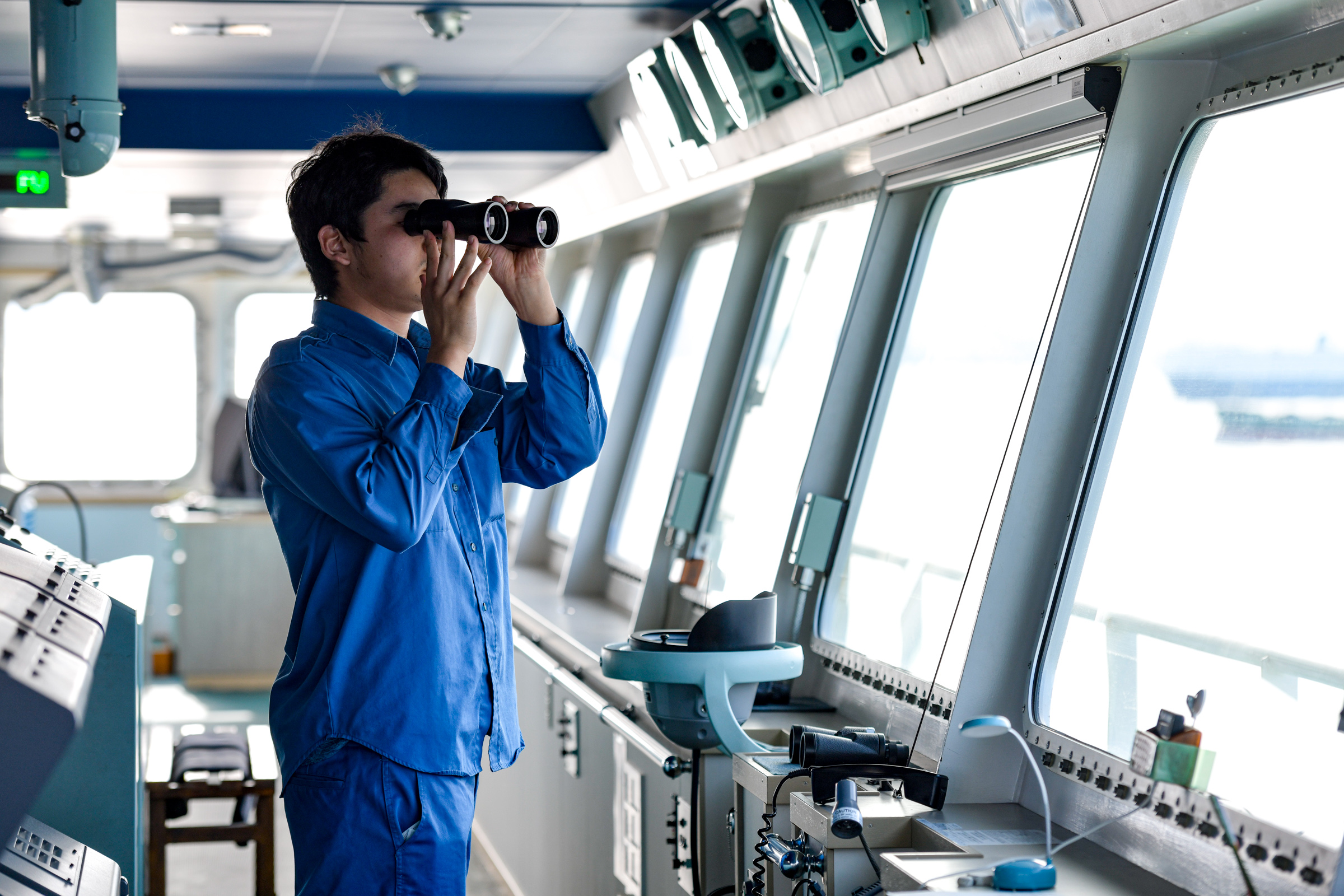
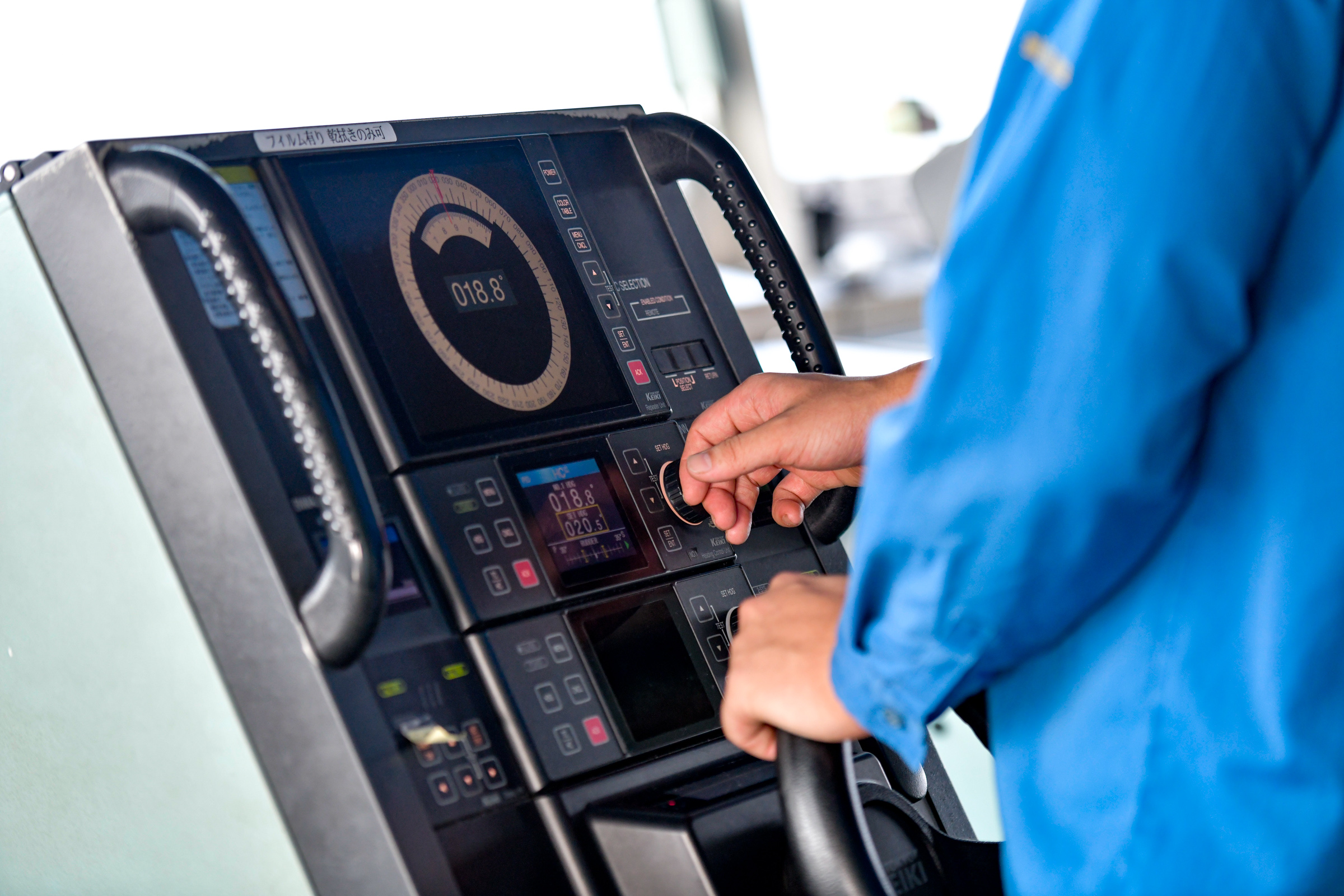
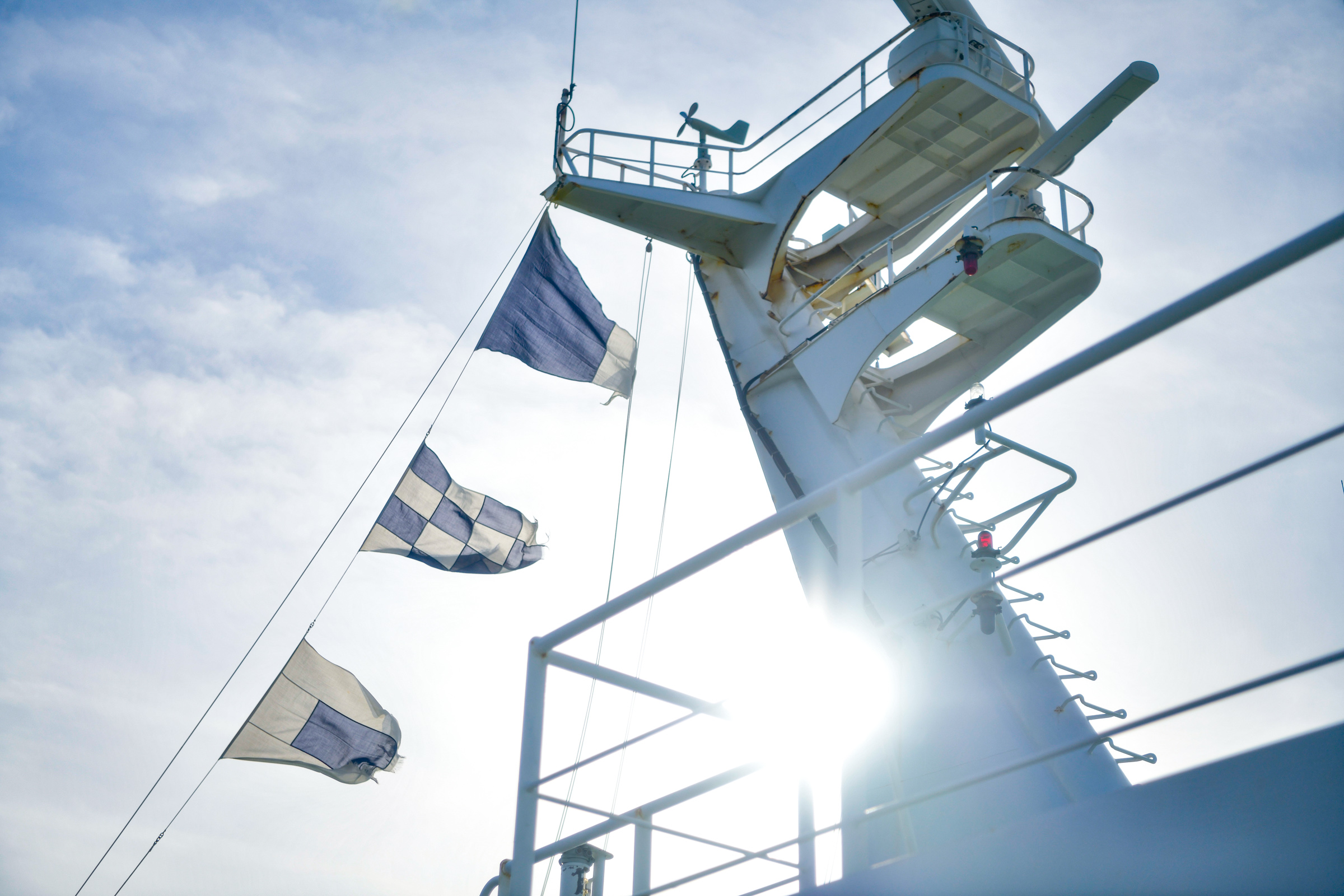
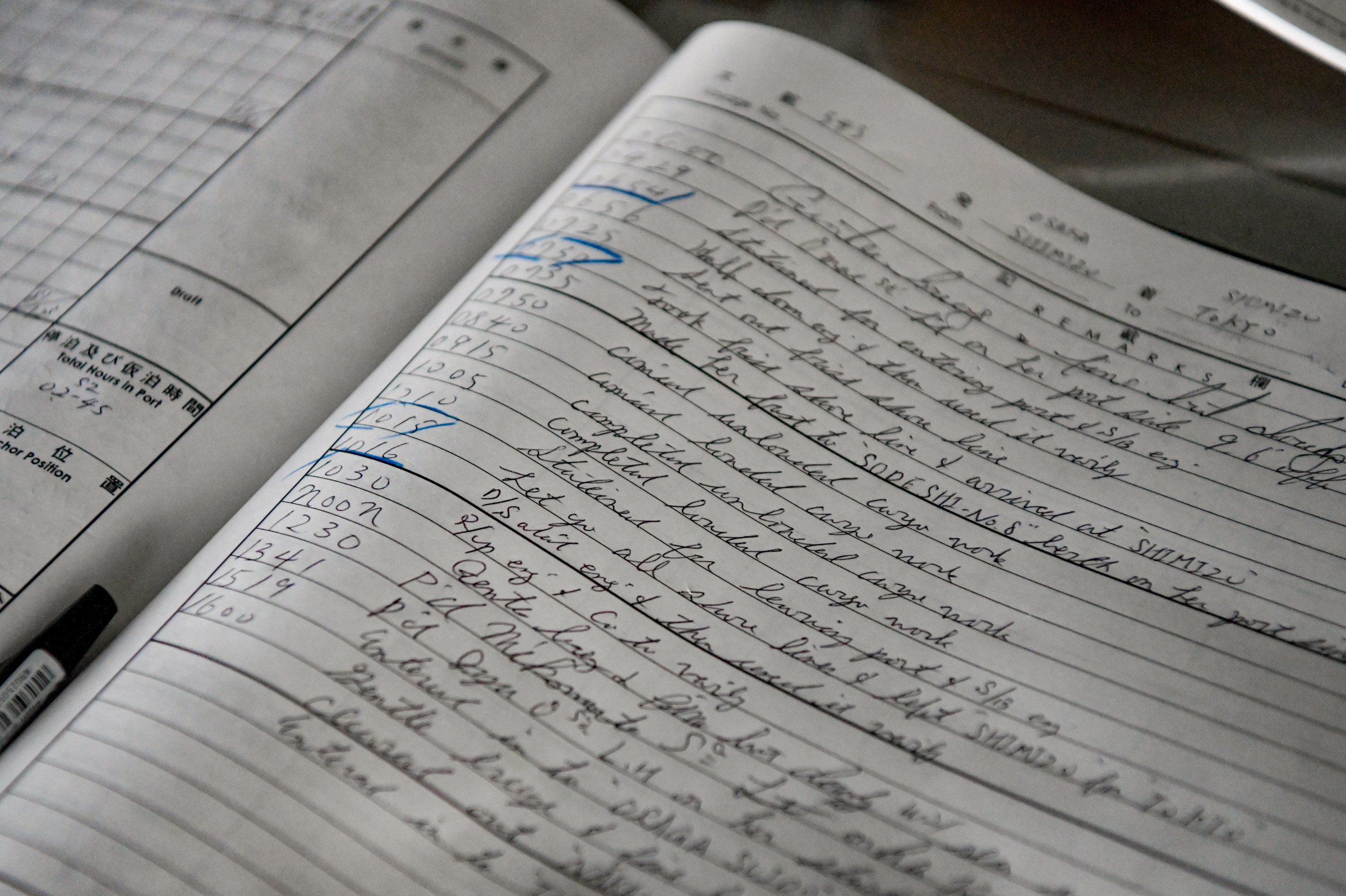
I also manage cargo and do clerical work on the ship. I also check the weather forecast and manage the crew's medical supplies. I also write an "official logbook" called an "abrogation log.
I mainly operate a ship called a "RORO ship. RORO" stands for "Roll on Roll off," which means "to take on and off.
The advantage of RORO vessels is that trailers (vehicles towing cargo) can be loaded onto the vessels.
Normally, the cargo is unloaded from the trailer, loaded onto the ship, and when it arrives at its destination, the cargo is unloaded from the ship and loaded onto another trailer ....... In the case of RORO vessels, however, this process does not occur.
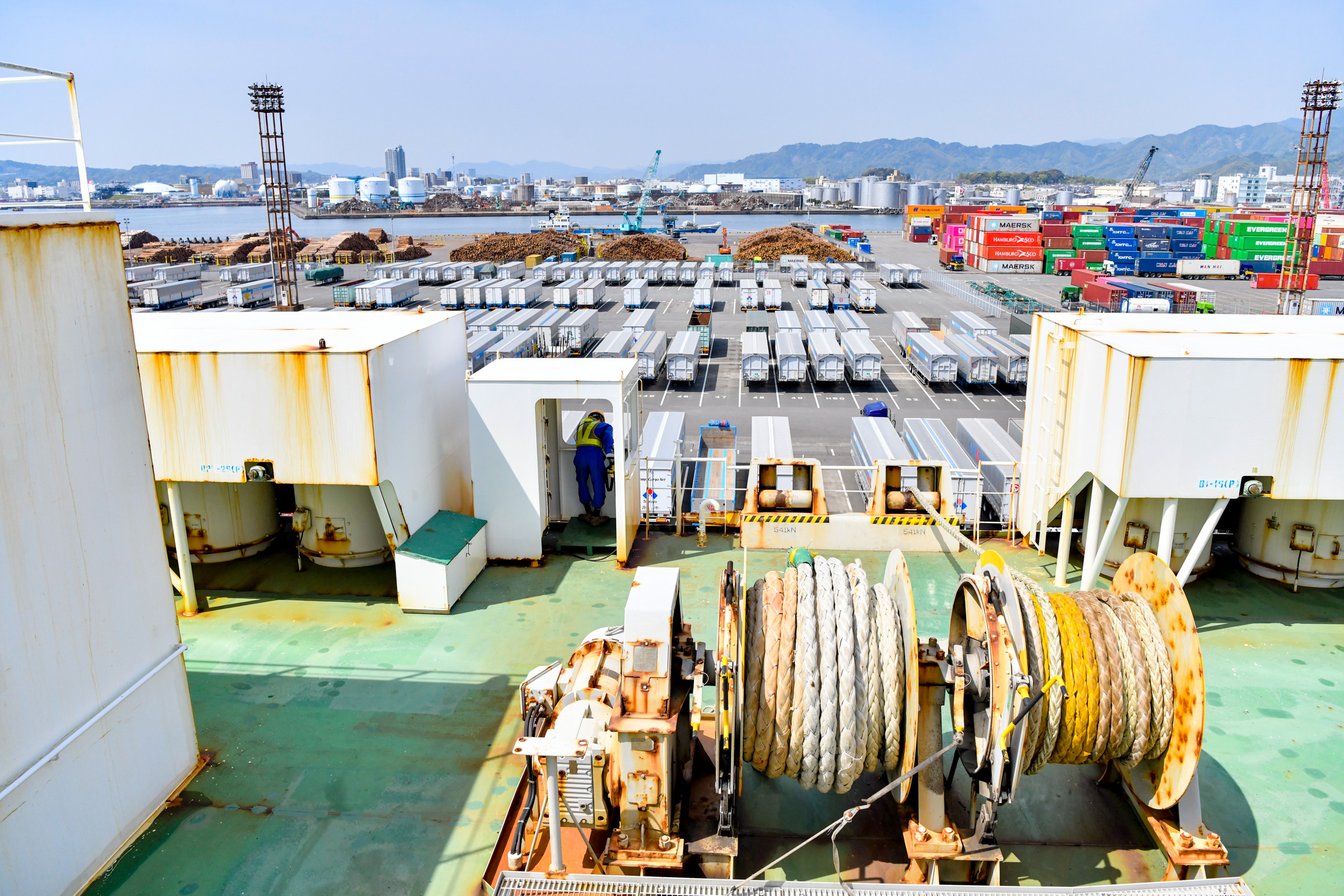
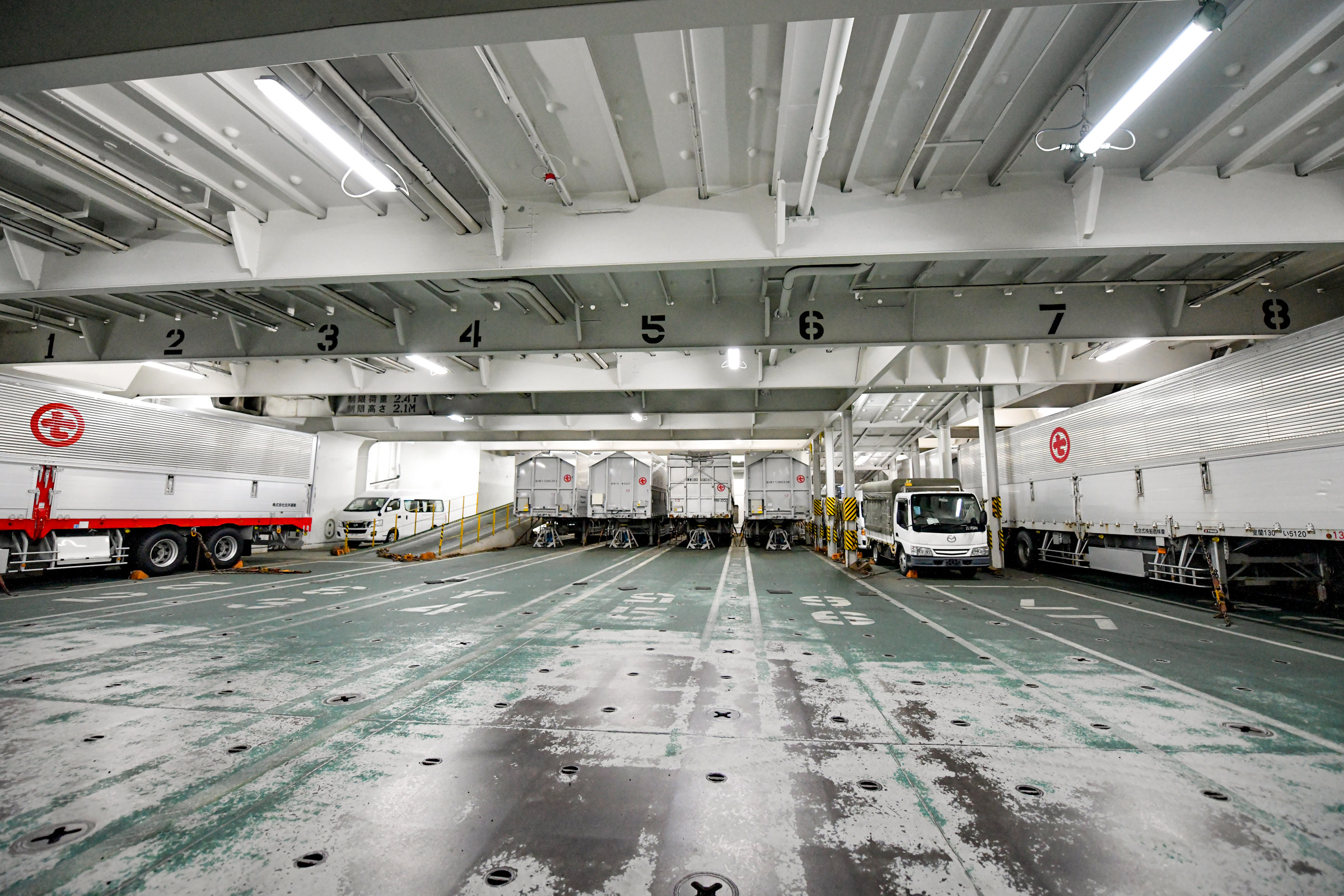
The ship is so large that it can carry a trailer as it is, which surprises everyone. The vessel I am currently operating, the "Kamikita Maru," is 169.99 meters long and weighs 12,430 tons.
It operates year-round on a route from Hokkaido to Osaka, carrying agricultural products such as potatoes from Hokkaido and paper used for newspapers.
The number of officers on a ship is determined by the size of the ship. On my ship, there is a captain first, and then three officers: a chief officer, a second officer, and a third officer.
What do you keep in mind in your work as a navigator?
The mate is entrusted with the safety of the lives of the crew and the cargo.
We must always be on the lookout for other vessels, marine life, logs, ropes, and other obstacles.
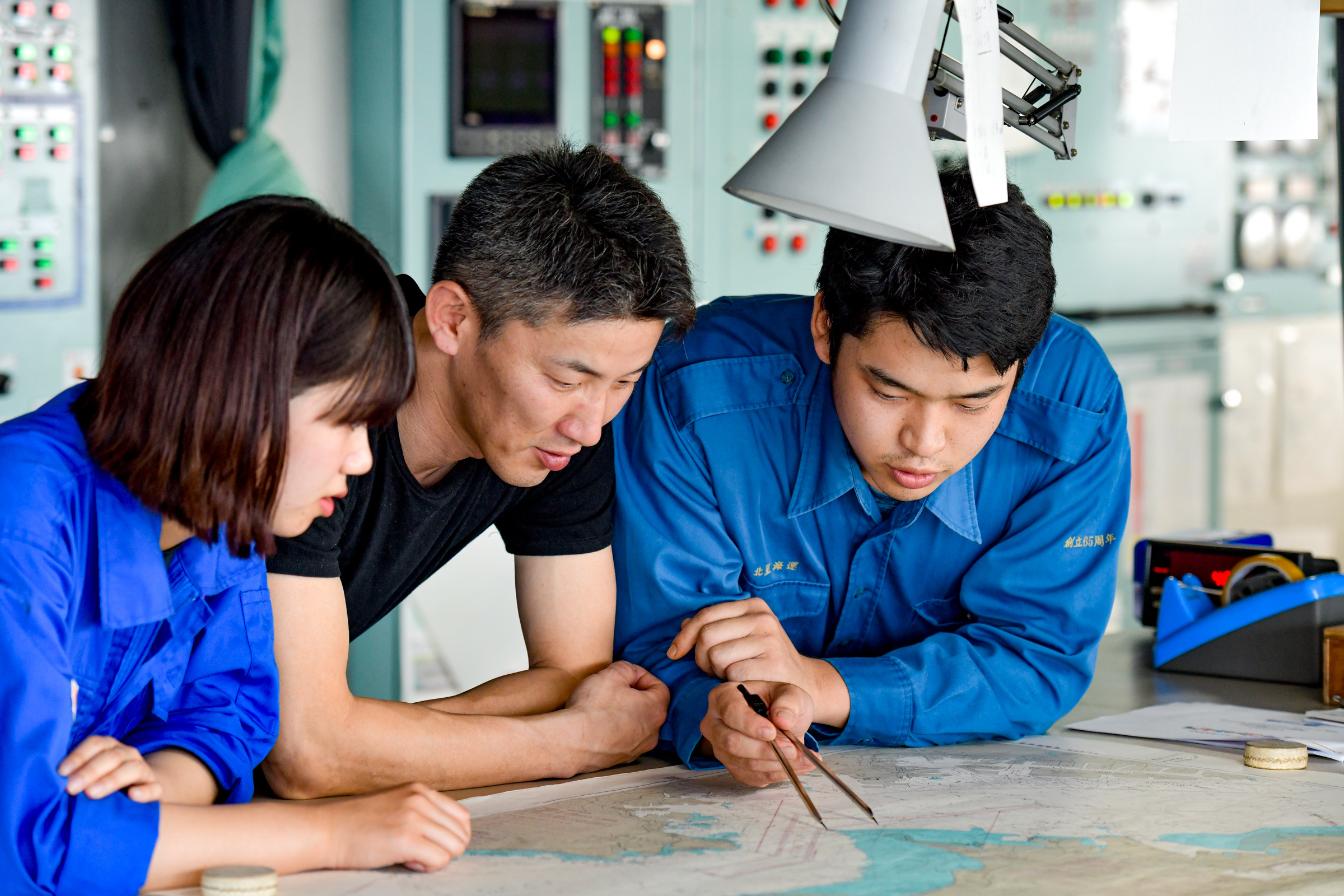
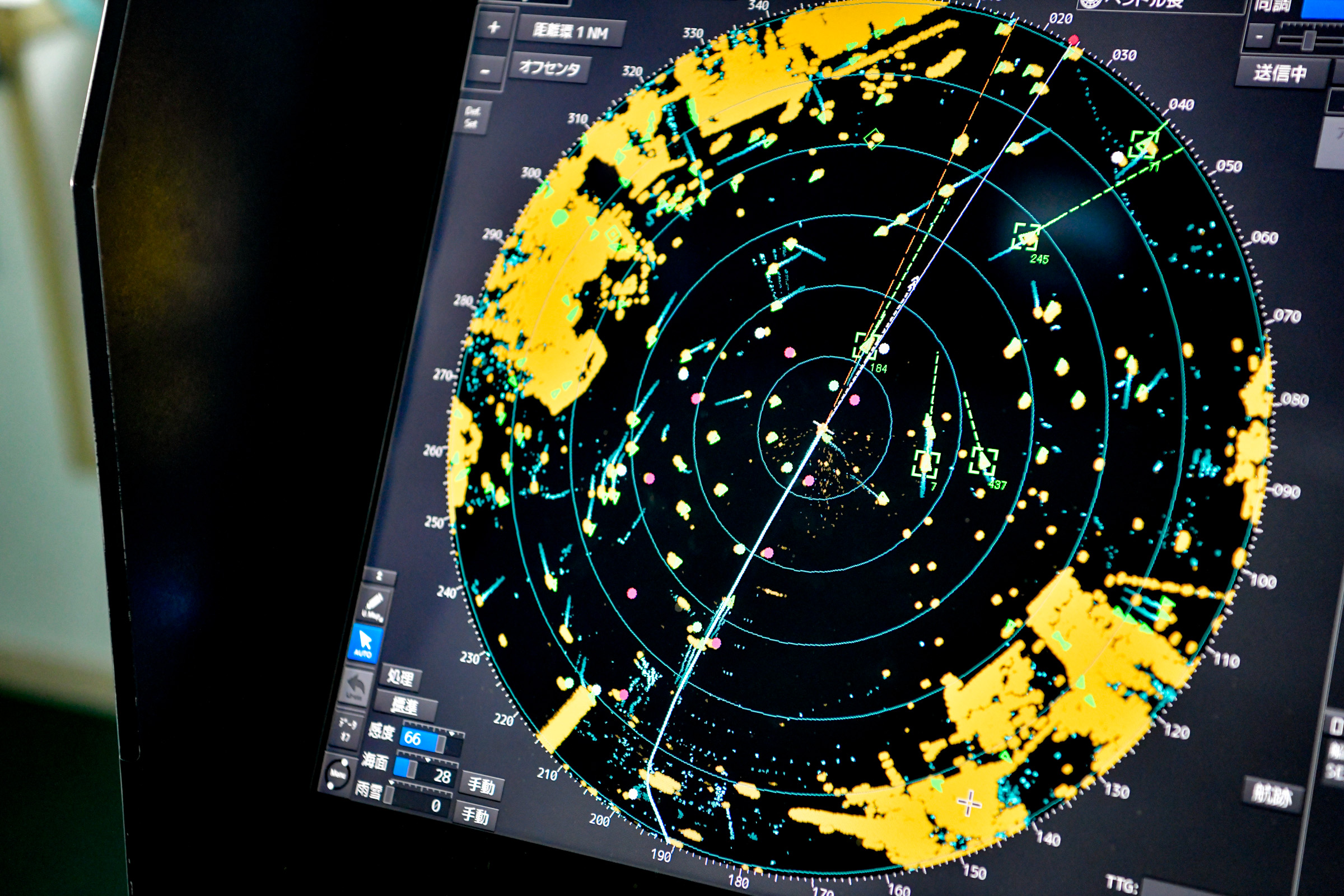
Using a variety of navigational instruments, such as electronic charts and radar, we try to maneuver the vessel precisely according to changing conditions and surroundings.
Physical condition is also important for the safety of the crew. If they are injured or become ill, they cannot go to the hospital immediately at sea.
It is important to take sufficient precautions when dangerous work is involved and to be prepared to handle any sudden illnesses on board.
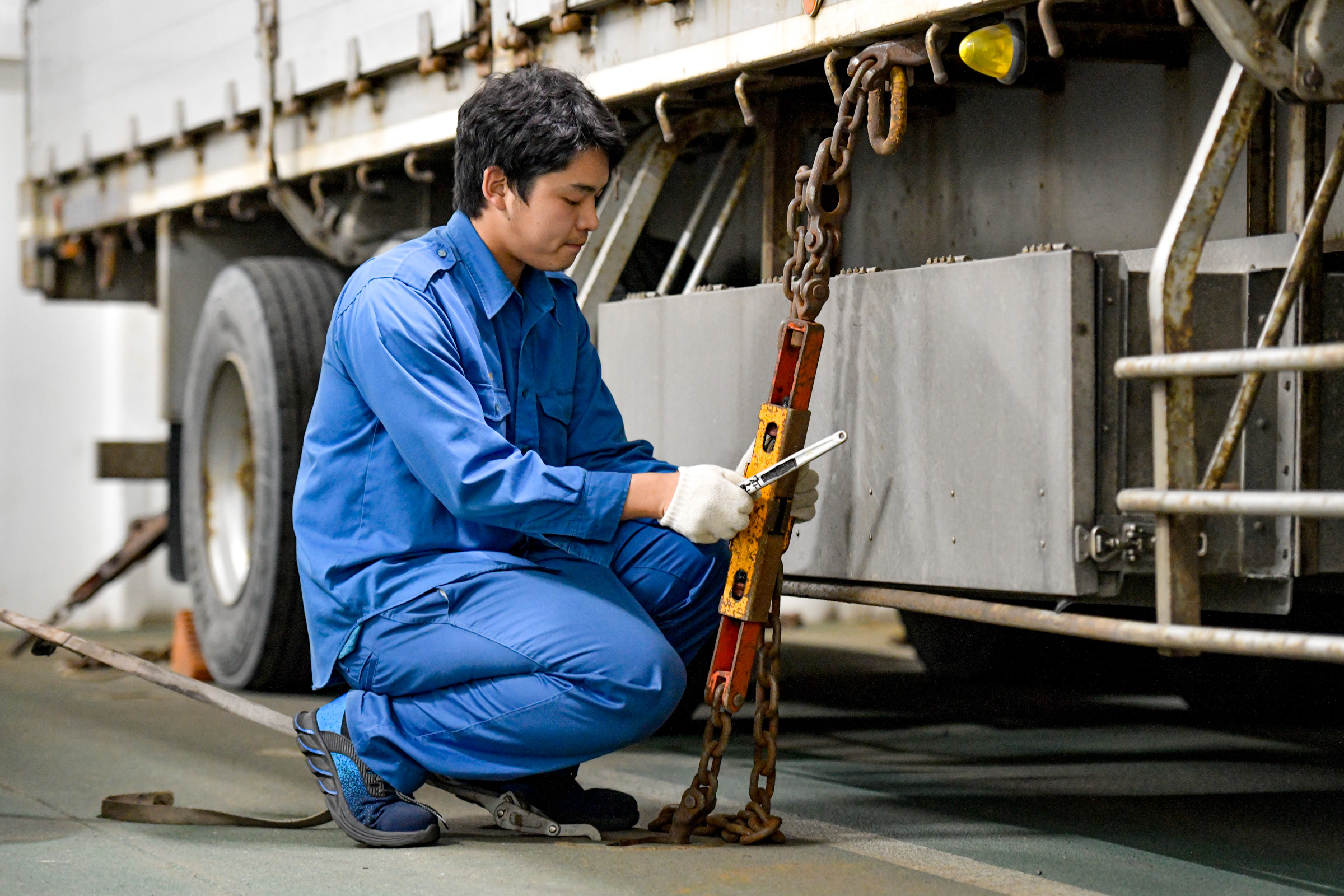
The cargo we transport now is agricultural produce and paper, and one of our important jobs is to maintain the quality of the cargo when we receive it.
For example, if the temperature and humidity are not properly controlled, even if we go to the trouble of transporting the vegetables, the vegetables will be damaged or the paper will be damp.
We have to take care of not only the safe operation of the ship, but also the health of the crew, the cargo, and many other things.
What attracts you to the job of a navigator?
After all, I get to operate a large ship, 169.99 meters in length. When I first became a navigator, I sometimes worried about what would happen if something went wrong on such a large ship, but now I find it much more appealing.
RORO vessels are completely different from the vessels you use for sightseeing and transportation, so people who see them for the first time are surprised to hear that they are moving such large vessels. They are very surprised when they see them for the first time.
The navigators maneuver and watch the ship in the "bridge," a wheelhouse that is high up in the air. I like the fact that we are very high up and can experience views that can only be seen there.

The morning sunrise and star-filled sky seen from the ocean are so beautiful that words cannot describe it. Especially at night, you can see an unbelievable number of stars, and I have seen shooting stars many times.
I am also attracted to the work cycle of 3 months on board and 1 month off.
I am always on my toes during the three months I am on the ship, but the moment I get off the ship after safely operating the vessel without incident and delivering the cargo in good condition, I feel a sense of accomplishment as well as satisfaction. I feel a sense of accomplishment as well as a sense of fulfillment.
Why did you become a navigator?
I grew up in Saitama Prefecture, so the sea was not close to me, but my grandfather was an engineer and we had many pictures of ships at home. I remember thinking to myself as a child, "How cool! I remember asking him many questions.
My grandfather did not often talk about boats himself, but if I asked him, he would answer any questions I had. I think that is how I first became interested in boats.
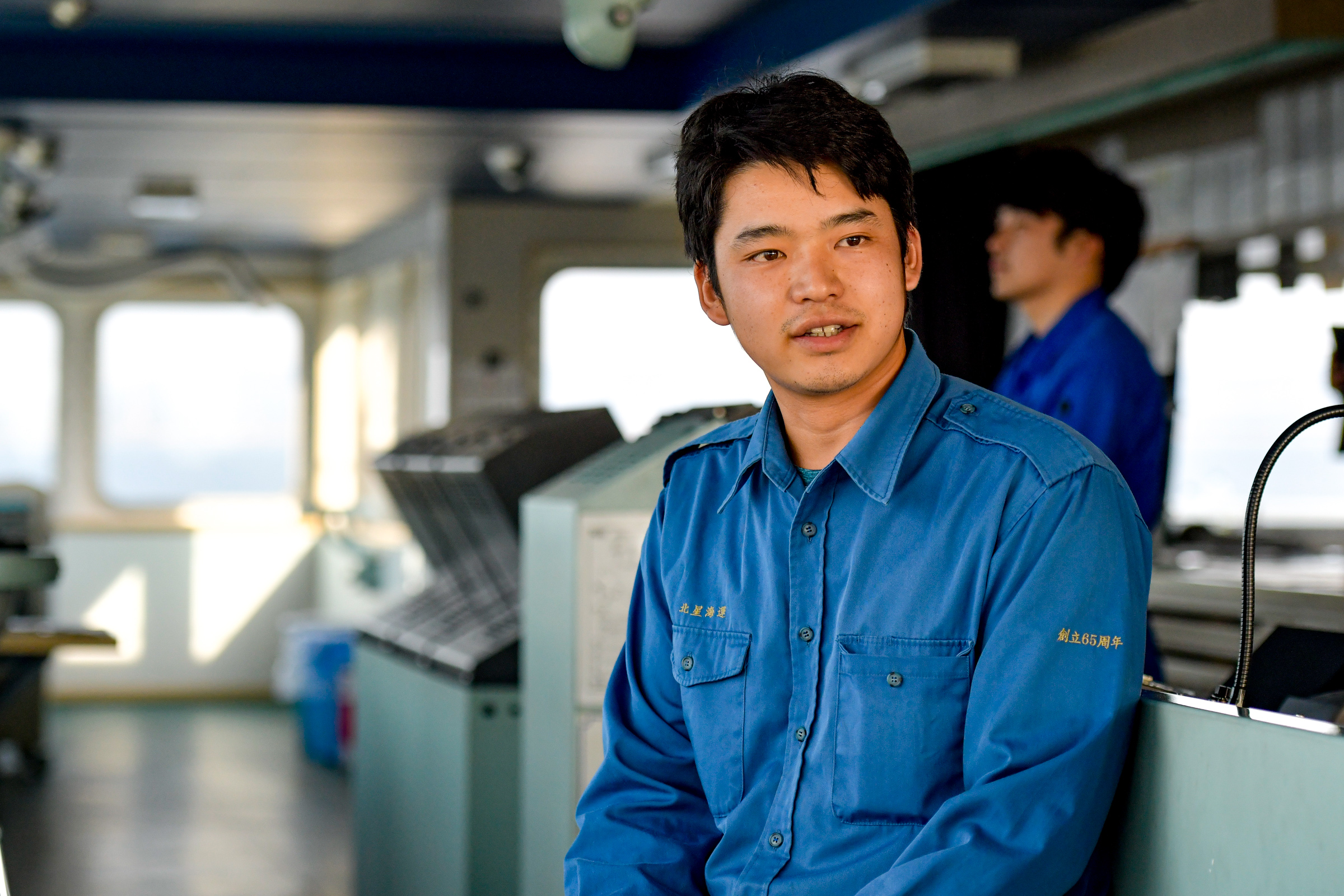
I had been thinking about working on a ship since I was in junior high school, and when I graduated from high school and went to college, I decided to study nautical engineering.
At the university, I studied for the third level of the "maritime engineer" qualification, and also did practical training on board a training ship.
Do you have a goal?
Every time I board a ship, my goal is to ensure the safety of the crew's lives and cargo. As I am now in my fourth year as a navigator and have more junior crew members, I want to put safety first while paying attention to the work of everyone on my team as a senior officer.
I learn a lot from teaching my experience and knowledge to junior staff. I enjoy expanding my knowledge when I realize something I didn't know until I was asked a question, or when I find something I don't understand.
Shipboard work is supported by teamwork, based on a sense of responsibility and trust in each person's expertise to protect his or her post. I will try to be a dependable member of the team, valuing communication such as daily conversation when having meals.
How to become a navigator?
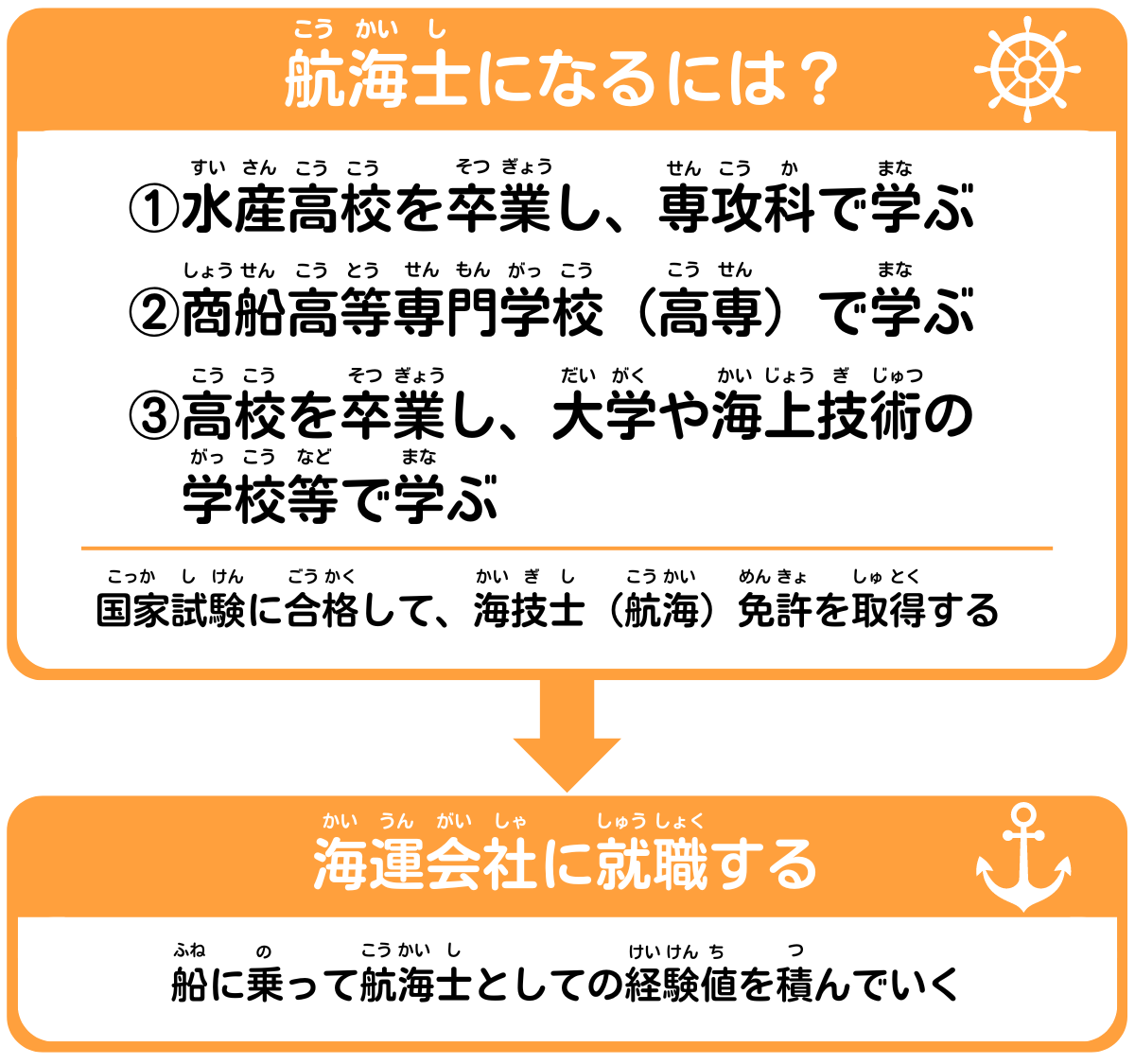
A message of support for everyone interested in a career as a navigator.
I think the job of a navigator is suited to people with a curious and inquisitive mind.
There are various navigational instruments such as radar, which we never touch in land-based vehicles, and ship-specific mechanisms and tools such as ballast pumps, which we can only be excited about.
You can see beautiful starry skies, shooting stars, and sea creatures such as dolphins and whales up close. When I encounter such moments, I think, "I'm glad I became a navigator! (laughs).
It would be interesting for children who like the sea, nature, and boats!
Interviewing and writing by Kaoru Takasaki Editing by Saori Ishibashi Photography by Kensuke Suzuki Design by Yuko Soya
- I want to work teaching!
- I want to work to protect people!
- I want to help people!
- Interested in vehicles and machinery!
- Places with lots of nature
- I am a goal-oriented person.
- Good talker and listener
- leader type
- I like to take care of people
- Intuition is keen.
- be meticulous
- Easily Enthusiastic Type
- Easy to get along with any person
- Responsible.
- Cooperation.
- (I can take a long vacation (more than three days).
- Work that is more substantial than a vacation
- Challenge the Future