




pharmacist
From a quiet research position to a member of the medical field. More and more responsibility with the division of labor.
Perfect For …
He is good at chemistry. A meticulous person who investigates questions to the end. Able to put themselves in other people's shoes and have a strong sense of ethics. Good with hands and neat and tidy.
Job Details
Careful dispensing of medications, clear explanations to patients
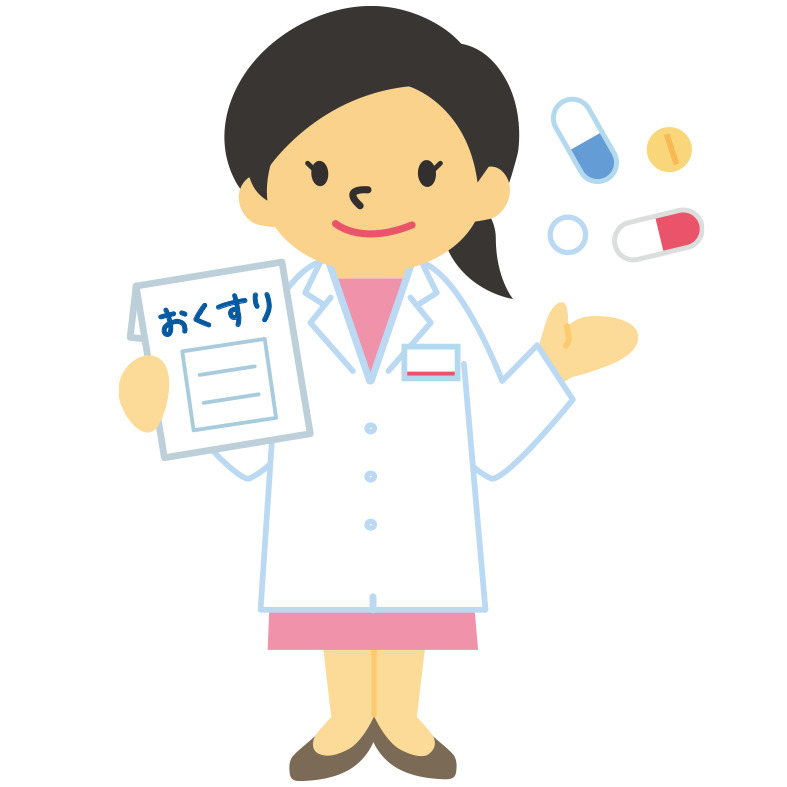
A drug specialist in a hospital or pharmacy who accurately prepares and administers medications in accordance with a physician's prescription. Since patients often bring their doctor's prescriptions to the pharmacy to have their medications dispensed, they must explain the correct use of the medication to each patient and answer any questions they may have. In addition, as a member of the medical staff, they are increasingly responsible for providing "medication guidance" to hospitalized patients.
Key Points !
National exam requires extensive knowledge
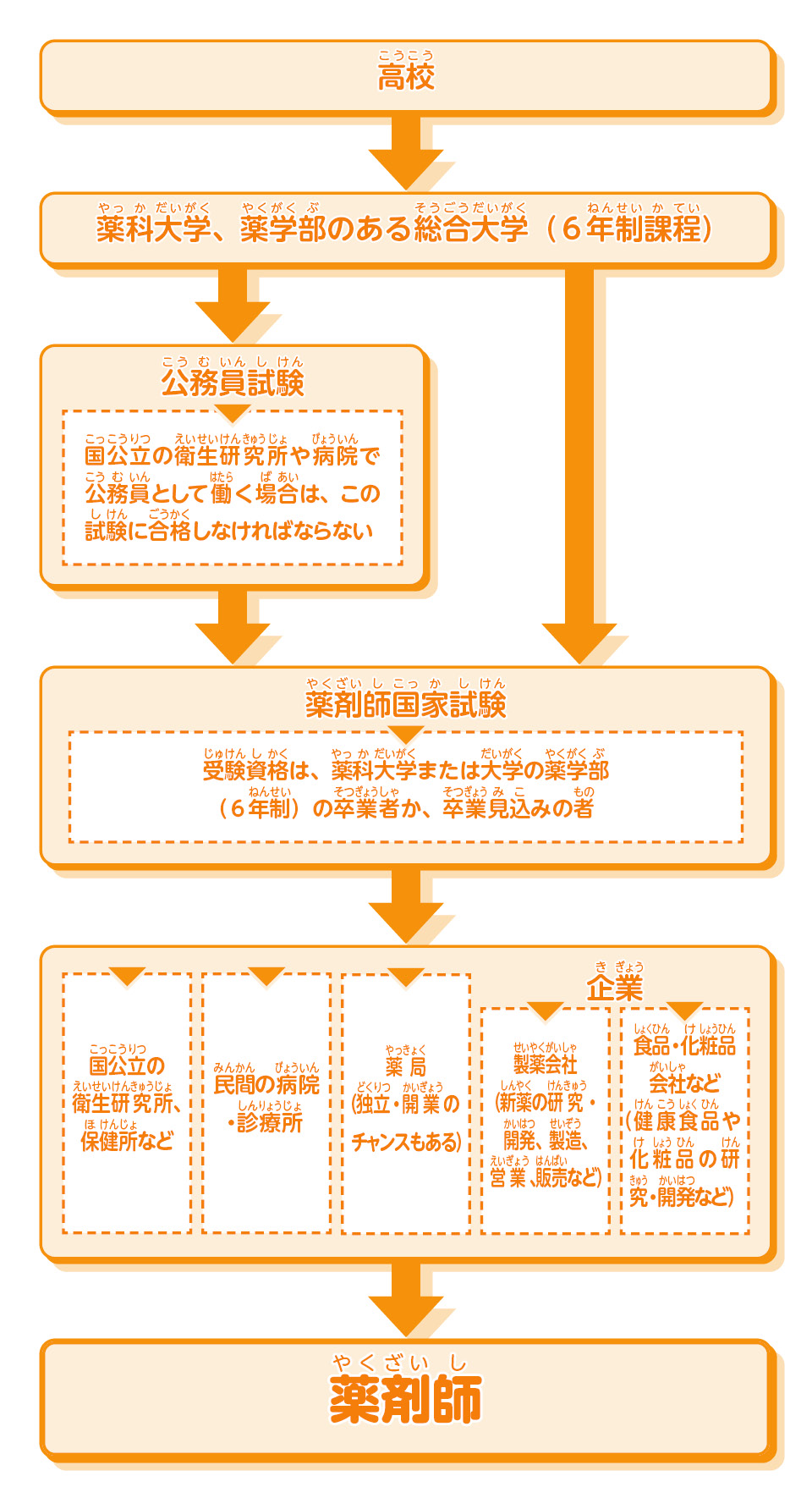
It is necessary to pass the national examination. The national examination includes a wide range of questions that test knowledge and skills not only in pharmacy but also in all aspects of healthcare, as well as questions that test communication skills. The pass rate for the past few years has been around 70%.
Is the university single-sector or comprehensive?
In principle, eligibility to sit for the national examination is obtained by graduating from a sixth-year pharmacy college or university pharmacy school. The advantage of a pharmacy college is that it has strong ties with teachers, seniors, and graduates, which is advantageous in terms of preparation for the national examination and employment. On the other hand, medical general universities with pharmacy schools often have affiliated hospitals. Incidentally, graduating from a four-year pharmacy school does not qualify you to take the national examination, so be careful when entering a university.
In the Future
Pharmacies become centers of "community welfare
In the future, there is likely to be a further polarization between "clinical pharmacists," who work closely with physicians and deal with patients, and "pharmacy pharmacists," who dispense and sell pharmaceuticals based on prescriptions issued by hospitals. As the population ages, pharmacy pharmacists are expected to serve as comprehensive advisors for "community welfare," which includes not only the medical field but also the health, welfare, and nursing care fields. There is also an increasing need for research work at pharmaceutical and other companies.
Job Facts
Income.
In the private sector, the national average of income is 5,651,000 yen, although it varies depending on the place of employment.
Vacation?
Hospitals are closed on vacations. However, it is not always a two day weekend, and in many places there are irregularities such as "eight days off within a four week period. Pharmaceutical companies and pharmacies have their own regulations.
Where do you work?
Hospitals, clinics, pharmacies, pharmaceutical companies, health-related government agencies, and universities. Independent pharmacy openings also available.
Your Future Path
It's a chart that shows at a glance the main routes to getting a job as a pharmacist!