
小学校教諭になるには?仕事内容や必要な資格などを解説!
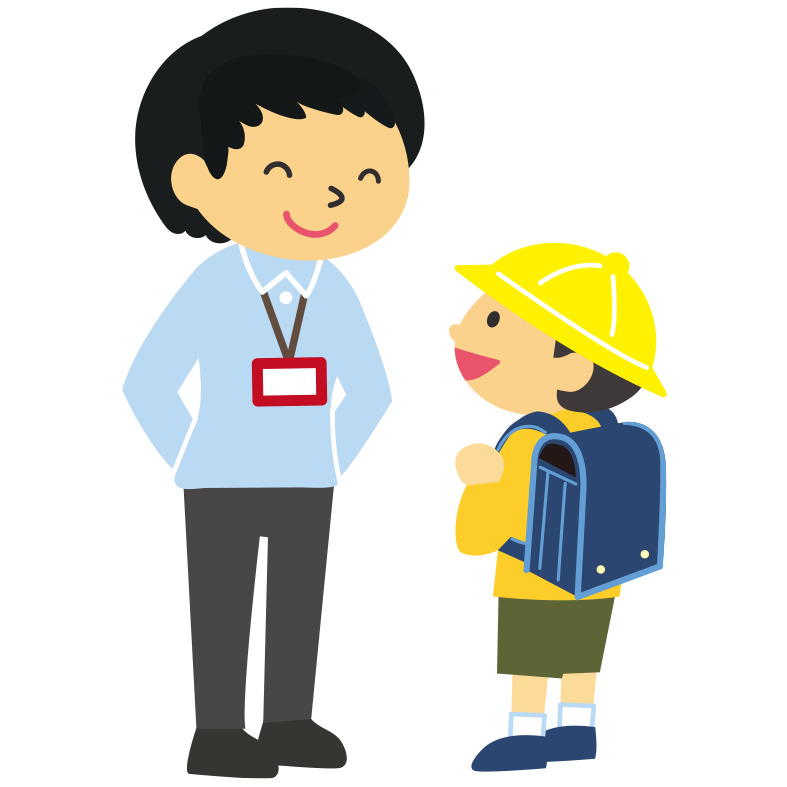
Through classes and daily life guidance, we nurture children's "zest for life" by teaching them the importance of nurturing their individuality, helping each other, and cultivating their dreams.
小学校教諭に向いている人は?こんな人にピッタリ!
A person who loves children. The person must be able to think from the children's point of view and pay attention to each one of them without dividing them. They must also have the physical strength to keep up with the children's energy.
小学校教諭の仕事内容を見ていこう!
The scope of work is broad, ranging from study and life guidance to PTA activities.
In the lower and middle grades below the 4th grade, the homeroom teacher teaches Japanese, social studies, arithmetic, and other subjects alone, but in the 5th and 6th grades, specialized subjects (foreign languages, arithmetic, science, and physical education) are taught in multiple classes. The introduction of a subject homeroom system is underway. In addition to teaching, the teachers also have a wide range of other duties, such as providing guidance on daily life, organizing school events, and cooperating with the PTA and the local community. For children who are receiving a full-fledged education for the first time, they are a great support and mentor.
小学校教諭になるには?必要な資格・役立つ知識もチェックしよう!
There are three types of licenses.
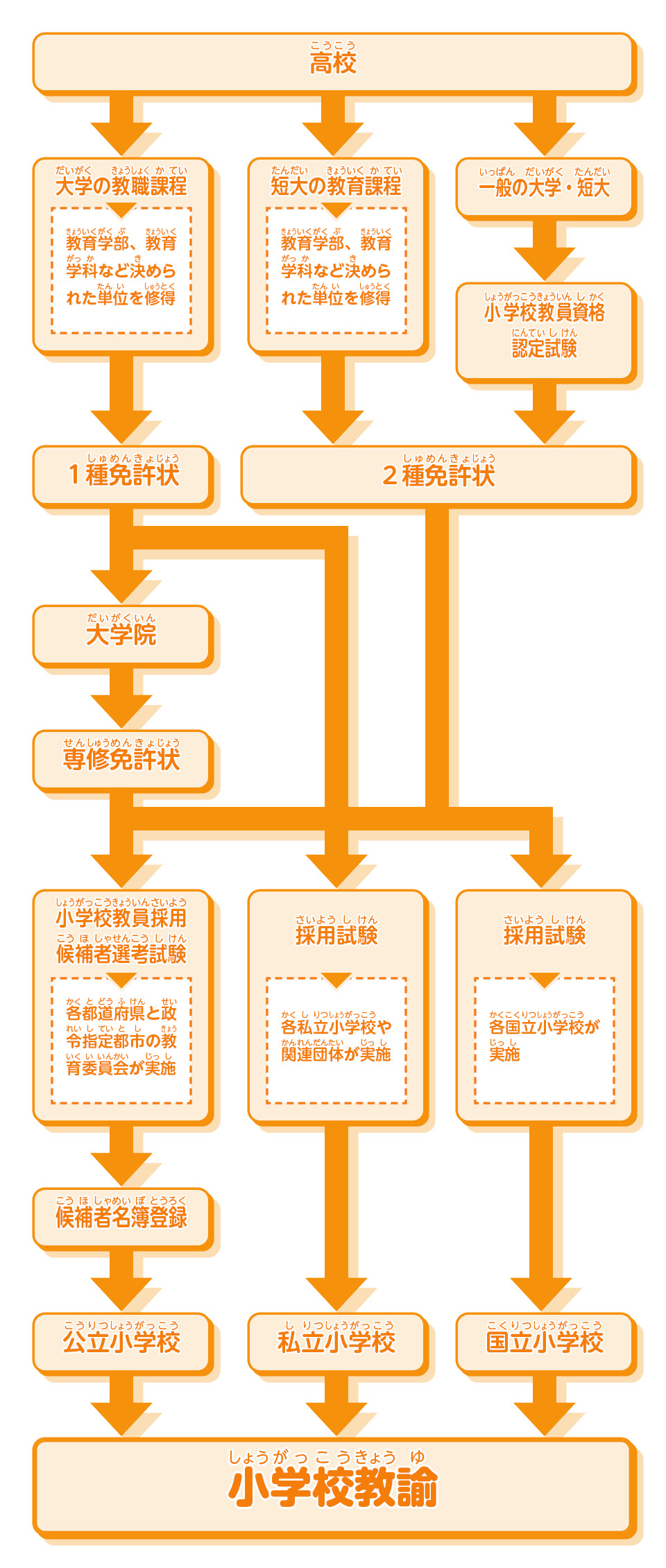
To become an elementary school teacher, one must attend a university or junior college that offers an elementary school teacher training program and obtain a teaching license. There are three types of licenses: Type 1, Type 2, and Specialized. Type 1 can be obtained by earning the required credits at a university's education department, while Type 2 can be obtained by earning the required credits at a junior college, or by passing the teacher qualification certification examination administered by the Ministry of Education, Culture, Sports, Science and Technology. Currently, an additional requirement is to have at least seven days of caregiving experience at a social welfare facility.
Preparation for the practical subjects of the employment examination
The practical test subjects for the teacher employment examination vary from prefecture to prefecture, but swimming, physical education, and music are often offered. At the very least, students should be able to swim 25 meters in breaststroke or crawl, and master at least a simple piece of music on the piano or organ.
なるためチャート!小学校教諭になるためのステップを図解するよ
キッズネットオリジナルの「なるためチャート」だよ!小学校教諭の仕事につくための主な進路の例や必要な情報を図解しているよ。ぜひ参考にしてみてね!
小学校教諭の将来性は?
Fertility is declining, but hiring is increasing.
The number of teachers hired is on the rise due to the Ministry of Education, Culture, Sports, Science and Technology's plan to improve the number of teachers and staff and to reduce the number of students per class. As problems such as bullying, truancy, and classroom violence become more serious, more emphasis is being placed on human qualities in hiring. In addition, teachers with higher skills in English education and programming education will be in high demand.
【データ】小学校教諭の年収・働き方・働く場所は?
Income.
In public elementary schools, salaries are based on local civil service salary regulations and therefore vary depending on the municipality in which they work. Salaries at private elementary schools are determined on a school-by-school basis. The average salary for both public and private elementary schools is approximately 7,110,000 yen (based on 12 years and 7 months of service).
Vacation?
Public elementary schools are closed on Saturdays, Sundays, and national holidays. Summer and winter vacations, etc., are only holidays when children are out of class, and teachers are at work as usual. They are assigned to pool instruction, day duty, and other events and training.
Where do you work?
In the case of public elementary schools, the work location is assigned within the prefecture or government-designated city in which you were hired. Transfer occurs when the same assignment becomes too long, for example. In the case of private elementary schools, there are almost no transfers.