




Chemical Analyst (Analytical Chemistry Technician)
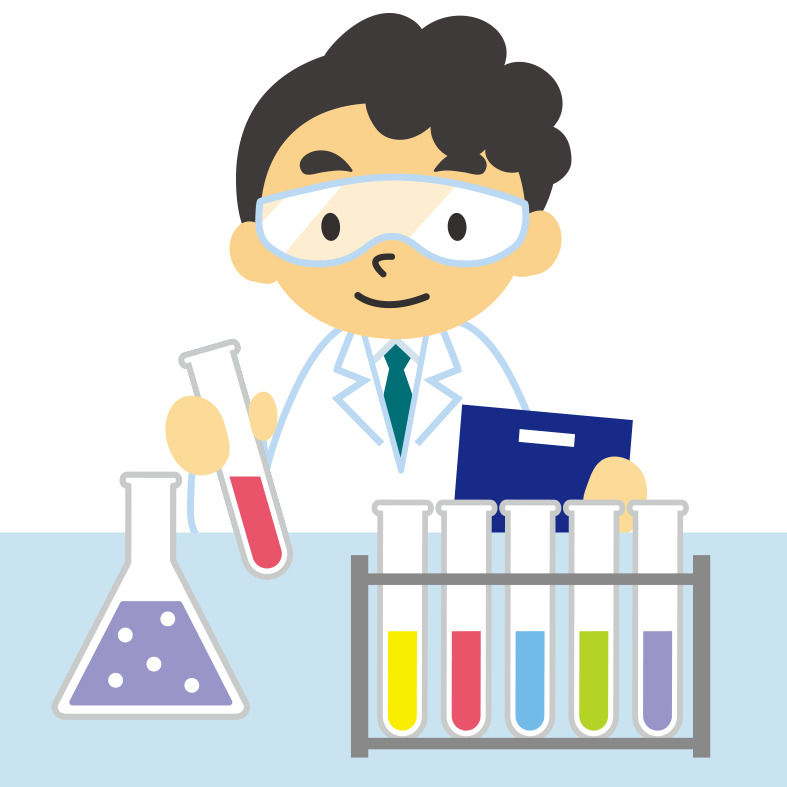
A specialist who uses chemical reactions in experiments and measuring instruments to determine the composition of substances.
Perfect For …
A serious person. A responsible person. A person with good judgment.
Job Details
Measure the types and amounts of components that make up a substance
Chemistry is the study of the structure and properties of substances that form everything. Substances are made up of some kind of "elements" or "compounds," and chemical analysis is the work of measuring the types and quantities of the "components" that make them up. Analytical work is performed using experiments and measuring instruments that utilize chemical reactions. Chemical analysts are in charge of this. The research department of a manufacturing company, for example, analyzes samples (materials) taken during production. They check to see if there are any irregularities in the amount of ingredients in the product, or if the product has undergone an unscheduled chemical reaction and turned into something harmful, and propose guidelines and standards for work at the manufacturing site. Chemical analysis related to nature involves analyzing samples of air, water, soil, etc., and compiling the results into a report. As such, chemical analysis is performed in a wide range of fields. There are even companies that specialize in chemical analysis at the request of their customers. If the measurement results of such chemical analysis are incorrect, it can lead to serious problems. It is a heavy responsibility, but it is an important job in its own right.
Key Points !
Learn basic chemistry in high school or college.
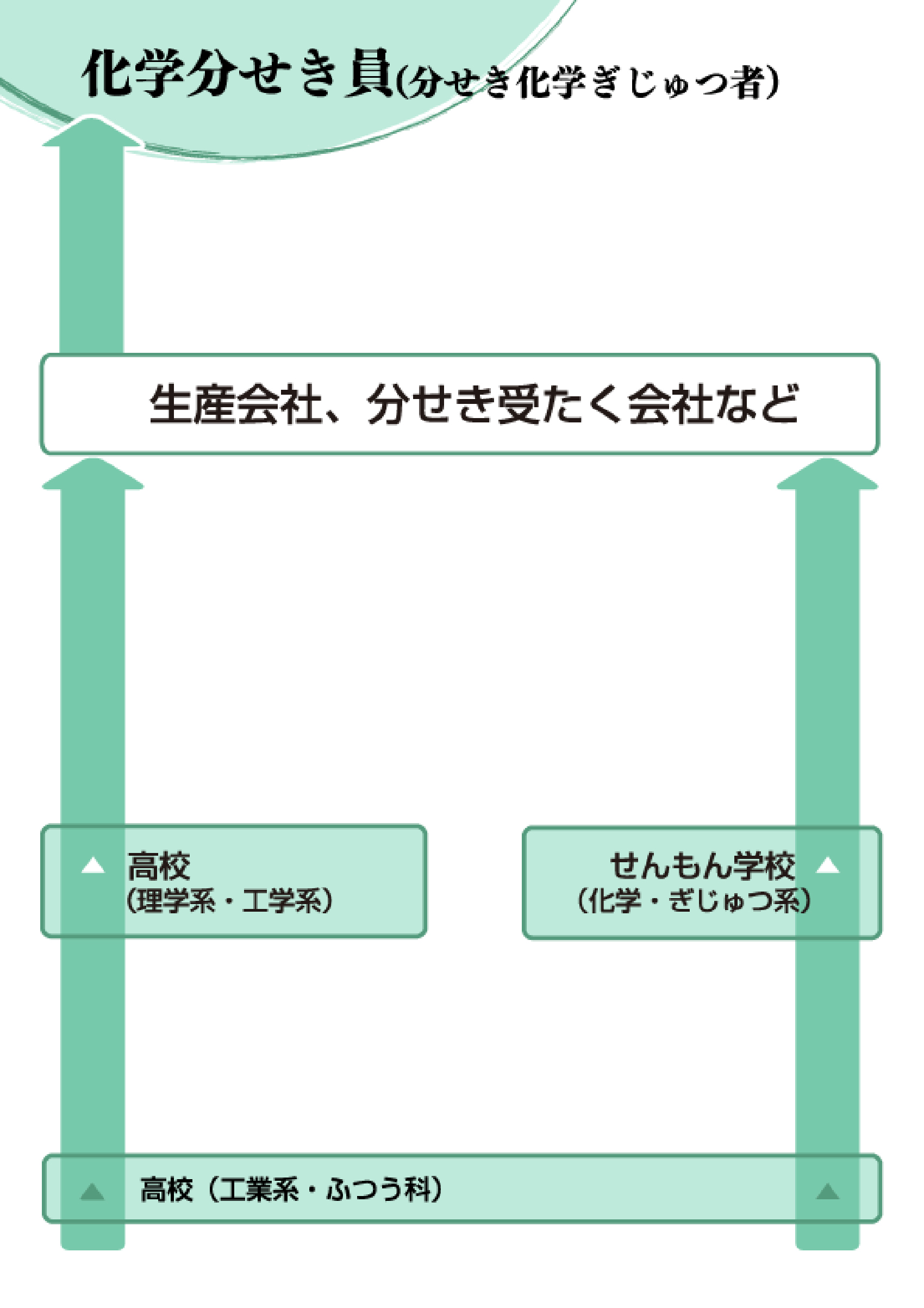
To become a chemical analyst, no particular educational background or qualifications are required. However, basic knowledge of chemistry is necessary. It is recommended that you study in the industrial chemistry department of a technical high school, an analytical chemistry college, or the chemistry department of a university's faculty of science or engineering. Employment opportunities include companies that manufacture pharmaceuticals, cosmetics, foods, and other products, as well as environment-related companies. There are also jobs at research institutes and in the civil service. Once assigned to a department in charge of analysis, you will learn analytical techniques from senior analysts and hone your skills through practical work. It is said that it takes more than 10 years to be able to perform analysis that meets the requirements.
Prove your ability with the national qualification "Chemical Analysis Technician".
There are no qualifications to become a chemical analyst, but there are three national qualifications that certify skills related to chemical analysis, from Level 3 to Level 1, and the first step is to obtain a Level 3 certification, which is the beginning level. The Level 2 certification test is available to those who have obtained the Level 3 certification or those who have at least two years of work experience. The Level 1 certification is available to "those who have obtained a Level 3 certification and have at least four years of work experience, those who have obtained a Level 2 certification and have at least two years of work experience, and those who have at least seven years of work experience. The certification is a proof of competence and will be advantageous for finding a job or changing careers.
In the Future
Chemical analysis is essential for safe living.
Chemical analysis is essential for products directly related to people's health, such as pharmaceuticals, foods, and cosmetics, to ensure their safety. Chemical analysis is also performed for air, water, soil, etc., for the safety of humans and other living creatures. As laws and regulations related to health, safety, and the environment become stronger, the need for chemical analysis in such fields will increase. In addition, new materials with high functionality are being developed one after another, and new knowledge and techniques are required to analyze them. Expectations for chemical analysts will continue to grow.
Job Facts
Income.
Average annual income ranges from 3.96 to 5.15 million yen.
Vacation?
Basically, there are two days off a week, although it varies depending on the place of work. Some, such as research departments in factories that work at night, may work at night in shifts.
Where do you work?
Various production and manufacturing companies, analysis companies, food and other inspection agencies, local governments (health centers, police, fire departments), etc.
Your Future Path
It's a chart that shows at a glance the main routes to get a job as a chemical analyst (analytical chemical technician)!