




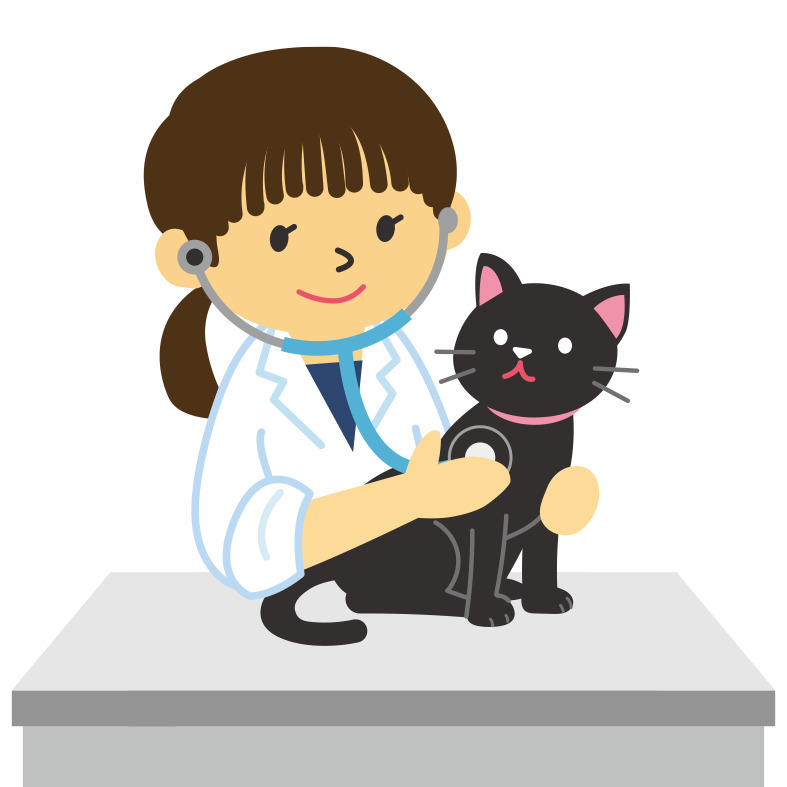
veterinarian
He has been involved in a wide range of activities, including the treatment of pet diseases, livestock breeding guidance, and measures to combat infectious diseases.
Perfect For …
Above all, you must love animals. You also need to have a keen insight to sense the feelings of animals that cannot speak, a willingness and curiosity to always be positive, and the physical strength to endure hard work.
Job Details
Veterinarians working in a variety of fields!
Veterinarians have a strong image of being "veterinary doctors," but this is only part of the story. There are many veterinarians who work as public servants, working in national and public zoos, providing guidance in animal husbandry, working in animal quarantine (infectious disease control), and conducting research on breed improvement. In the private sector, they are also active in the development and management of feed and animal food products. Recently, an increasing number of pharmaceutical manufacturers are hiring veterinarians to manage the breeding of animals for research purposes. There are also veterinarians who work at Japan Racing Association (JRA) facilities and specialize in health management and research of racehorses.
Key Points !
First, he enrolled in a university with a veterinary school!
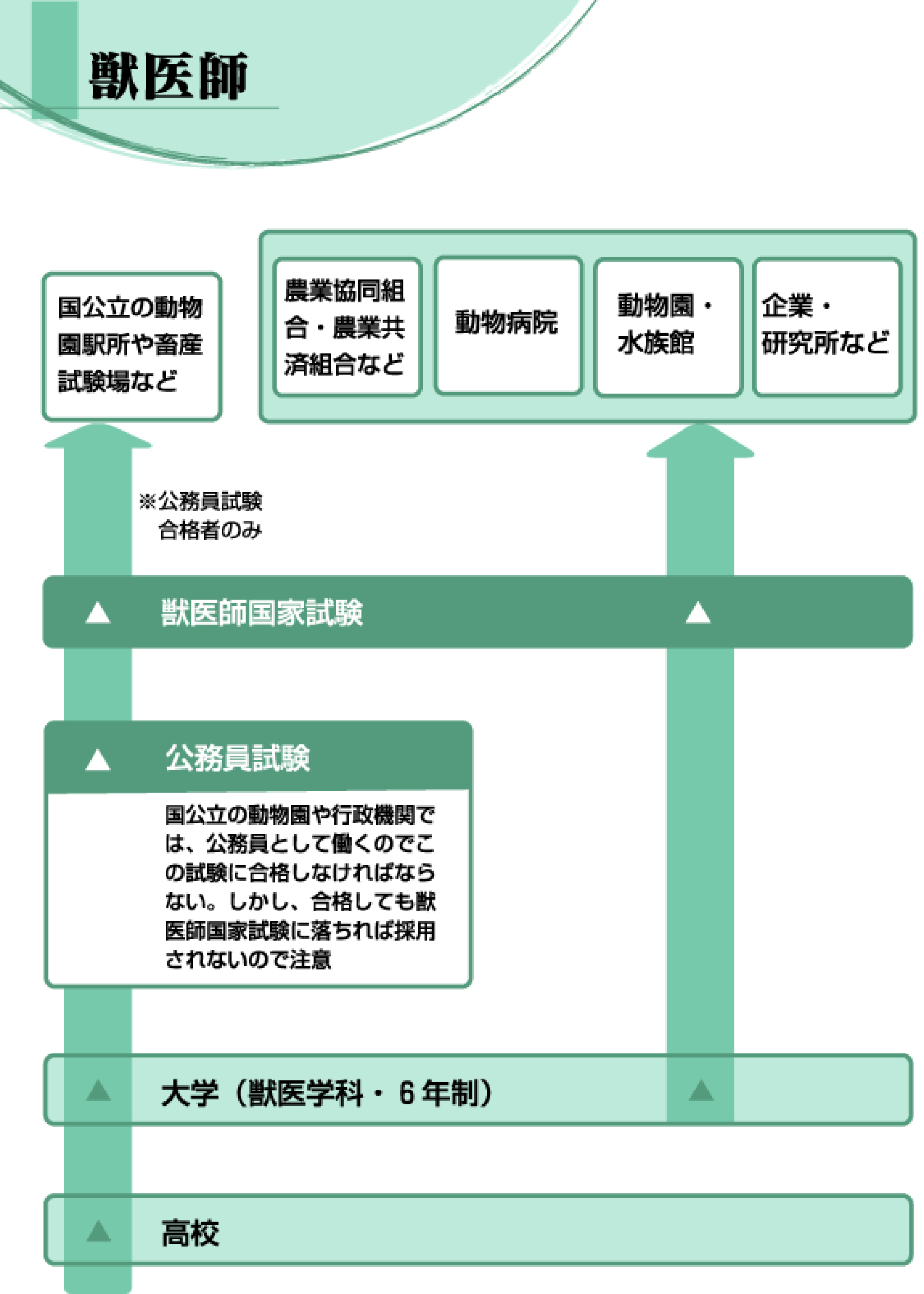
To become a veterinarian, one must pass the National Veterinary Medical Examination and obtain a "veterinary license," but to be eligible to take the exam, one must enroll in a university with a veterinary department. Currently, there are 11 public universities (Hokkaido University, Obihiro University of Agriculture and Veterinary Medicine, Iwate University, University of Tokyo, Tokyo University of Agriculture and Technology, Gifu University, Tottori University, Yamaguchi University, Miyazaki University, Kagoshima University, Osaka Prefecture University) and 6 private universities (Dairy Farming Science University, Kitasato University, Nihon University, Nihon Veterinary and Life Science University, Azabu University, Okayama University of Science).
Pets, livestock, zoos... very different working environments.
獣医系大学で6年間学び、国家試験に合格すれば獣医師となる。医師のようなインターン制度が確立されていないため、資格を取得後、希望する現場で働きながら臨床経験(診療・治療)を積むことになる。ペットなど小動物関係は動物病院で研修医として。牛や豚など畜産動物関係は、農業共済団体の家畜診療所などに勤務して経験を積むのが一般的だ。動物園で獣医として働く場合は、体の大きさも、生活環境も、生態も多様な動物たちの健康管理を行うので、常に学び続ける気持ちが必要。飼育活動や繁殖活動、野生動物の研究に携わることもあり、業務は幅広い。
どんな獣医師をめざすかによって働く環境も内容もま大きく異なってくるので、しっかり確認しておこう。
Civil service certification may be required.
If you work at a meat inspection facility under the jurisdiction of a prefectural government, a quarantine station to prevent the influx of infectious diseases from overseas, or a national or public zoo, you will also need to qualify as a public officer veterinarian. Depending on where you work, you will be classified as either a local public official or a national public official, and you will be required to take the respective civil service qualification examinations in addition to the veterinarian qualification.
In the Future
Pet medicine is also becoming more specialized and segmented.
Veterinary clinics are responsible for examining pets for all kinds of diseases, but as pets' longevity increases, so do the number of cancers and lifestyle-related diseases, just as in humans, and more and more detailed medical examinations are being demanded. As a result, the field of medical care is becoming more and more segmented. If you deepen your knowledge in your specialty and hone your skills, you will gain recognition as a specialist.
Job Facts
Income.
Starting salaries for civil servants and agricultural mutual aid organizations are generally around 200,000 yen. In the case of private companies, starting salaries vary, but none seem to offer special allowances. For veterinarians in private practice, income varies depending on their medical skills and other factors, but they can earn 10-20 million yen per year.
Vacation?
Many veterinary clinics have a two day weekend, but some work on weekends and holidays. General practitioners vary, and may be woken up in the middle of the night if there is an emergency.
Where do you work?
Veterinary hospitals, national and local government research and testing institutions, corporate laboratories, zoos, aquariums, and racetracks.
Your Future Path
It's a chart that shows at a glance the main routes to a veterinary career!