




Fisherman
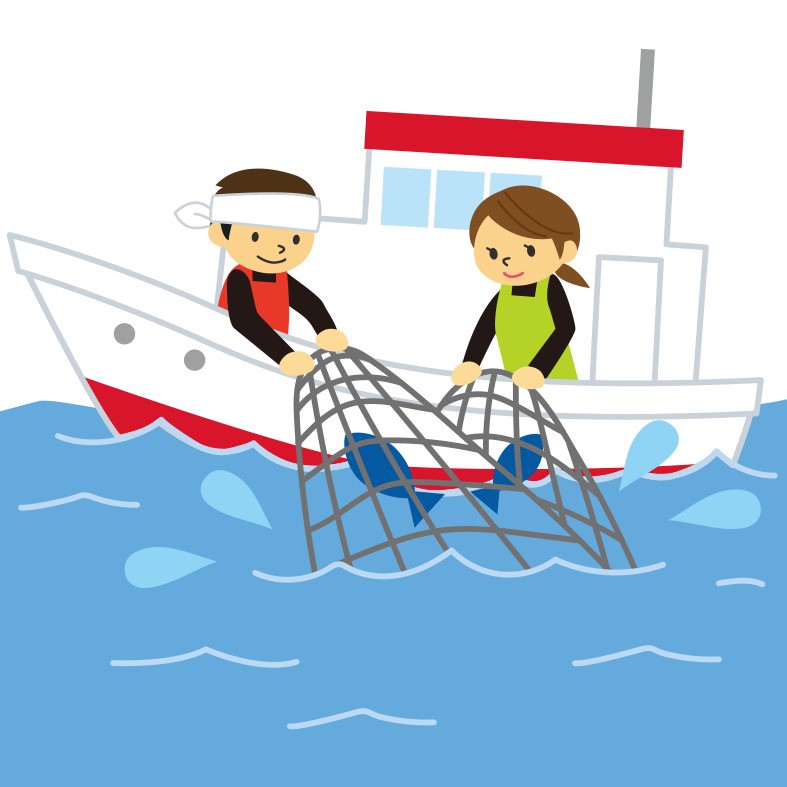
People who make a living by catching fish and shellfish from the sea and rivers. Nature, which sometimes turns its fangs against humans, is their workplace.
Perfect For …
People who love nature and are physically fit. People who can communicate well with other fishermen on the boat, as they will be socializing with other fishermen.
Job Details
Take fish and sell them at markets, etc.
The job of fishermen is to catch fish and shellfish from the sea and rivers, and sell them at markets to earn an income. Fishing in the ocean can be divided into three types depending on the fishing grounds: coastal fishing, offshore fishing, and pelagic fishing. In coastal fishing, small boats make day trips near the coast and catch shellfish and seaweed in addition to fish. Offshore fisheries are those conducted in the waters around Japan by vessels of 20 to 150 tons, and generally take two to three days to return home. In pelagic fisheries, large vessels head out into the world's oceans, such as the Atlantic, Pacific, and Indian Oceans, to catch fish over a long period of time. Although the income from this type of work varies depending on the weather and the movements of the fish, it is a very rewarding job that is indispensable in supporting Japan's food supply.
Key Points !
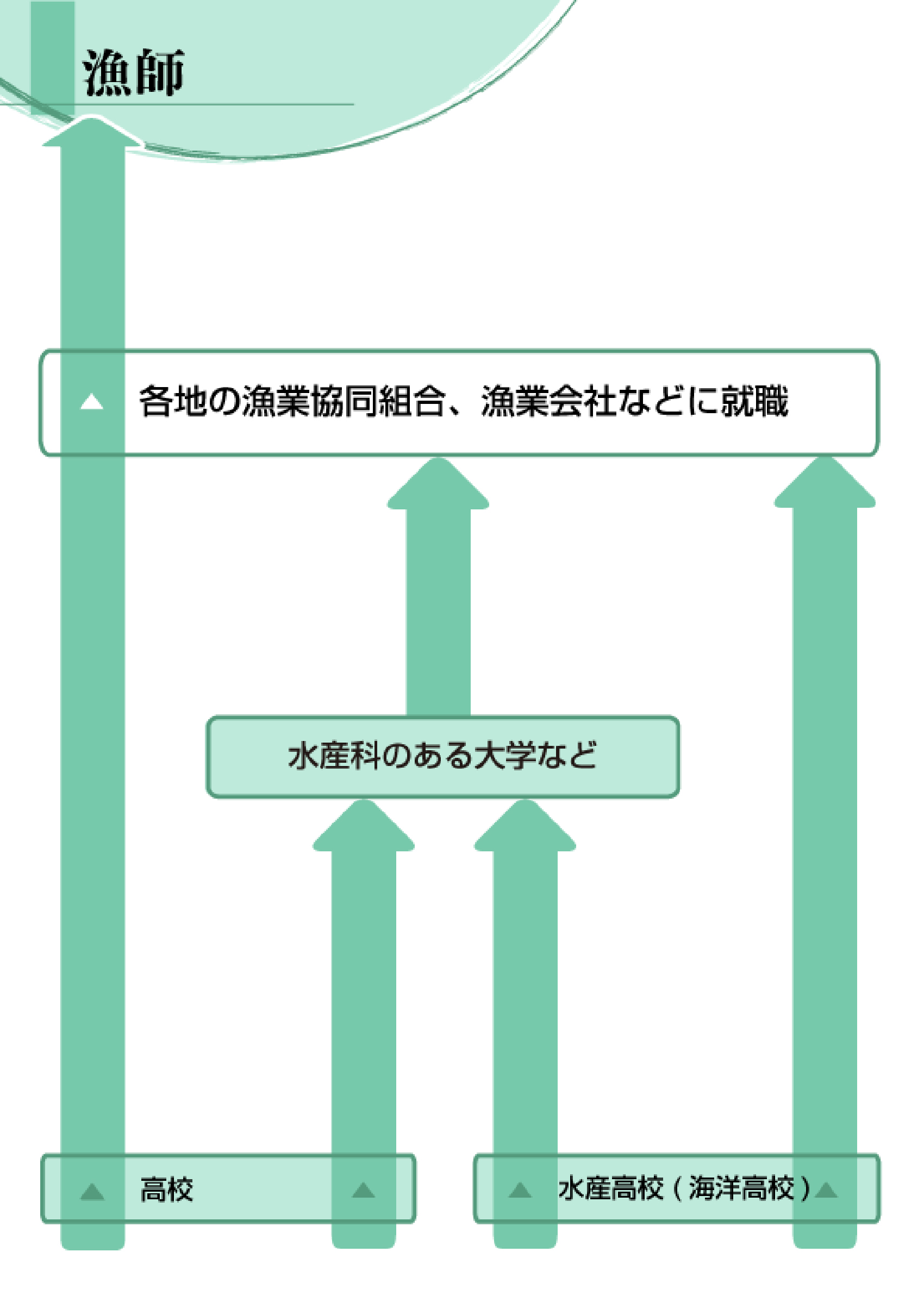
Study at a high school or university with a fisheries department, fishery department, etc.
No specific educational background or qualifications are required to become a fisherman. If there is someone in the fishing industry close to you, you can begin your apprenticeship with a fisherman's master by relying on his or her contacts. In addition, there are fisheries high schools, marine high schools, high schools with fisheries departments, and universities throughout Japan, where information on job offers is gathered. If you acquire various knowledge about the fishing industry at school, this knowledge will be useful when you become a fisherman.
Gather information from fishing cooperatives and employment magazines.
Fishing cooperatives and Internet job sites around the country may be looking for fishermen. It is a good idea to contact the company you are interested in. The National Center for Fishery Worker Recruitment and Training is an organization for people who want to become fishermen, and its website constantly gathers new information from fishery cooperatives and other organizations around the country. They also hold employment fairs and seminars, which are convenient because you can talk to them directly.
Licenses related to boats are required for career advancement
If you want to advance your career in the future, get a ship-related license. If you obtain a "first-class small vessel operator's license," you will be able to operate a vessel of less than 20 tons by yourself. To operate a ship equipped with radio equipment, you must obtain a "marine special radio operator's license," either first or second class. To become a captain, navigator, chief engineer, or radio operator on a large vessel in the deep-sea fishing industry, a "marine engineer" license is required. The maritime engineer's license is divided into "navigation," "engine," and "communication," and the number of years of work experience required to take the examination differs for each class.
In the Future
The environment surrounding fishermen is harsh.
Fishing does not always provide a stable income because the amount of fish caught changes when the ocean turns sour or fish diseases become prevalent. In recent years, global warming has changed the habitat of fish, and overfishing has reduced the number of popular fish, making the work of fishermen more difficult. However, advances in fish and ocean research and improved technology have led to more marine aquaculture near the coast. It is now possible to raise fish (such as tuna) that were once thought to be impossible to breed, and land-based aquaculture in huge fish ponds is also on the rise. Even if it becomes harder to catch fish in fishing, there will be more and more cases where fishermen will be active in fields such as aquaculture.
Job Facts
Income.
The average annual income is about 3.5 to 4 million yen for those in their 40s. There are also some masters, such as the famous "Oma tuna" fishermen, who catch big fish that can fetch tens of millions of yen per fish.
Vacation?
If the sea is too rough to fish, they are forced to take a day off. Other than that, it depends on the type of fishing and the time of year.
Where do you work?
Maritime. They may be part of a crew of a fishing company with a large boat, or they may fish on a small, privately owned boat.
Your Future Path
It's a chart that shows at a glance the main routes to a fisherman's job!