




plasterer

These craftsmen use trowels to paint and finish the walls, floors, and mud walls of buildings.
Perfect For …
Self-motivated. People who are confident in their physical strength. People with artistic sense.
Job Details
Paint the walls of the building beautifully with a deft hand.
Plasterers work at construction sites such as condominiums and buildings, applying paint and tile, pouring concrete, and finishing staircases. Plasterers use a tool called a trowel to apply cement, mortar, plaster, or clay. Plasterers are divided into "machiya" and "no-choba" according to their specialty. Machiya plasterers work on detached houses, temples and shrines, painting clay walls and plaster. Plasterers in the field work for major general construction companies, known as general contractors, to paint the walls and floors of buildings and condominiums.
Key Points !
Plastering will continue to be an integral part of the construction industry
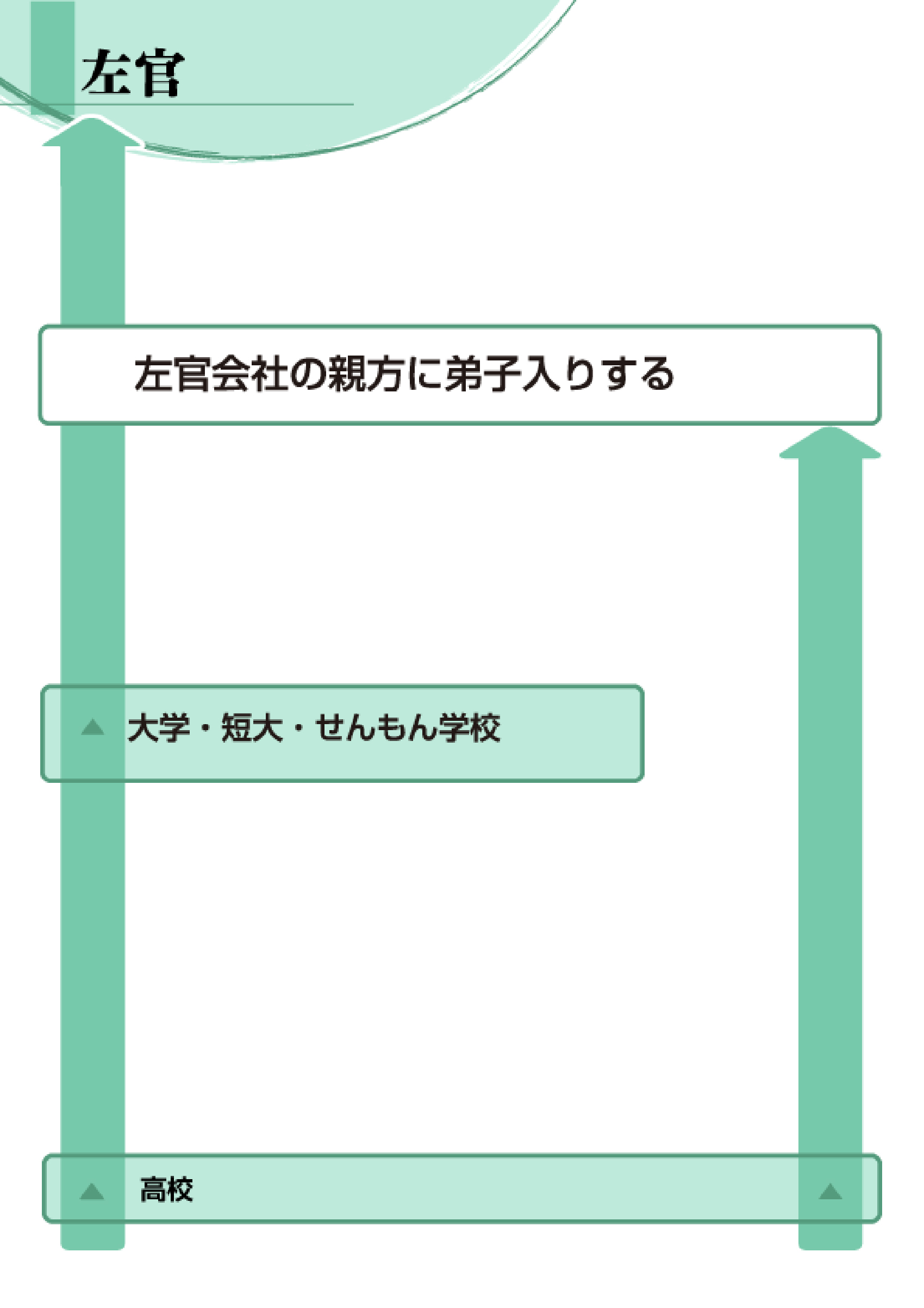
To become a plasterer, no qualifications or education are required. One becomes an apprentice to a master plasterer and learns the trade. Plastering companies are often entered through job advertisements or through introductions by acquaintances. Another option is to attend a vocational training facility nationwide (where there are courses on "home interior finishing") to acquire basic skills before looking for a plastering company. Once at a company, you start out as an apprentice. Once they become accustomed to the work, they are finally allowed to use a trowel, and learn how to make a dirt floor and plaster the bottom of a wall.
Plastering Technician" is a qualification to be recognized as a full-fledged plasterer.
How long it takes to be recognized as a full-fledged plasterer depends on individual ability and experience, but it is said that at least five years of training is required. For those who wish to test their skills, there is a technical certification system called "Plasterer Technician," a national certification ranging from Level 1 to Level 3, which, if obtained, proves that the plasterer is a full-fledged plasterer. However, to take the 1st class examination, one must have at least seven years of work experience. First, aim for Level 3, which can be taken even if you do not have much work experience. If you want to become a master, there is also a "special kyu," which can be taken with at least five years of work experience after passing the first kyu. The examination is administered by the prefectural government, and consists of a technical exam and a departmental exam.
In the Future
Declining and aging craftsmen are pulling away.
Plastering is an essential part of construction work, but the number of plasterers is decreasing year by year. The number of craftsmen is aging, and there is an urgent need to train young plasterers in order to pass on their skills to the next generation. Conversely, there is a great demand for plasterers. Although the work is physically demanding, such as carrying heavy cement, the number of female plasterers has been increasing recently, as it is an attractive job that allows them to use their artistic sensibilities with a trowel. Plastering companies and construction companies are always looking for people who want to become plasterers, so there are many opportunities for employment.
Techniques for passing on wooden structures are "intangible cultural heritage".
In 2020, "Traditional Building Craftsmanship: Traditional Techniques for Inheriting Wooden Buildings" was registered as a UNESCO Intangible Cultural Heritage. Plastering (Japanese wall)" is included in this list. Plastering is an essential part of wooden construction. The owners of advanced techniques for repairing and preserving historical buildings are likely to become objects of respect as inheritors of valuable traditional techniques.
Job Facts
Income.
Craftsmen's work is often calculated on a per diem basis. For an apprentice, it is 7,000 yen per day, and for a full-fledged craftsman, it is about 10,000 yen per day.
Vacation?
About one day off per week. They often have Sundays off. If it rains, they cannot work.
Where do you work?
Many are construction sites.
Your Future Path
It's a chart that shows at a glance the main routes to get a job as a plasterer!