

Formula 1 driver
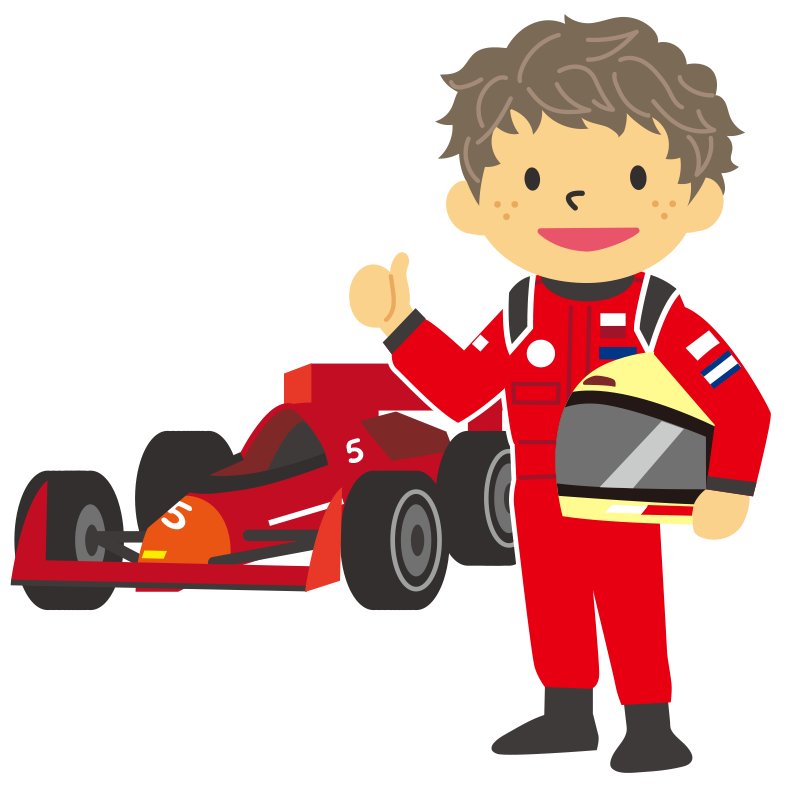
He is a high-profile, flamboyant driver who competes in Formula One (F1) racing, known as the pinnacle of automobile racing.
Perfect For …
A person who can work steadily toward a goal. A person who is good at driving a car. Able to work as a team.
Job Details
Participate in the World Championships and become a champion.
Formula 1 racing is an automobile competition in which cars are raced in a single-seat, race-only vehicle called a formula car. Formula" means "standard. Formula cars are competition cars designed according to the standard that "the wheels and driver are exposed. Since these cars were developed with an emphasis on speed, they can reach a maximum speed of more than 300 km/h. The driver of such a high-performance car is a Formula One driver. F1 drivers drive such high-performance machines. Each racing team is allowed to enter two cars in a race. The maximum number of teams that can compete in the race is 13, so the maximum number of cars is 26. In other words, F1 drivers are the chosen racers of only 26 people in the world at most. (Since approximately 20 F1 races are held each year in various countries around the world, F1 drivers travel with their teams from one country to another. The courses vary from country to country, with some racing circuits featuring curves and straights, and others using city streets. In addition to advanced driving skills, F1 drivers must be able to play the game well in order to gain the upper hand in the fierce competition. Sometimes, cars collide with each other or go off course and crash into walls and other surfaces. It is a dangerous job, and the slightest mistake can cost a life. In addition, in order to keep the cars in optimum condition during the race, they must stop at the pit (maintenance area) where their teammates are waiting to change tires and refuel several times. The timing and time required to perform these tasks have a large impact on the race standings, so teamwork, including that of the F1 drivers, is very important. At the end of the race, F1 drivers and teams are awarded "championship points" according to their position in the standings. The F1 driver and team with the most championship points is recognized as the "World Champion. In addition, prize money is awarded to the team according to their performance. However, running a racing team is very expensive, and the prize money alone is not enough. Therefore, most teams have sponsors who provide expenses. In order to meet the expectations of their sponsors, F1 drivers work together with their teams to compete for the championship.
Key Points !
Participated in races from an early age to become a formula racer.
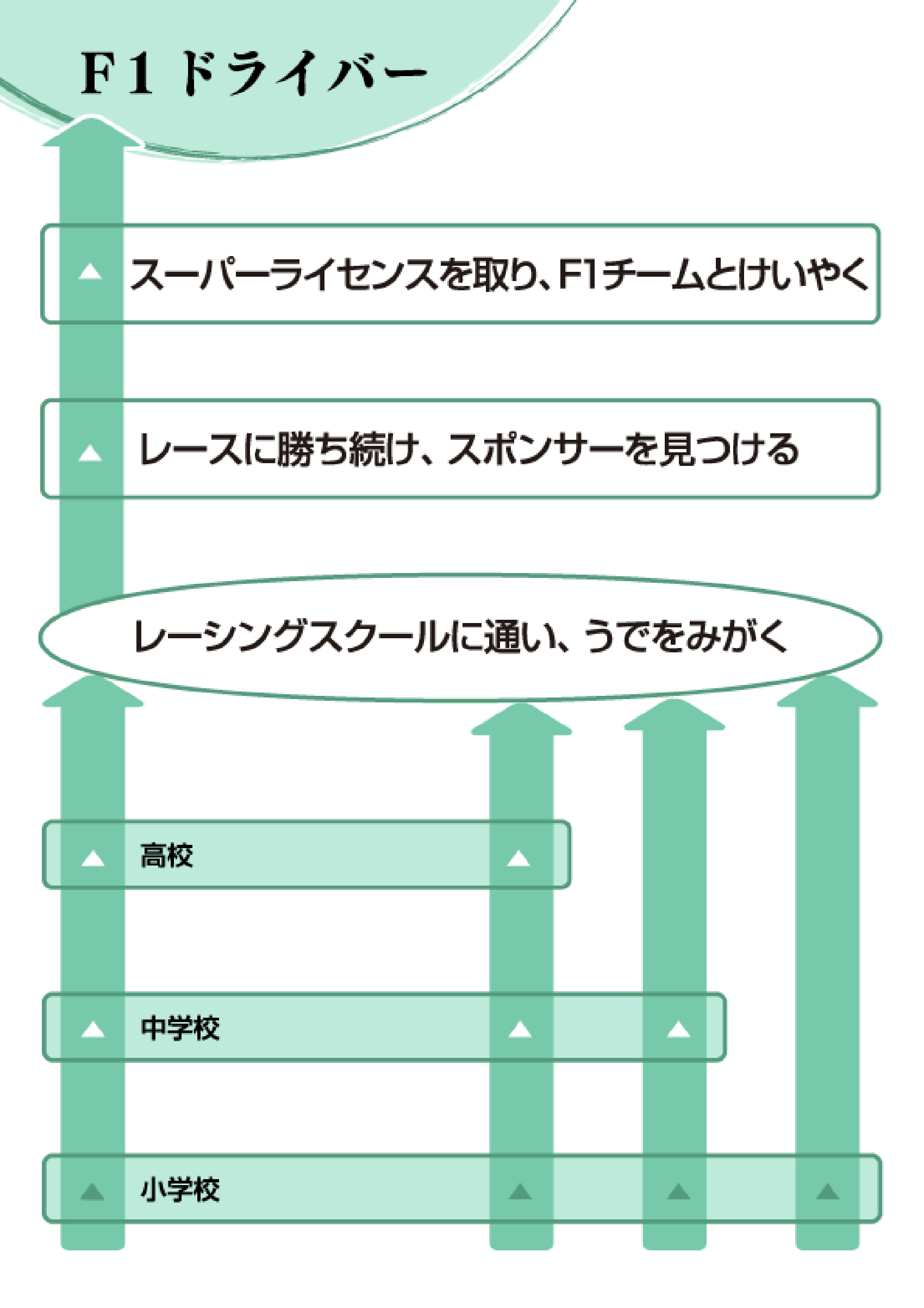
Most F1 drivers have experienced "kart racing," a competition using small competition vehicles called "racing karts," at an early age. If you want to experience formula racing, enroll in a racing school to learn the skills. If your skills are recognized and you are scouted by a racing team, do your best to achieve good results in the races you enter. As you accumulate excellent results, you will catch the eye of a team competing in a higher-class race. In this way, they will move up to "Junior Formula," "Formula 4 (F4)," "Formula 3 (F3)," "Formula 2 (F2)," "All-Japan Super Formula (SF)," and their goal, "Formula 1 (F1). Incidentally, 21 Japanese have been F1 drivers by 2022. As of 2022, Hiroki Tsunoda is driving for the Italian-based team Alfatauri.
Obtain the necessary licenses to enter races
To participate in motorsports events in Japan, a license called a "motorsports license (competition participant permit)" issued by the JAF (Japan Automobile Federation) is required. To participate in karting competitions, a "karting license" is required. To participate in races that are above that level, you must first obtain a "Domestic B License" and then a "Domestic A License". To compete in international competitions, one needs an "International C-C License," an "International B License," and an "International A License. Furthermore, to compete in F1 races, a "Super License" issued by the FIA (Fédération Internationale de l'Automobile), which organizes F1 races, is required. This is a special license given only to a limited number of drivers, and its acquisition is contingent on race results and other factors. In addition, all drivers who wish to participate in races must have a regular driver's license. However, those between the ages of 16 and 18 who cannot obtain a regular driver's license can obtain a "limited domestic A license" if they have participated in kart races. Incidentally, there are several karting licenses with different age groups. The domestic licenses are "Junior B (8 to 14 years old)," "Junior A (12 to 14 years old)," and "Kart Domestic B/A (15 years old and up). International licenses are "International E (15 years and older)," "International F (14 years and older)," and "International G (12 to 13 years old).
In the Future
Focus on New Engine Aimed at Carbon Neutrality
Unlike mass-produced production cars, F1 cars are custom-made and developed independently by each team. Even though they are unique, there are still many aspects that cannot be left to chance. The "technical regulations," the common rules governing the cars, are very detailed. The latest regulations for the engine, which is the heart of the car, state that "from 2026 onward, fuel will be shifted from fossil fuels to artificial fuels made from sustainable food waste and other resources. This is in order to reduce the amount of carbon dioxide emitted from the engine as much as possible and become carbon neutral (decarbonized). It will be interesting to see what new engines will be created and how they will perform in the near future.
Job Facts
Income.
Since contract fees are rarely officially announced, we can only approximate annual salaries, but it seems that the market for a world-famous F1 driver is in the billions of yen. However, it is important to keep in mind that it takes time and money to earn this kind of income.
Vacation?
Take time off during the off-season when there are no races.
Where do you work?
A racing venue such as a circuit in the host country.
Your Future Path
It's a chart that shows at a glance the main routes to getting a job as an F1 driver!