




Robot Development Engineer
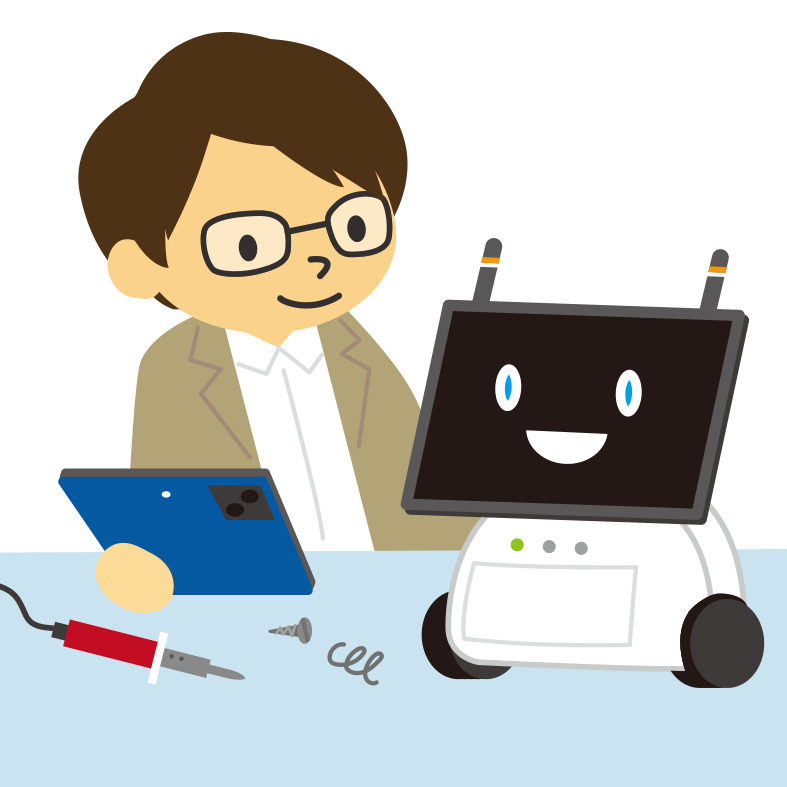
Develop industrial and medical robots.
Perfect For …
People who like to make things. People who are good with their hands. People who like to do research and study. People who can work in cooperation with others.
Job Details
Teams develop robots that are useful to society
Robots are useful machines that work in place of humans or assist humans in their work. Today, a wide variety of robots are in practical use, including industrial robots that work in factories, robots that are useful in medical and nursing care settings, cleaning robots for home use, and robot toys (toys). Robot development engineers are responsible for the creation of such robots. Their work covers a wide range of areas, including the design of the robots themselves, the development of sensors and motors for the robots' movements, and the programming of computers to control the robots' movements. Robot development engineers are required to have a wide range of industrial knowledge, advanced skills and abilities. For this reason, they often form teams for each specialized field and develop a single robot by combining what they have created in each field. Imagination to come up with unprecedented ideas is also important, but cooperativeness to work together with many people is also necessary. English and other language skills are also important when cooperating with overseas development teams. Using cutting-edge technologies in engineering, we create new machines and robots that are useful to society in ways that have never existed before. That is the appeal of this job.
Key Points !
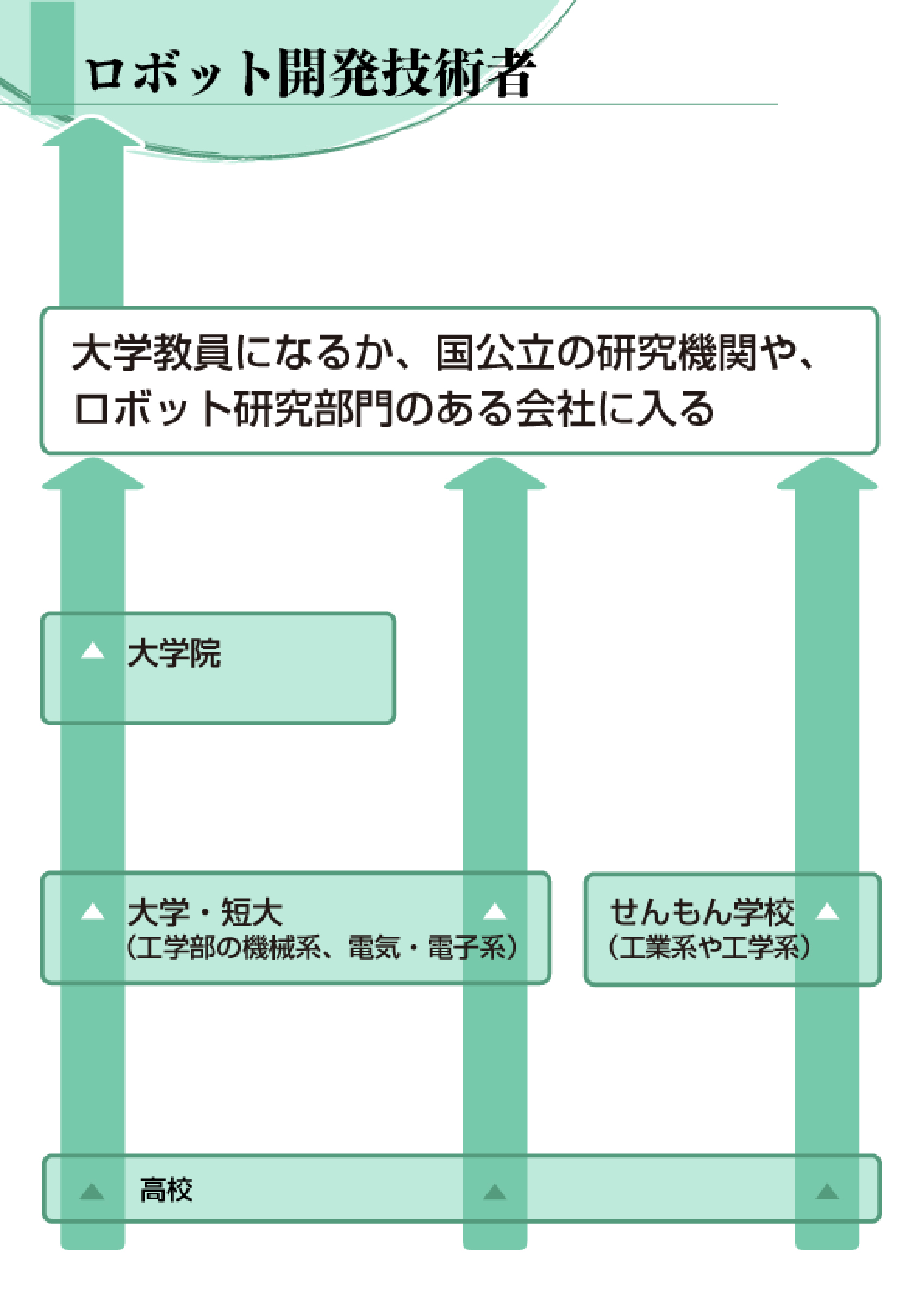
Study at an industrial or engineering college or technical college
Robots are a collection of cutting-edge technologies in mechanical and electrical engineering. Therefore, to become a robot development engineer, it is essential to study the fundamentals of robotics at an industrial or engineering college or university with specialized departments. Then, after graduation, it is common for students to work for companies that actually develop robots. There is also a path to enter graduate school from university to learn more advanced robotics knowledge and then find a job. There are also schools that offer robotics courses at colleges of technology (technical colleges), where students receive five years of specialized education after graduating from junior high school. One of the most famous events held by technical colleges is the "Idea Showdown: National Technical College Robot Contest," in which students from technical colleges nationwide participate. Graduates of technical colleges are highly evaluated by industry and have a high employment rate. Some graduates not only find employment at companies that develop robots, but also start their own companies that develop robots and artificial intelligence. For those who aim to become robot development engineers, this is one of the most promising places to go on to higher education.
Qualifications for Robotics Development Engineer Jobs
There are no specific qualifications required to become a robot development engineer, but there are several exams that can be taken to prove a high level of knowledge and skills. The Information Technology Engineer Examination, which tests knowledge and skills related to information processing such as programming, is a national certification authorized by the Ministry of Economy, Trade and Industry. The "CAD User Engineer Examination," sponsored by the Association for the Promotion of Computer Education, is a private certification for CAD operators, a system for designing and drafting on a computer. The Mechanical Design Engineer Examination, administered by the Japan Society of Mechanical Design Industry, is a private certification that certifies technical skills related to mechanical design, such as material mechanics and mechanical dynamics. The Chief Electrical Engineer Examination, administered by the Japan Electrical Engineers Testing Center, is a national certification that tests the skills and knowledge of electronics and electricity essential for machine control. Obtaining this certification not only broadens the scope of one's work, but also gives one an advantage in finding employment.
In the Future
As robots become more sophisticated and complex, the capabilities required will also increase.
Japan is the world's largest producer of industrial robots. Nearly 60% of the industrial robots in operation worldwide are made in Japan. The market for robots is expected to continue to grow, with service robots accounting for about half of that market. Service robots are robots other than industrial robots: AI-equipped home appliances, medical robots, communication robots that converse with humans, remote-controlled construction robots, robots that carry loads or move humans, robots that assist the movements of humans wearing suits, mechanical hands/manipulators used in dangerous places such as space, deep sea, and nuclear reactors, drones, and a wide variety of other service robots. As the market expands, the variety is bound to increase even further. Moreover, it is clear that the performance of each robot will become increasingly sophisticated and complex. This will require robot development engineers to have even higher skills and abilities. In order to be able to meet any requirement, it is important to accumulate a wide range of experience, knowledge and skills, and to cultivate the ability to think out of the box to help resolve difficulties.
Job Facts
Income.
The average annual salary for company employees is 5.5-7 million yen, although it varies depending on the place of employment.
Vacation?
It depends on the place of employment, but basically two days off a week. Overtime work may continue when the delivery date of a robot is close.
Where do you work?
A company's robotics development office, a university laboratory conducting robotics research, etc.
Your Future Path
It's a chart that shows at a glance the main routes to a job as a robotics development engineer!