




Kimono dresser
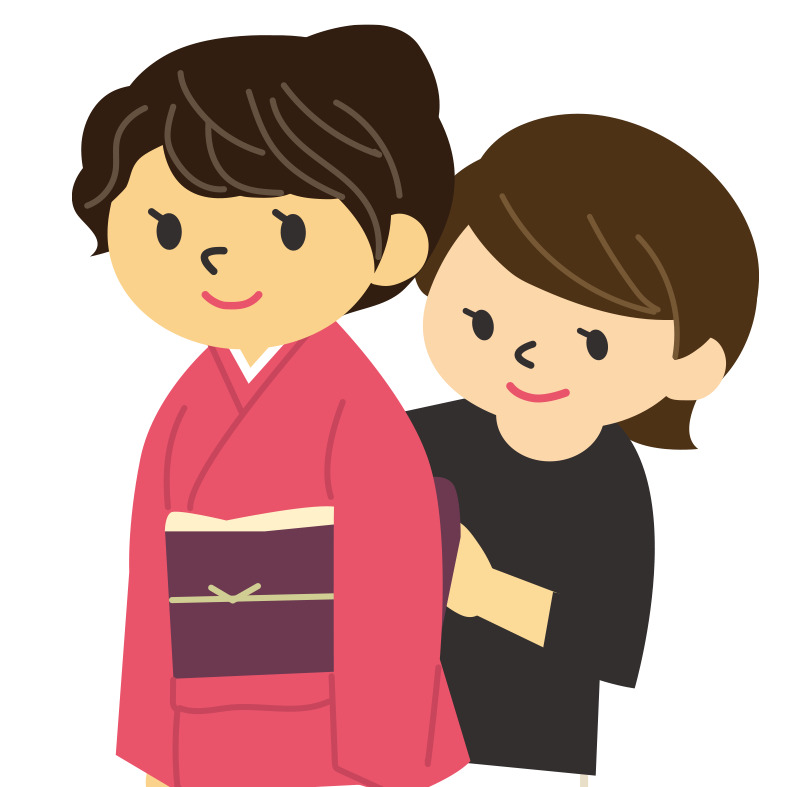
Dressing" is the process of putting on a kimono properly. Kimono dressers are professionals who dress people beautifully when they wear kimonos to events such as weddings, coming-of-age ceremonies, Shichi-Go-San, and parties.
Perfect For …
Likes to take care of others. Good talker and listener. Interested in Japanese traditions and culture.
Job Details
Experts who also give advice and coordinate kimonos.
We dress people attending events such as weddings, coming-of-age ceremonies, funerals, Shichigosan, tea ceremonies, and parties. At such occasions, we not only simply dress them, but also advise them on kimonos that match the season, and coordinate kimonos, obis, and accessories to suit the wearer's personality and tastes. She is active in a variety of fields, including teaching kimono dressing classes, giving kimono advice at kimono stores and exhibitions, and working as a kimono stylist who prepares kimonos and accessories for models to wear on TV, in magazines, and on stage.
Key Points !
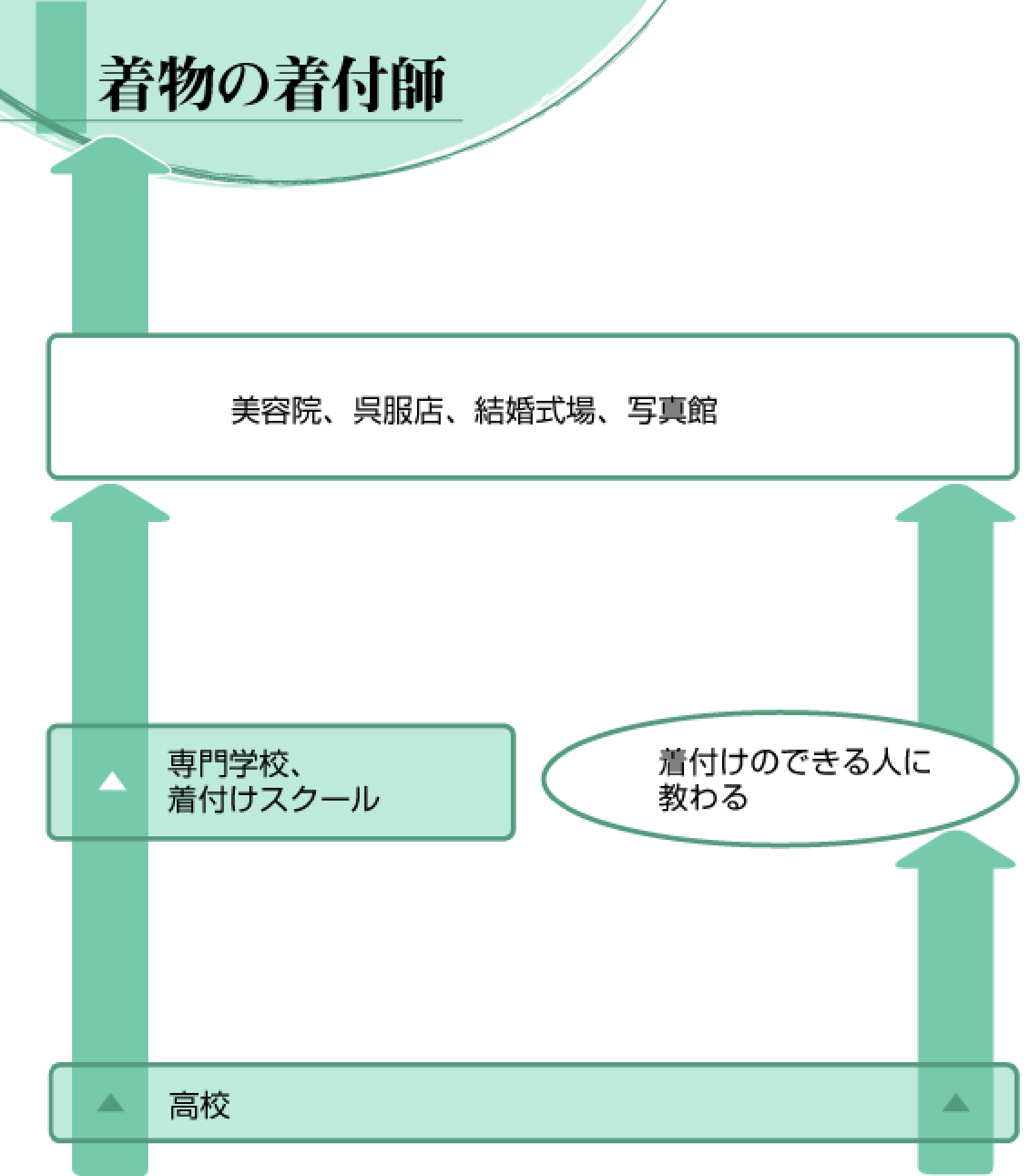
Attend a school to learn how to dress and acquire knowledge.
To become a kimono dresser, it is not enough to be able to wear a kimono by yourself. It is necessary to acquire knowledge of kimono dyeing, crests, and etiquette, as well as the skills to dress for every occasion, from everyday wear to formal attire. No particular qualifications are required, but if you want to become a professional, you should attend a vocational school or learn from someone who can dress you, and find a job where you can put your skills and sense of style to the test. Incidentally, there is a qualification called "Kimono Consultant" authorized by the All Japan Kimono Consultants Association. This qualification is available to those who have completed kimono-related education at a specialized school or have at least two years of work experience.
If you want to be a teacher, aim to be a role model.
If you want to become a kimono dressing teacher, it is desirable to be able to dress in kimono yourself and set a good example for your students with your beautiful body language and bearing. Furthermore, as a teacher, it is important to acquire the skills to "teach" in an easy-to-understand manner to those who have no knowledge of kimono or kimono dressing.
In the Future
It is advantageous to have qualifications other than kimono dresser
In this day and age, when people no longer wear kimonos unless there is some kind of event, it is becoming increasingly difficult to make a living only by dressing kimonos. Therefore, it would be better to acquire another qualification, such as learning hair and make-up techniques or becoming a beautician by acquiring a hairdresser's license, in order to expand one's field of activity. However, there are those who have a separate main job and hold kimono dressing classes only when there are applicants, or who contract with a beauty salon to work part-time as a kimono dresser only during the Shichigosan and coming-of-age ceremony periods, when there is a high demand for kimono dressing. Nevertheless, kimono dressers are an indispensable job for spreading the good qualities of the kimono to future generations.
Job Facts
Income.
Kimono dressing fee per person ranges from 2,000 yen to 10,000 yen. The fee varies depending on the type of kimono. If you work for a kimono store or wedding hall, you will be paid a monthly salary, and newcomers are paid around 200,000 yen.
Vacation?
Since it is a business with customers, it is not always on weekends. If you are a kimono store, wedding hall, etc., you have about 8 days off a month.
Where do you work?
Beauty salons, kimono stores, wedding halls, photo studios, etc. Some even hold dressing classes at home.
Your Future Path
It's a chart that shows at a glance the main routes to getting a job as a kimono dresser!