




pattern maker (for clothing)
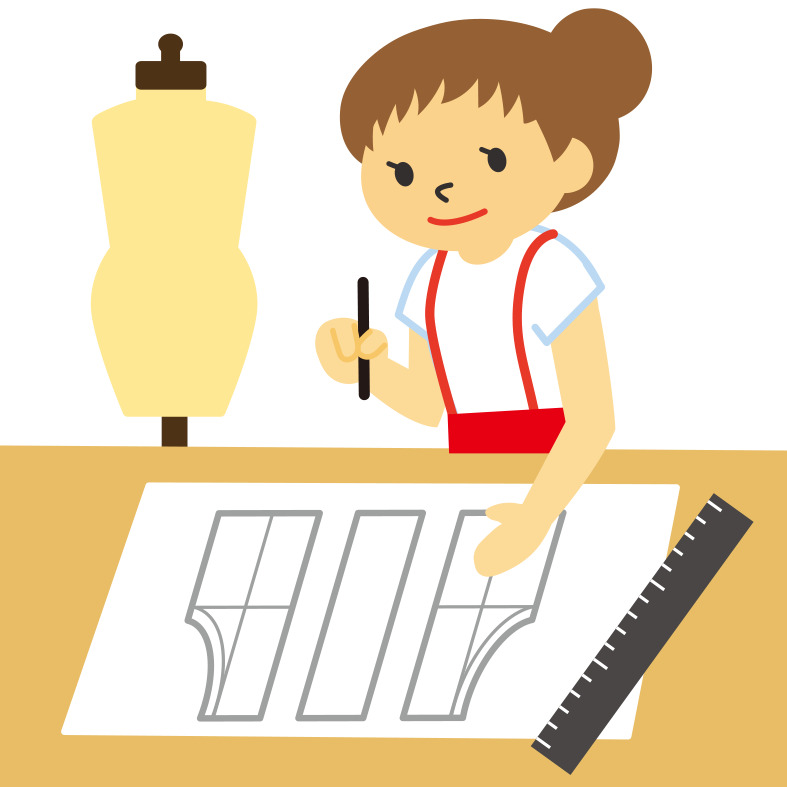
Based on design illustrations created by fashion designers, patterns, or blueprints for clothing, are made to produce samples. It is an indispensable part of the fashion industry.
Perfect For …
Sensitive to fashion trends; good at detail work, as shifting even a millimeter can change the line of a garment.
Job Details
Team up with designers to create clothing.
The pattern maker's job is to create a pattern quickly and meticulously to create a three-dimensional garment from a fashion designer's design. It is also an important job to check the wearability of samples made from the patterns and to instruct factories on the types and quantities of fabrics and buttons to be used. They then work up to the final pattern that will become the basis of the final product. Pattern makers are required to have not only the skills to make patterns, but also a fashion sense that anticipates the times and knowledge of materials such as fabrics.
Key Points !
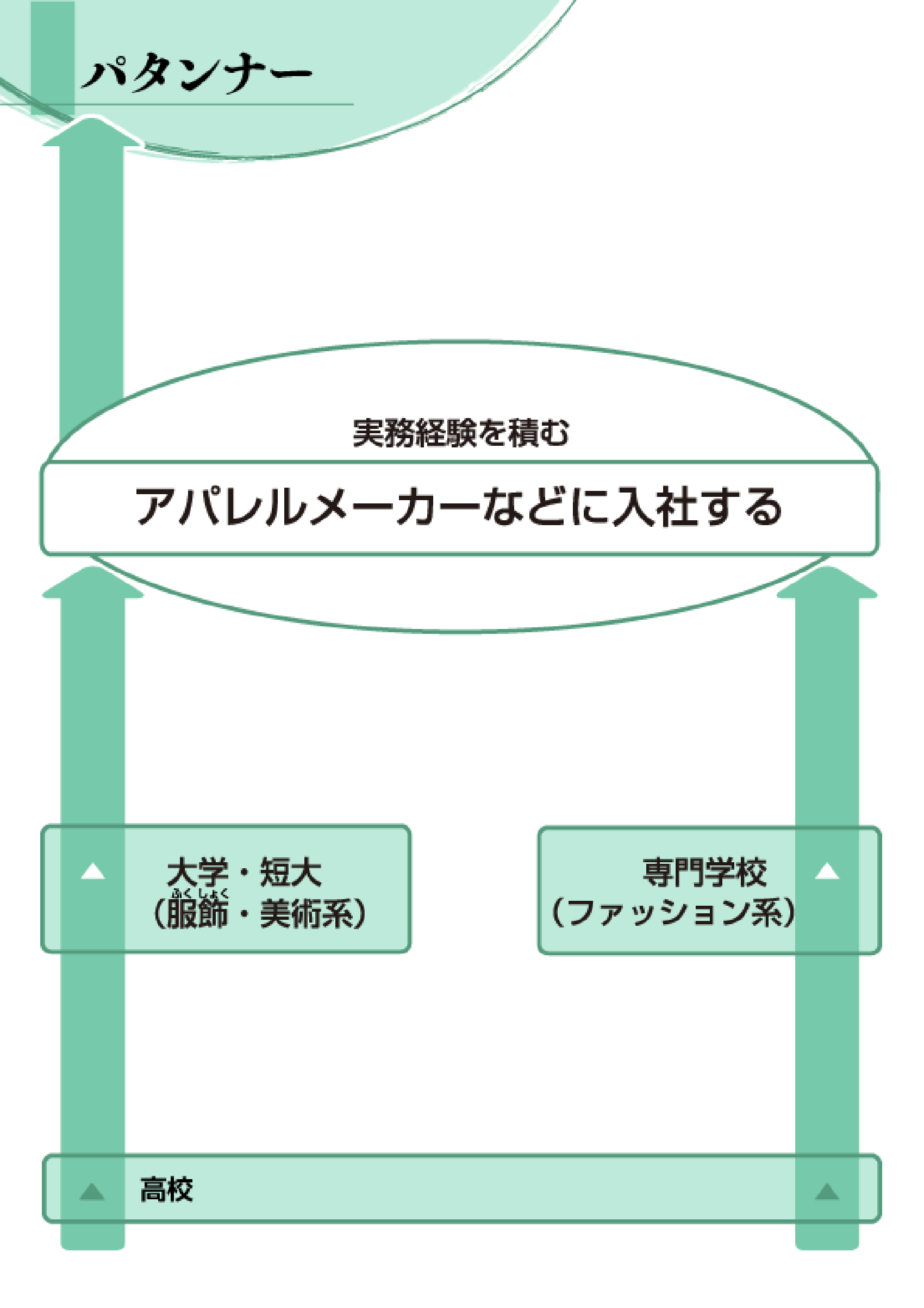
Learn the basics of clothing at a vocational school or university.
No specific qualifications are required to become a pattern maker. However, many apparel manufacturers require a practical skill test and submission of work for employment, so it is common to study at a fashion-related vocational school or a college or junior college of fashion or art to acquire basic skills before seeking employment. It is advantageous to take the "Patternmaking Techniques Certification Test" or similar examinations before seeking employment. Recently, an increasing number of companies use CAD (computer-aided drafting) software to create patterns, so it is also advisable to acquire knowledge of CAD. After joining a company, it is common for employees to assist their seniors as assistants while learning the skills they will need.
From pattern making to temporary sewing, pattern makers need delicate skills.
There are basically two types of pattern making. One is flat cutting, in which the garment is cut according to the measurements on paper, and the other is three-dimensional cutting, in which the cloth is placed on a model of a human figure (called a jitai or body) and the silhouette is cut out three-dimensionally. Sometimes, the actual garment is measured and a pattern is made from it in reverse. The process of grading, in which paper patterns of various sizes are made for mass production, is also indispensable. Another important job of the pattern maker is to check whether the pattern is appropriate or not by cutting the cloth to fit the garment, putting it on the body, and making temporary stitches. If a pattern maker can acquire these delicate skills and gain the trust of designers, he or she can become an independent pattern maker.
In the Future
High technical skills will expand your field of activity.
Excellent pattern makers are said to influence the popularity of a brand, and they are often recruited by other brands and companies. This is because there are not many people who can make patterns while considering the intentions of manufacturers and designers. Recently, the number of people who can make a pattern from a blank sheet of paper has been decreasing, so pattern makers with solid skills will continue to be in demand. If you have high technical skills, you will be able to play an active role in any company you join, even if you go abroad.
Job Facts
Income.
The average annual income is 3.9 to 4.95 million yen. Work styles vary, including full-time, contract, part-time, and freelance. If you become a successful pattern maker, you can expect a high income.
Vacation?
Often has two days off a week, but may have to work on weekends when busy. Working hours seem to be long.
Where do you work?
Apparel manufacturers, companies that specialize in making samples, designer offices, sewing factories, etc.
Your Future Path
It's a chart that shows at a glance the main routes to getting a job as a pattern maker!