




disc jockey

Club DJs compete through song selection, and radio DJs through talk. Both require taste and effort.
Perfect For …
Club DJs need to have musical talent, knowledge, and background, but they also need to have a "keen sense" of the mood of the place. Radio DJs are suited to those with a clear voice and a wealth of topics.
Job Details
Club DJs compete with their sense of music selection, while radio DJs compete with their talking skills.
The same DJ has a very different job description for "club" and "radio" DJs. The main job of a club DJ is to select background music that matches the atmosphere and clientele of the establishment (club) where alcohol, music, and dancing are enjoyed, and to operate turntables and mixers to entertain customers with sound changes. Radio DJs, on the other hand, are the facilitators of programs broadcast by radio stations. They are required to have good talking techniques to convey music and various information to the listeners while proceeding with the program according to the broadcast script. They are also called radio personalities.
Key Points !
Both clubs and radios have few openings on job sites!
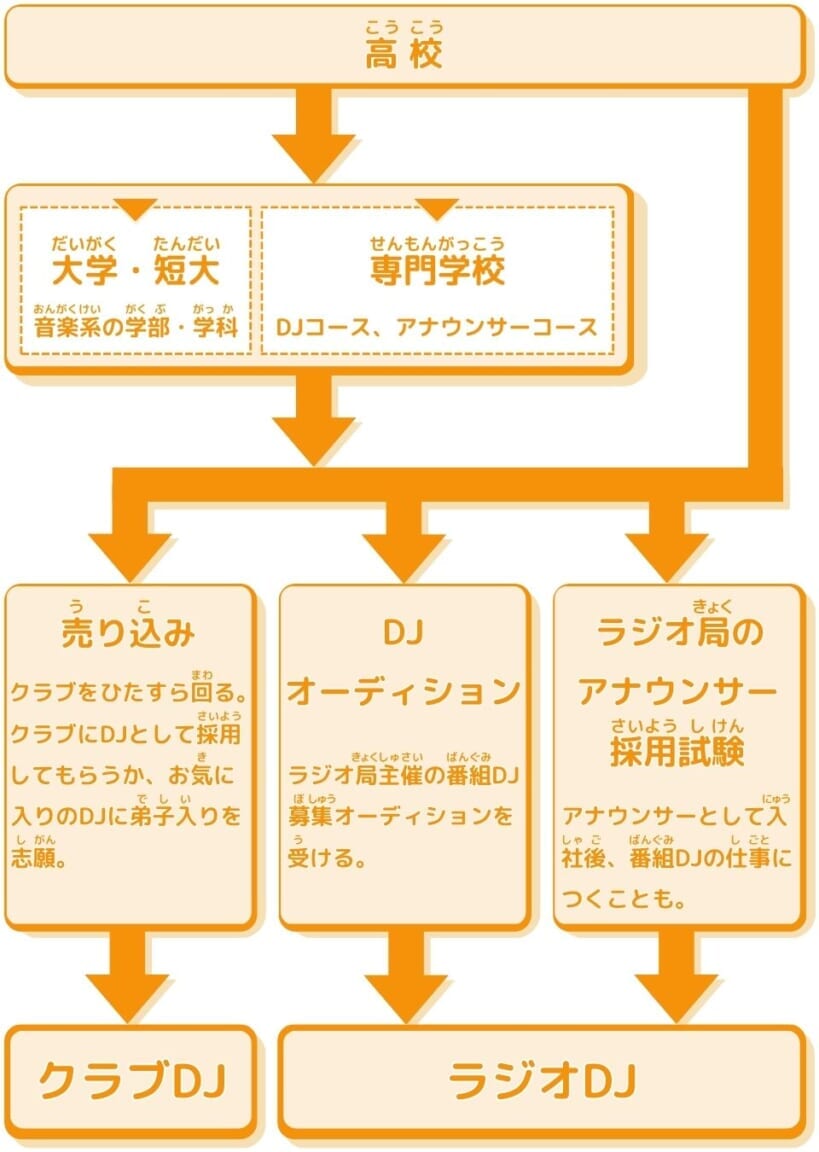
Although club DJs do not need qualifications or educational background, it is advisable to learn how to handle specialized sound equipment at a music school or DJ training school. Club DJs are either contracted to work exclusively for a club or work as freelance DJs, but it is not easy to find a job because there are almost no job postings on job sites. The reality is that the only way to find a job is by word of mouth, either by becoming a regular at a favorite restaurant or by getting information from acquaintances. On the other hand, radio DJs are not always available, as large stations hire their own announcers, TV personalities, famous radio personalities, etc. FM stations sometimes post audition information on their homepages, so you should check them frequently.
In the Future
Global Dance Music Boom Expands Opportunities
The world music scene is changing to a dance music-centered one, clubs are highly popular, and club DJs are indispensable. Some Japanese DJs are performing in clubs overseas, and we can expect to see more of them around the world in the future. Meanwhile, radio broadcasting, which was said to be in a slump in popularity, is making a comeback. With the spread of the Internet, radio programs can now be heard all over Japan, and new initiatives such as video streaming to introduce the inside of the studio are attracting new fans. The emergence of unique radio DJs is expected to continue.
Job Facts
Income.
Some club DJs work as employees of the clubs, but many are freelance contractors. The pay is not that high, around 20,000 yen per night even for veteran DJs. Since they do not necessarily work every day, very few people can make a living as club DJs alone. For radio DJs, full-time employees of a station are subject to the station's rules and regulations. Some freelance, well-known "radio personalities" earn more than 10 million yen a year.
Vacation?
Club DJs are required to take time off according to the store's operating schedule. Radio DJs have two days off a week if they are employees of a radio station. If freelance, they take days off when they are not working.
Where do you work?
Club DJs are clubs, bars, and live houses. Radio DJs are broadcasters.
Your Future Path
It's a chart that shows at a glance the main routes to getting a job as a DJ!