
司法書士になるには?仕事内容や必要な資格などを解説!
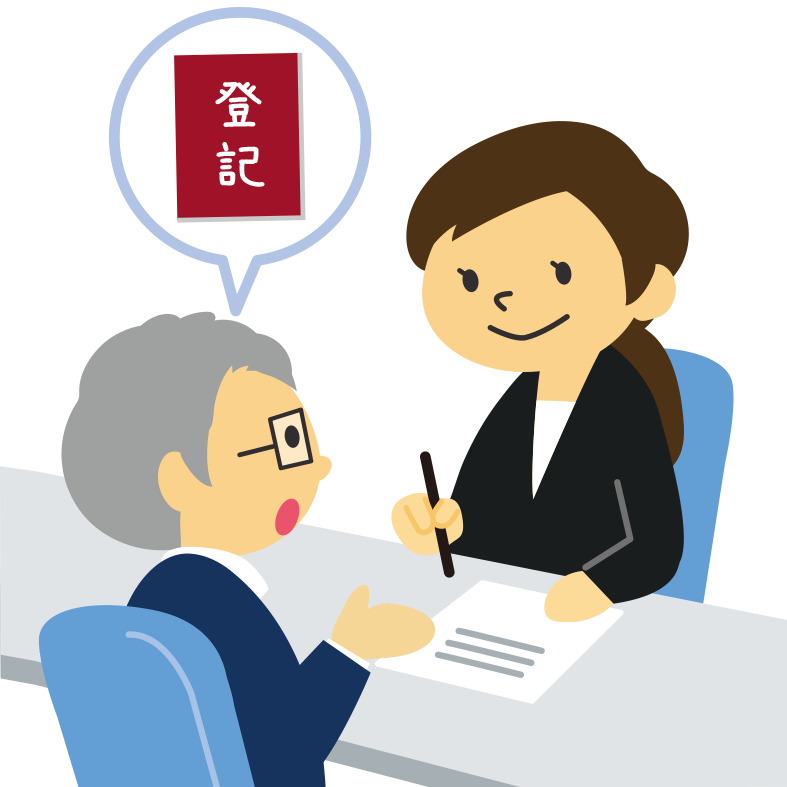
A "legal affairs specialist" who handles legal procedures required for the purchase and sale of land, the establishment of a company, etc. on behalf of citizens. A citizen's ally in providing complex legal advice.
司法書士に向いている人は?こんな人にピッタリ!
A person who is meticulous and careful in his/her work. A kindness, sincerity, and sense of justice are also required, as is the ability to listen to what others have to say and to consider things from the other person's perspective. Also, a person who pays attention to new laws and legal changes and always keeps up with his/her studies.
司法書士の仕事内容を見ていこう!
Representing clients in registration and deposition procedures and preparing documents related to lawsuits
Judiciary is the realization of the law. Judicial scriveners are legal affairs specialists who prepare documents to be submitted to the Legal Affairs Bureau, courts, and prosecutors' offices. The role of a judicial scrivener is to represent individuals and companies in the necessary procedures, including the preparation and submission of documents that require specialized knowledge. Among these, "representation in procedures related to registration and deposition" is an exclusive service that only judicial scriveners are allowed to perform. Registration" is a system whereby rights can be asserted by registering them in the "registry" of the Legal Affairs Bureau. When buying land or a house (real estate), "real estate registration" is obligatory, and representation in real estate registration is at the core of most judicial scriveners' work. Deposit" is a system for preventing and resolving legal disputes over money by depositing money and other assets with a depository (Legal Affairs Bureau). Since there are various types of registration and deposition, the work of a judicial scrivener is also multifaceted. Certified judicial scriveners, who have undergone special training and examinations, have an even wider range of work. One such case is the trial of "civil cases involving claims of 1.4 million yen or less" handled by summary courts. In such cases, judicial scriveners can not only prepare documents and procedures, but also represent plaintiffs (the party suing) and defendants (the party being sued) in court, provide legal advice, negotiate settlements, and perform other tasks similar to those performed by attorneys. Judicial scriveners have a rewarding job in which they can help people who are having trouble with complicated and difficult legal procedures.
司法書士になるには?必要な資格・役立つ知識もチェックしよう!
Passing the judicial clerk exam is extremely difficult!
Since judicial scriveners are nationally licensed, they must pass the "Judicial Scrivener Examination," a national examination. There are no restrictions on eligibility for this examination, and anyone may take it. The examination covers 11 subjects, including Constitutional Law, Civil Law, Commercial Law (Companies Act), Civil Procedure Law, Real Estate Registration Law, and Commercial Registration Law. The exam requires a broad and deep knowledge of the legal field, making it extremely difficult to pass, with a pass rate of 4-5%. It is the second most difficult national law-related examination after the National Bar Examination for becoming a lawyer or a judge. Because it is a legal qualification, many examinees have studied law at university law schools. However, there are also successful candidates who graduated from non-law faculties and those who graduated from high school as their final educational background. Whether or not you can pass the exam depends solely on your ability. Incidentally, passing the exam alone does not guarantee a judicial scrivener's job. Those who have passed the exam are required to undergo training at the Japan Federation of Judicial Scriveners' Associations. Furthermore, they can call themselves judicial scriveners only after they are registered in the Judicial Scrivener Registry of the Federation. However, some people do not register if they work in the legal department of a general corporation. In addition, to qualify as a "certified judicial scrivener," a qualified judicial scrivener must undergo special training at the Japan Federation of Judicial Scrivener Associations and pass the certification examination of the Federation.
Differences from lawyers and administrative scriveners
Although judicial scriveners and lawyers perform the same legal work, they are legally allowed to handle different types of work. Lawyers can handle all legal work, but there are many legal tasks that judicial scriveners cannot handle. For example, when a legal dispute over rent arises between an apartment landlord and a resident, judicial scriveners can use the deposit system to help resolve the issue. However, when that dispute is to be resolved through a court case, it is essentially the job of an attorney. Certified judicial scriveners, who can represent limited lawsuits, are also not allowed to consult, settle, or represent clients in cases in which the amount sued exceeds 1.4 million yen. Another job with a name similar to that of a judicial scrivener is that of an "administrative scrivener. Gyoseishoshi shoshi (administrative scriveners) are mainly engaged in preparing application documents for permits and approvals (business licenses, building permits, etc.) to be submitted to public offices (ministries and agencies, prefectural and city offices, town and village halls, police stations, etc.), providing consultation on such documents, and acting as agents for filing procedures. Another major difference between judicial scriveners and administrative scriveners is that judicial scriveners are under the jurisdiction of the Ministry of Justice, while administrative scriveners are under the jurisdiction of the Ministry of Internal Affairs and Communications. Gyoseishoshi Scriveners cannot act as agents for applications for registration or prepare documents to be submitted to the court.
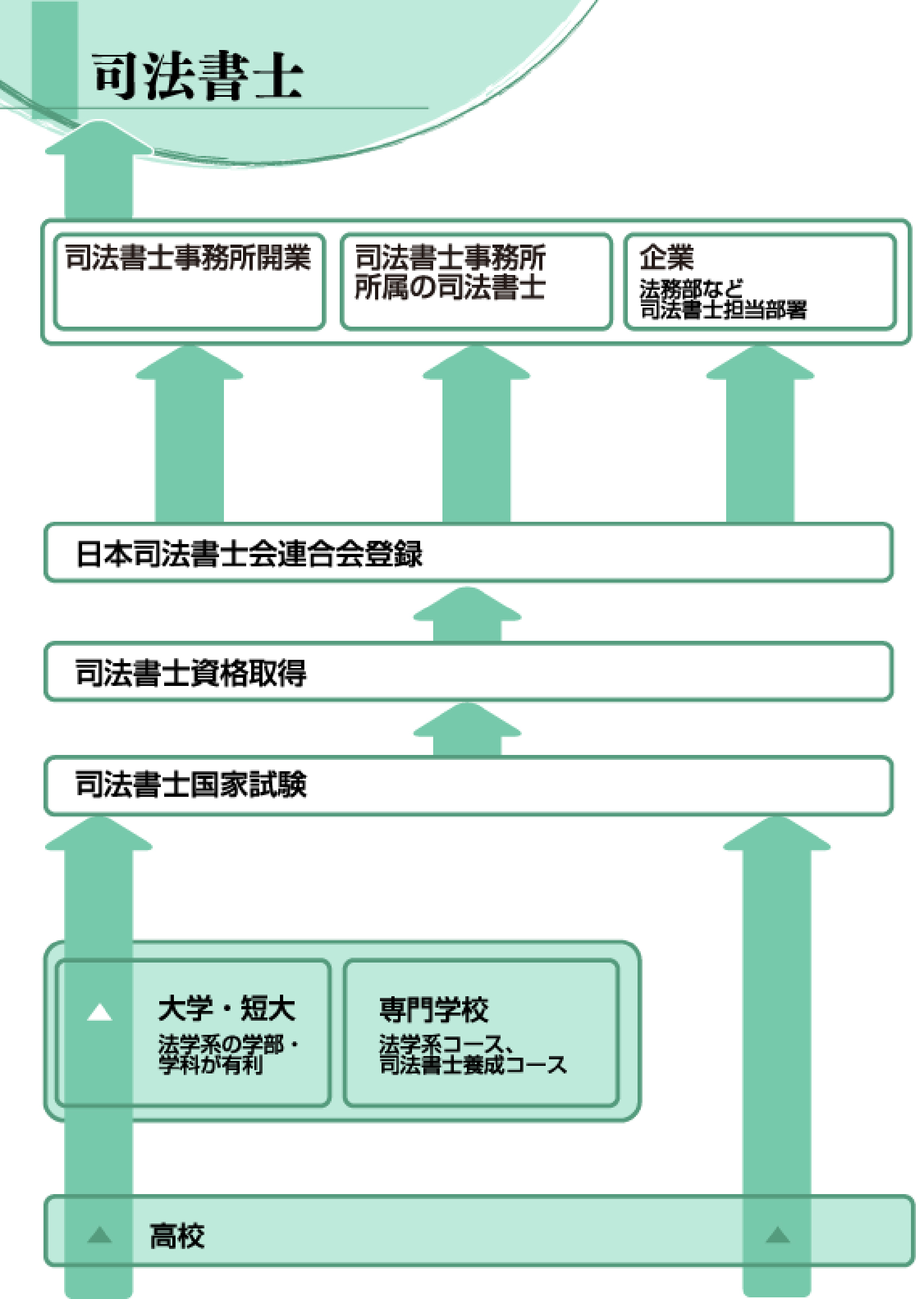
なるためチャート!司法書士になるためのステップを図解するよ
キッズネットオリジナルの「なるためチャート」だよ!司法書士の仕事につくための主な進路の例や必要な情報を図解しているよ。ぜひ参考にしてみてね!
司法書士の将来性は?
More work on "adult guardianship" and "inheritance registration."
As of 2021, the percentage of the elderly population aged 65 and over will account for 28.9% of the total population, and Japan's super-aging society is underway. Along with this, the number of people who develop dementia due to old age is also increasing. There is a job called "adult guardian," which helps people with impaired judgment by managing their property and taking care of hospital procedures on their behalf. Recently, this is becoming an important job for judicial scriveners, and it is expected to increase in the future. In addition, when the owner of real estate (land or building) passes away, the procedure for changing the name of the real estate (name of the right holder or owner) to the name of the person who will inherit (take over) the property is called "inheritance registration. The application for inheritance registration will become mandatory from April 2024.
【データ】司法書士の年収・働き方・働く場所は?
Income.
The average annual salary ranges from 6.4 to 14.6 million yen. If you work in the legal department of a general company, it varies depending on the company. Also, if you belong to a firm, it depends on the size of the firm. If you are an independent practitioner in the Tokyo metropolitan area, where demand is high, you may earn an average income in excess of 10 million yen.
Vacation?
If you start your own business, you are free to take holidays. In most cases, offices are closed on Saturdays, Sundays, and holidays due to relationships with courts and other authorities. Working hours are usually from 9:00 a.m. to 5:00 p.m. During periods when real estate transactions are active, overtime work may be required to prepare the necessary paperwork for procedures.
Where do you work?
Legal departments of general companies. The office of a private firm or judicial law firm. Some independent practitioners use their homes as their offices.