




forensic scientist
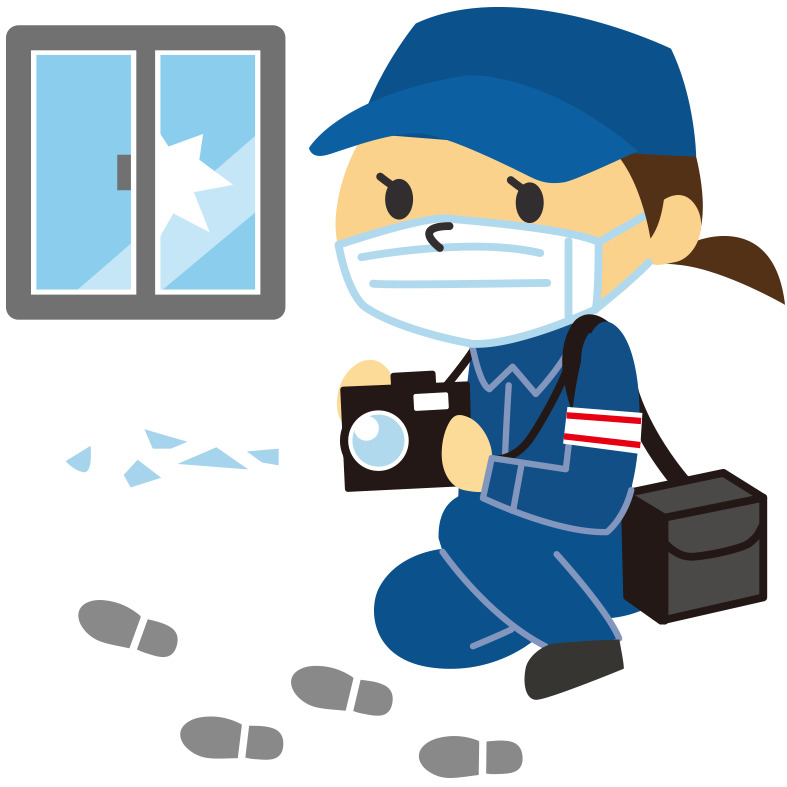
Familiar from detective dramas. They find incriminating evidence such as fingerprints and hairs left at the crime scene.
Perfect For …
A person who has a righteous heart that does not tolerate crime. A person who loses track of time when he or she is absorbed in something they love to do, such as research.
Job Details
Identify the perpetrator from items collected at the crime scene.
A forensic scientist is a police officer who works in the "Forensics Division of the Criminal Investigation Department" of the police department. They go to crime scenes and collect items that may be related to the crime, such as fingerprints, blood, footprints, and debris from cars that have been in traffic accidents. Using the collected items as clues, their job is to identify the culprit and determine what happened. The information on the culprit identified by the forensics team is used as material for finding the culprit. The crime scene forensics team is also responsible for creating a "montage" of photographs that depict the face of the criminal. A police dog that chases criminals by scent also belongs to the forensics division.
Key Points !
A forensic scientist is a police officer of choice.
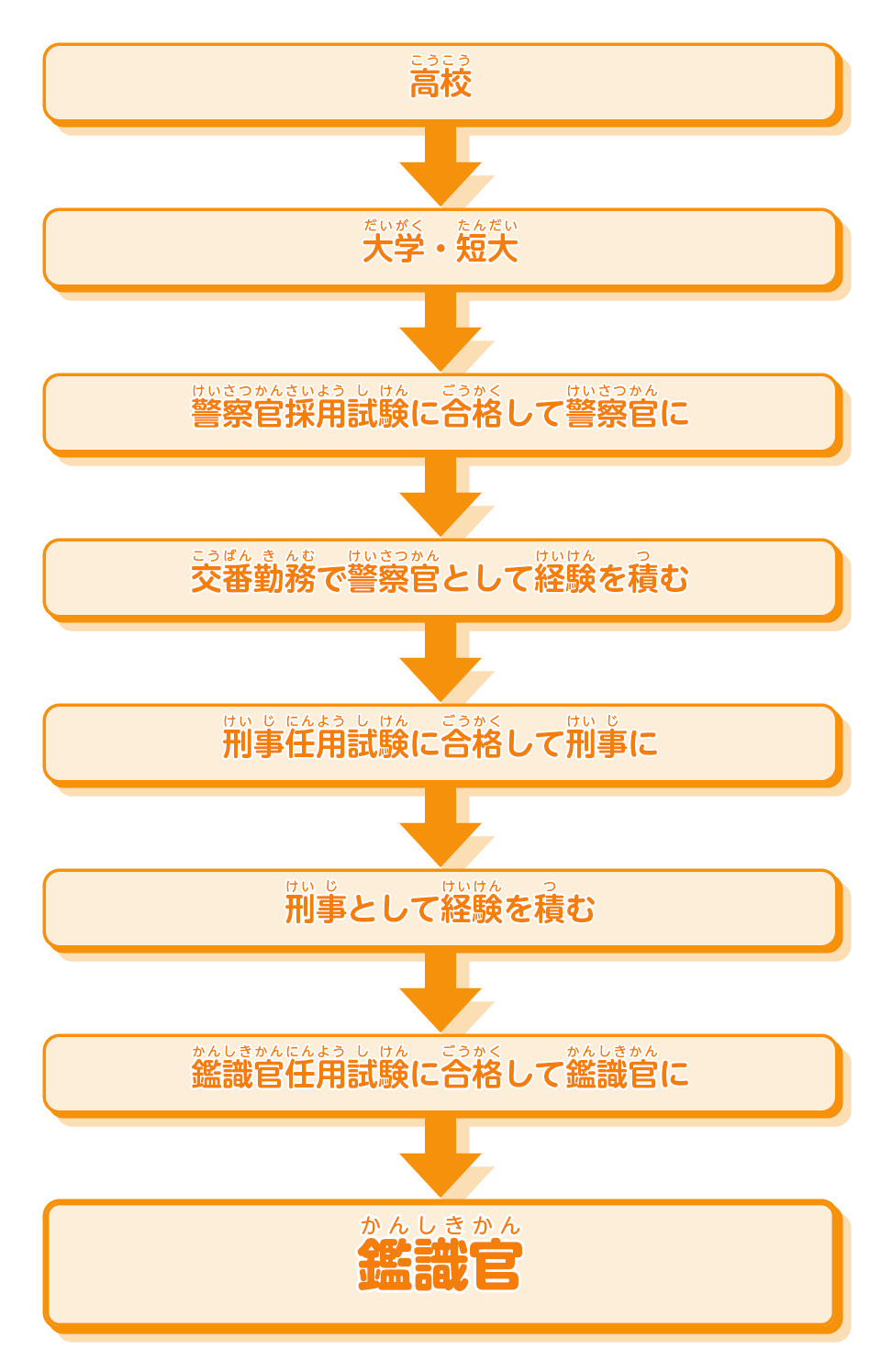
Since a forensic scientist is a police officer, the first step to becoming a forensic scientist is to pass the police recruitment examination and become a police officer. They do not work as forensics officers from the start, but must first develop their skills as police officers by working at a police box, and then be assigned to the Criminal Investigation Division (department). After that, they must pass the "forensics officer appointment examination" or otherwise strongly desire to be assigned to the forensics section, and if they are accepted, they are selected as forensics officers. Since forensic knowledge and skills are learned after becoming a police officer, such as through training conducted within the department, there is no particular school from which graduation would be advantageous. However, knowledge of chemistry and photography skills are useful.
Forensic Science Laboratory" is a separate entity.
The Forensic Science Laboratory (Forensic Sci. Lab.) is another research organization that is often seen and heard of in TV dramas, but it is completely different from the Forensic Science Section. For example, a forensic scientist collects blood samples at a crime scene and the Forensic Science Laboratory analyzes them to identify the culprit. Note that the route to become a forensic scientist is different from that of a forensic scientist. Incidentally, forensic researchers do not take the police recruitment examination, but rather the local civil service examination and the researcher recruitment examination. There is also the "National Research Institute of Police Science," which conducts research on forensics itself, but this belongs to the National Police Agency, a national organization, and requires passing the National Civil Service Examination.
In the Future
Finding the culprit's decisive factor more quickly and preventing "next time".
One of the roles of the police is to prevent new crimes by catching criminals. According to data from the National Police Agency in 2020, the number of crimes has been decreasing every year since 2003. To further reduce crime, it is important to catch more criminals more quickly. To this end, the work of forensics in narrowing down the list of criminals will become more important. Scientific advances may make it possible to identify criminals from a greater number of clues. However, the collection of clues, which is the basis of the forensic scientist's work, should not change.
Job Facts
Income.
As of April 2021, the average monthly salary for police officers was approximately 460,000 yen, including various allowances.
Vacation?
The Criminal Investigation Division is closed on weekends and holidays when there are no major cases. Since there is a duty shift (overnight work) about once a week, even summer vacation is not a very long period of time off.
Where do you work?
Police Department to which you belong.
Your Future Path
It's a chart that shows at a glance the main routes to getting a job as a forensic scientist!