




home helper
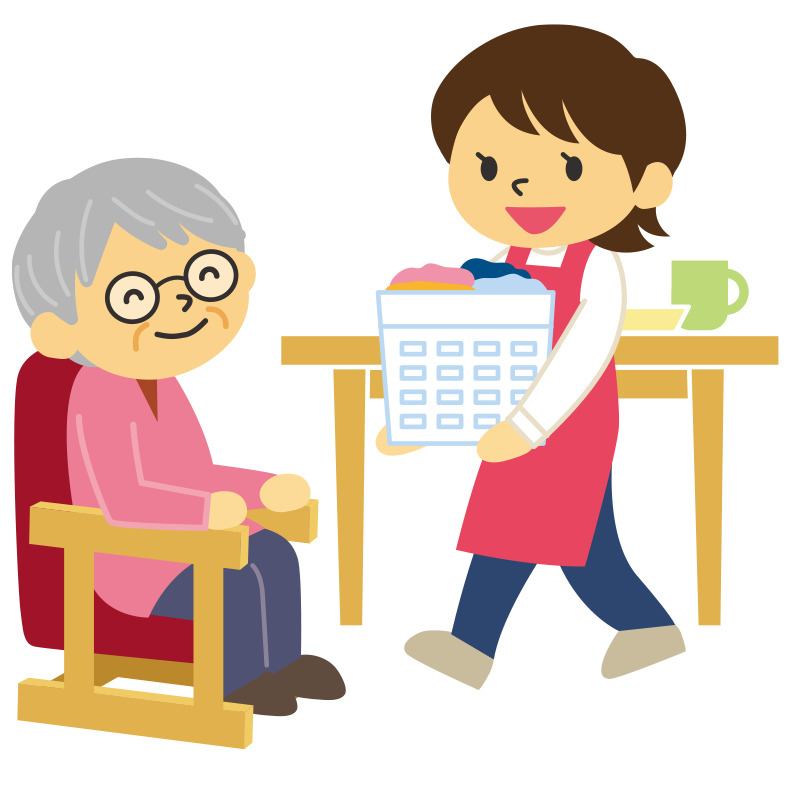
They go to the homes of the elderly and people with disabilities and provide various kinds of assistance so that they can lead independent daily lives. They are also called home care workers. This is a very important job in Japan, where the number of elderly people is increasing.
Perfect For …
People who can relate to the care recipients. People who like to interact with people and are willing to listen carefully to the elderly and disabled. Physical fitness is also required, as they will be assisting with bathing and housework.
Job Details
Assist the elderly and disabled with activities of daily living and household chores.
Their main job is to visit the homes of elderly or disabled people in need of care, helping them with activities and household chores. They work for care-related companies or contract with care recipients on an individual basis. The work can be broadly divided into "physical care" and "assistance with daily living. Physical care involves assisting with daily activities such as eating, dressing, toileting, and bathing. Daily living assistance involves helping with household chores such as cleaning, laundry, shopping, and cooking. Some companies have home helpers who drive cars to take care recipients to the hospital. Although home helpers provide a variety of assistance, they cannot perform tasks that do not directly help the care recipient. For example, they cannot do housework, care for children or pets, or weed the garden for the care recipient's family. Furthermore, they are prohibited by law from administering medications, intravenous infusions, injections, and other medical procedures unless they are licensed as doctors or nurses. On the other hand, home helpers also play an important role in providing emotional support by offering counseling and advice to care recipients and their families.
Key Points !
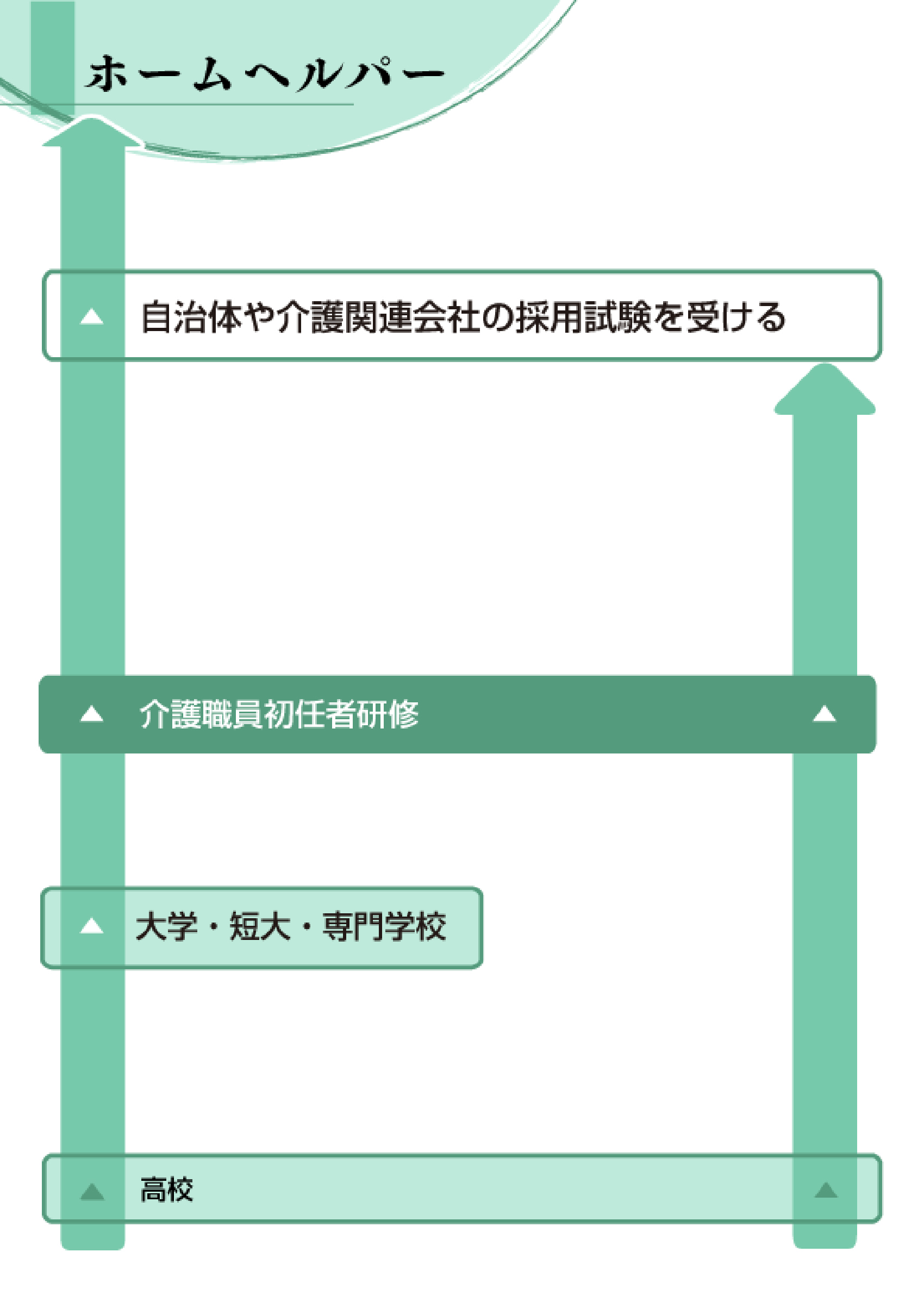
Acquire basic knowledge and skills through the "Initial Nursing Care Worker Training Program".
There is also a national certification for caregivers to care for the elderly and disabled. No national certification is required to become a home helper, but one must take the Ministry of Health, Labor and Welfare's "Initial Training for Nursing Care Workers" and pass the final examination. Anyone can take the training course. The program consists of lectures on nursing care work and practical exercises to acquire the basic knowledge and skills needed for the job. The training takes about three months, but upon completion, the trainee can work not only as a home helper but also as an employee at a nursing care facility. Many nursing care-related companies require their employees to have completed training for entry-level nursing care workers.
You can also become a caregiver or care manager.
After three years of work experience as a home helper, a person becomes qualified to take the national examination to become a "care worker. Furthermore, after five years of work experience as a care worker, one becomes qualified to take the "practical training examination for care support specialists" to become a "care manager (care support specialist). Incidentally, a care manager's main job is to prepare schedules and care plans for nursing care services. In addition, care manager is not a national qualification, but a public qualification certified by each prefecture. Because both are public qualifications, they offer more favorable conditions in terms of salary and working environment than home helpers. If you want to become a professional caregiver, you may want to set your sights on becoming a care worker or a care manager.
In the Future
Important work required in Japan in the future
Japan's population will decline and the elderly population will increase; by 2065, it is estimated that the percentage of the population aged 65 and over will be 38 percent of the total population, and about one in three people will be aged 65 and over. Therefore, there is a strong need to improve welfare for the elderly. Attention to home helpers, who can provide a variety of nursing care services in the comfort of their own homes, is expected to continue to grow.
Job Facts
Income.
Depending on the company to which they belong, the average annual salary ranges from 3.82 to 4.07 million yen. However, many people work as part-timers or contractors as well as regular officials and employees.
Vacation?
The number of working days and other details vary depending on where they work. Day service centers, nursing homes, and hospitals use a shift system. Part-timers and contract workers may work only two or three days a week.
Where do you work?
The care recipient's home, day service center, nursing home, or hospital.
Your Future Path
It's a chart that shows at a glance the main routes to getting a job as a home helper!