





lifesaving
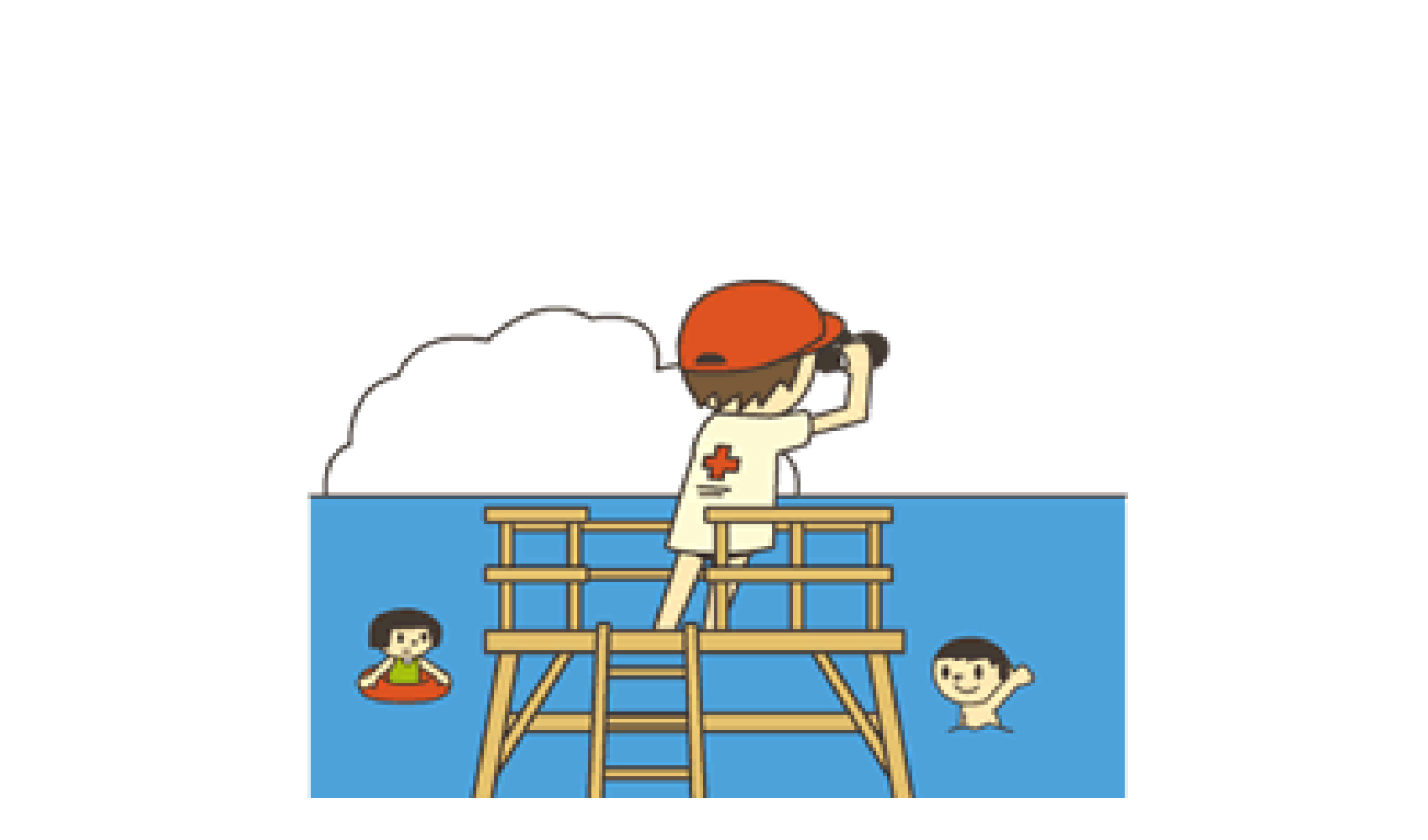
They work to prevent accidents near the water and to save people's lives. Their help is indispensable to have fun in the ocean or pool.
Our mission is to avoid accidents!
The number of deaths and missing persons in the ocean and swimming pools is estimated to be as high as 1,000 per year. A fun summer vacation day can turn into a nightmare in an instant.
Lifesaving is an activity aimed at eliminating accidents near water. The word means everything from monitoring, teaching, and rescuing to prevent accidents, to competitions to improve the skills of the public and lifesavers.
The mission of lifesavers is not only to rescue drowning people. It is to prevent accidents before they occur. They pick up trash to prevent injuries on the beach, protect lost children and find their parents, prevent drunkards from entering the water, give first aid to jellyfish stings, and so on. It may be simple and detailed, but there is a lot of important work to be done.
There are three entrances depending on the purpose
There are three entrances to lifesaving certification. Elementary," which focuses on first aid and resuscitation. Water," which is intended for rescue operations in pools and lakes; and Basic Surf, which is intended for rescue operations at the beach.
Lifesaving also includes competitions. The most famous is the Beach Flags, a competition to see who can get the flag first. The competition began as a way to train people to make good decisions in order to save drowning victims as quickly as possible.
Lifesaving activities in Japan rely heavily on university students and volunteers. Many of the nearly 1,300 beaches in Japan are monitored by unqualified swimmers. We would like to see more understanding of lifesaving in Japan.
Chart until
| Sign up for a workshop | Students must be at least 15 years old (excluding junior high school students) to take Elementary and Water, and at least 18 years old (excluding high school students) to take Basic Surf. |
|---|---|
| Take a class | Most of the courses are for five consecutive days, but some courses are offered every Saturday and Sunday. |
| Passed the certification test! | There is an examination on the last day of the course. It is not so difficult if you take the course seriously. |
| Active in the field | If you are qualified, you are more likely to be hired for part-time work at the beach or pool. |
Contact Us
JAPAN LIFESAVING ASSOCIATION (JLA)
Tops Building 1F, 2-1-18 Hamamatsucho, Minato-ku, Tokyo 105-0013, Japan